
Blog
Let it Grow
With spring about to unfold in central Vermont I eagerly await the emergence of so many green shoots from the ground. Leaves and flowers of great variety will unfurl, revealing their identities to those who care to notice. But to many people, perhaps most I’m afraid, the pageant of spring wildflowers is seen as an onslaught of weeds that need to be pulled, mowed or sprayed with herbicide. This bizarre fetish is incomprehensible to me, but more importantly it is inherently wasteful and destructive.
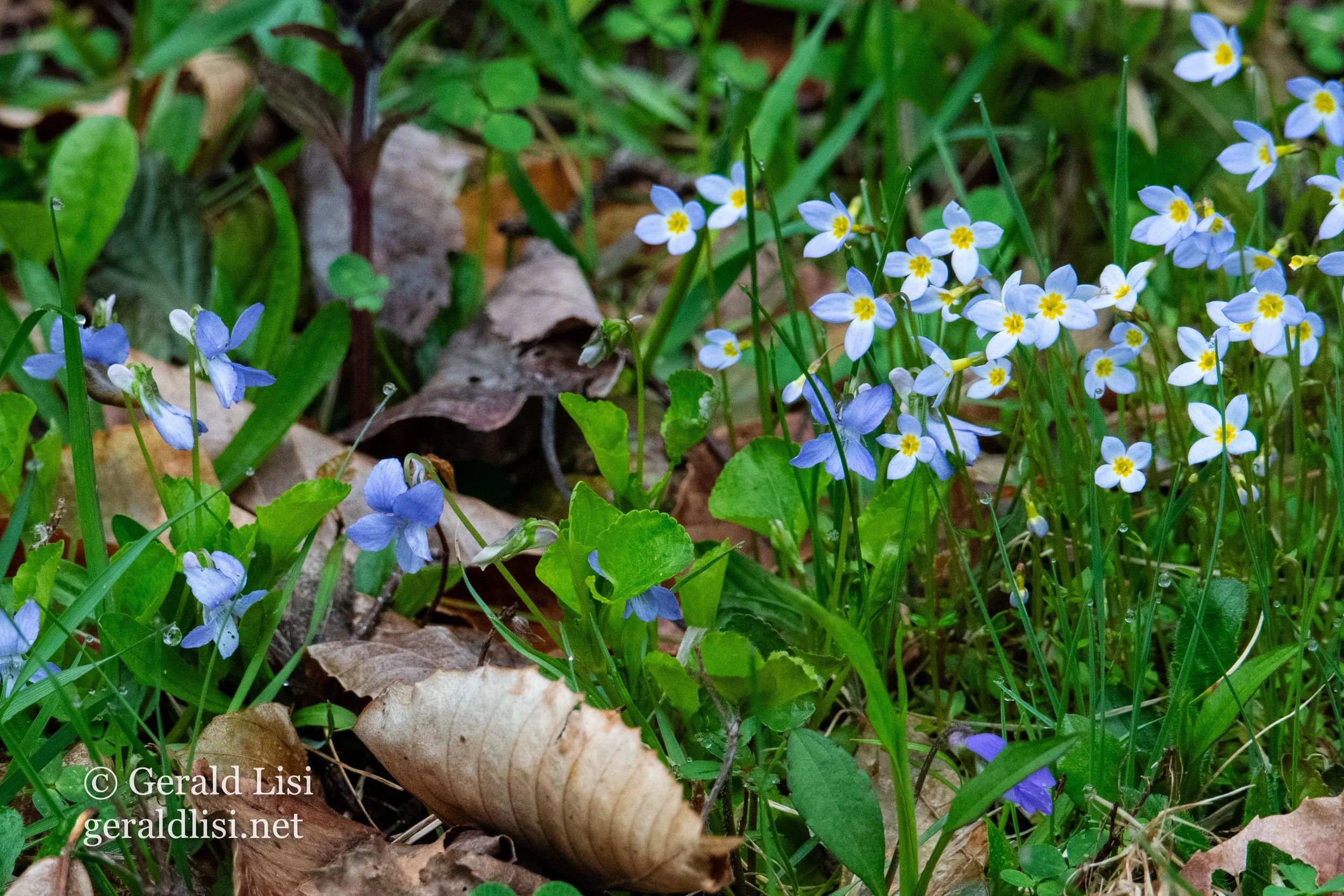
A beautiful mess. Nature is not tidy, and attempts to impose a simplistic order on it damage the biodiversity upon which Earth’s ecosystems rely. These Bluets and Violets provide crucial nutrition for Bumblebees and other insects in the form of nectar and pollen. The tree leaves from the previous autumn provide shelter for pupating butterflies and moths, and ultimately enrich the soil with organic matter.
To be clear, I’ve pulled or otherwise executed hundreds of thousands, if not millions, of weeds in my lifetime. As a gardener and a farmer I have cultivated crops and ornamentals, and as a restoration ecologist I have battled invasive plants species to protect native plant communities and the wildlife that depend on them. My appeal to you is that you get to know the wild plants that grow on your property, and consider their merits before you persecute them. “Weeds” are subjective. They’re just plants growing in a place that a human being doesn’t want them. Because many people value a monoculture of turf grass beautiful flowers, such as dandelions and violets, that nourish bumblebees and many other native pollinators are subjected to relentless campaigns of removal from people’s lawns. This is actually just a minor manifestation of the violent indifference to plant life that put that lawn there in the first place. A forest, or some other natural plant community was completely razed so the land could be “developed.” On just one acre of land there could have been over a dozen species of trees, shrubs and vines, as well as several dozen species of herbaceous plants, wildflowers, grasses, sedges, rushes, ferns and horsetails. This is to say nothing of the club mosses, mosses, liverworts and hornworts that may have grown there. I am not suggesting that we shouldn’t clear land to build homes (although perhaps we’ve cleared enough already at this point). I am asking that we retain more of the trees and other native plants around those homes. We can’t reverse the alarming declines of birds, insects and amphibians without retaining, protecting and restoring natural plant communities that feed and shelter them. But novel ecosystems, like peoples’ yards, can provide for wildlife too. Mowing less frequently and letting the “weeds” grow can significantly increase the habitat value of your yard. Many of the wildflowers that grow in our yards are naturalized non-native species. These are introduced plants that have established wild populations, but unlike invasive species they play well with others. Those others include various native plants that require the relatively open sunny environments that our yards provide.
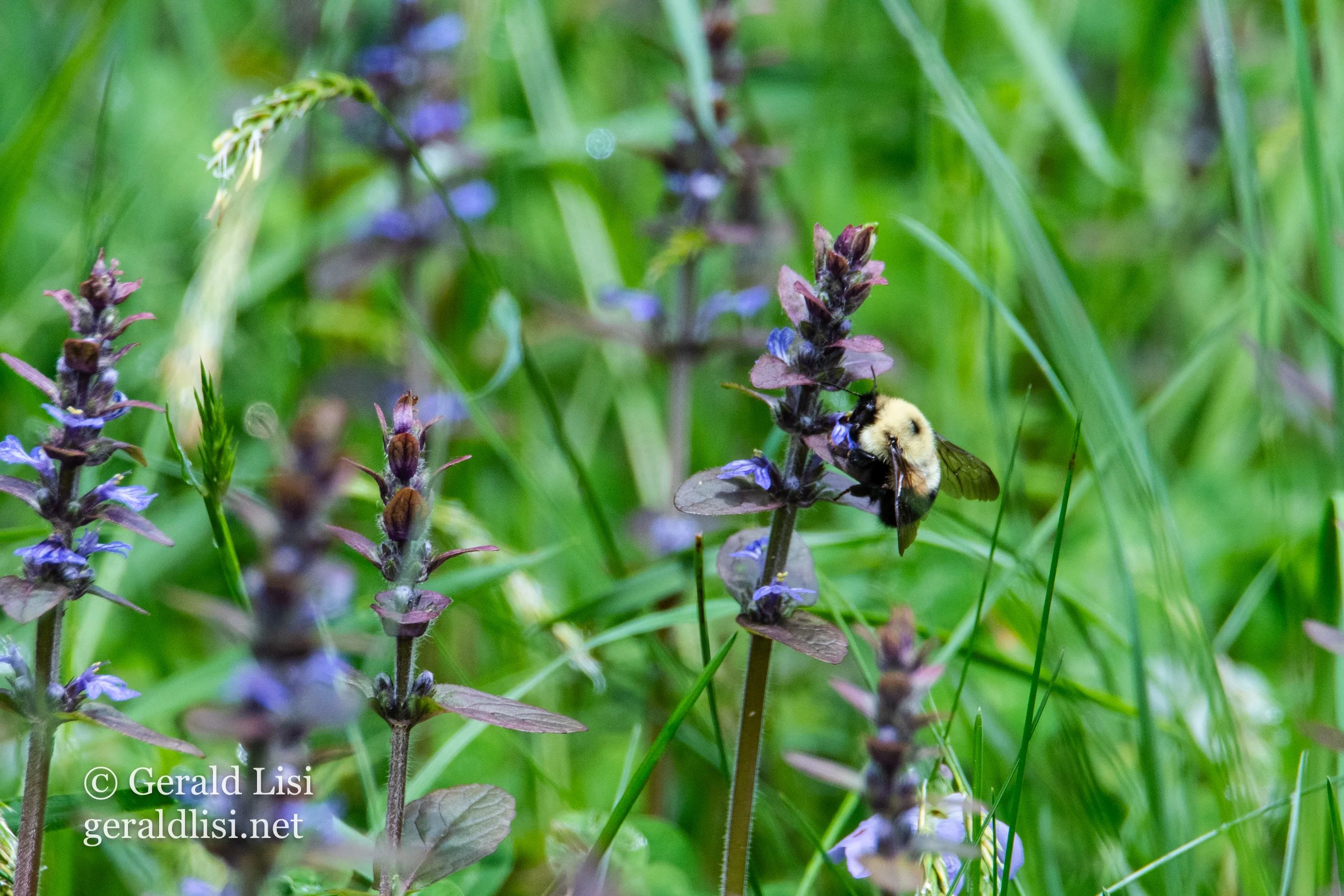
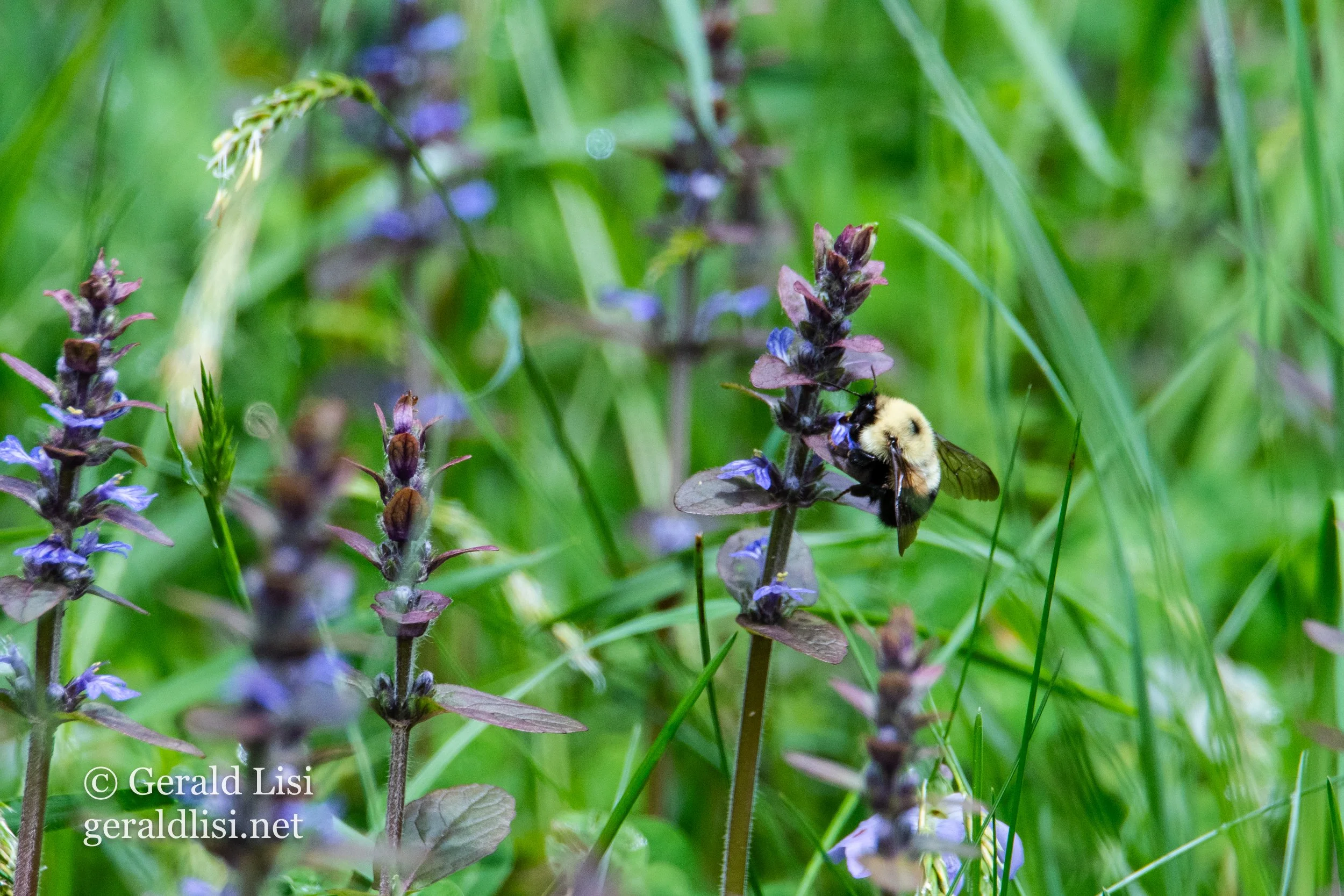
A Two-spotted Bumblebee drinks Bugleweed nectar. Two-spotted Bumblebees are one of seventeen species of bumblebees found in Vermont. Bugleweed is a Eurasian species in the mint family, and is commonly found in yards. It’s an attractive ground cover, and as shown here a food source for our bees. I identified this bumblebee in the Vermont Atlas of Life on the Vermont Center for Ecostudies website. Check out their very helpful Bumblebee field guide here: https://val.vtecostudies.org/projects/bumble-bee-atlas/bumble-bees-through-binoculars/
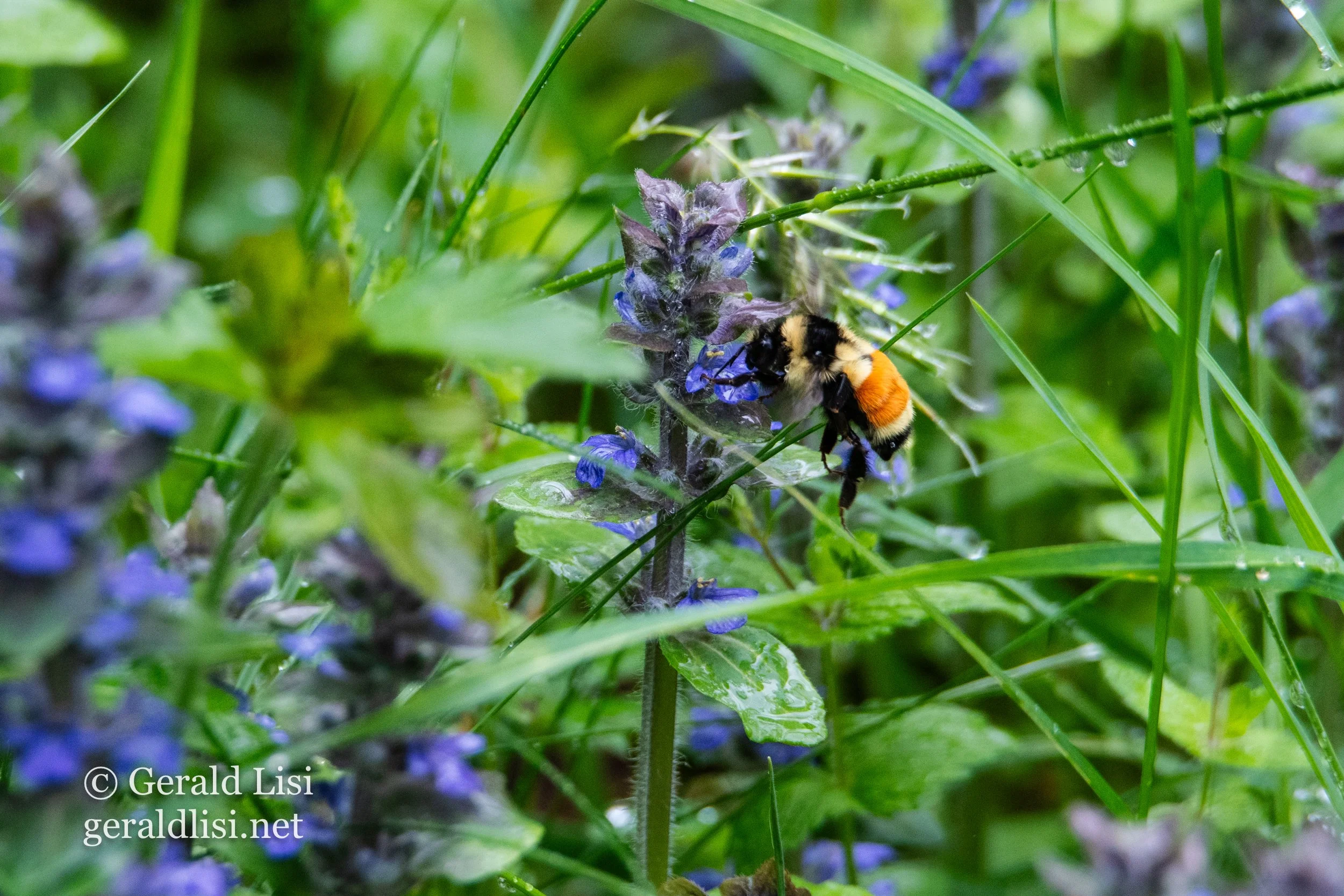
Here we see a Tricolored Bumblebee feeding on Bugleweed.
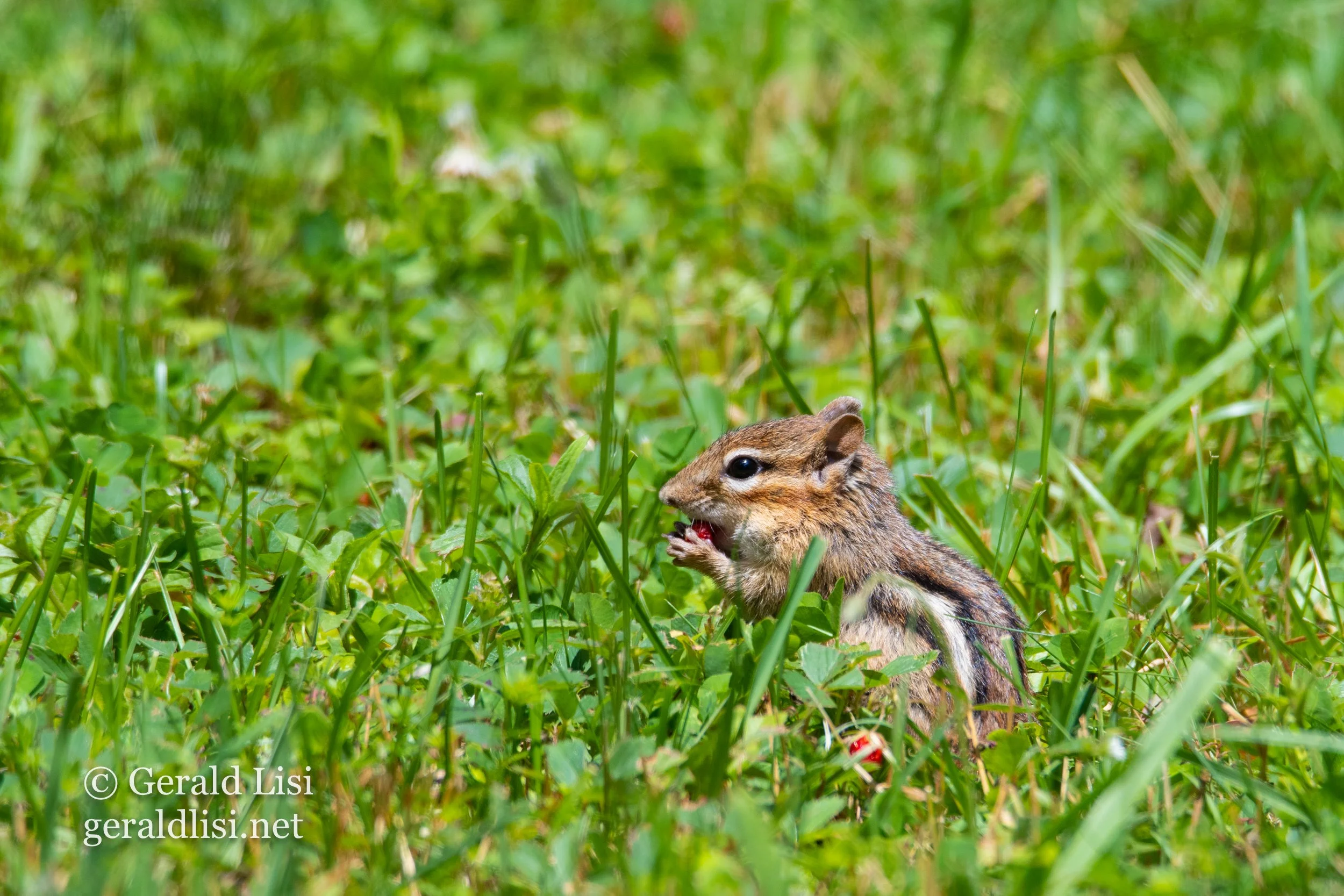
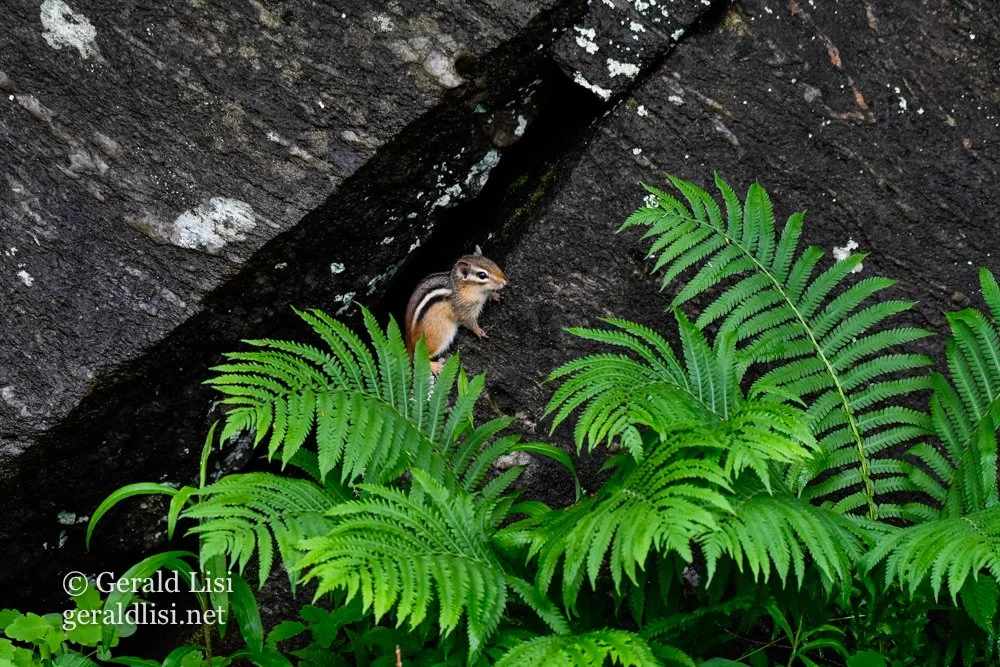
This yard has been mowed, but not too short and not too frequently. Wildflowers are welcome here, which means this Eastern Chipmunk gets to snack on Wild Strawberries.
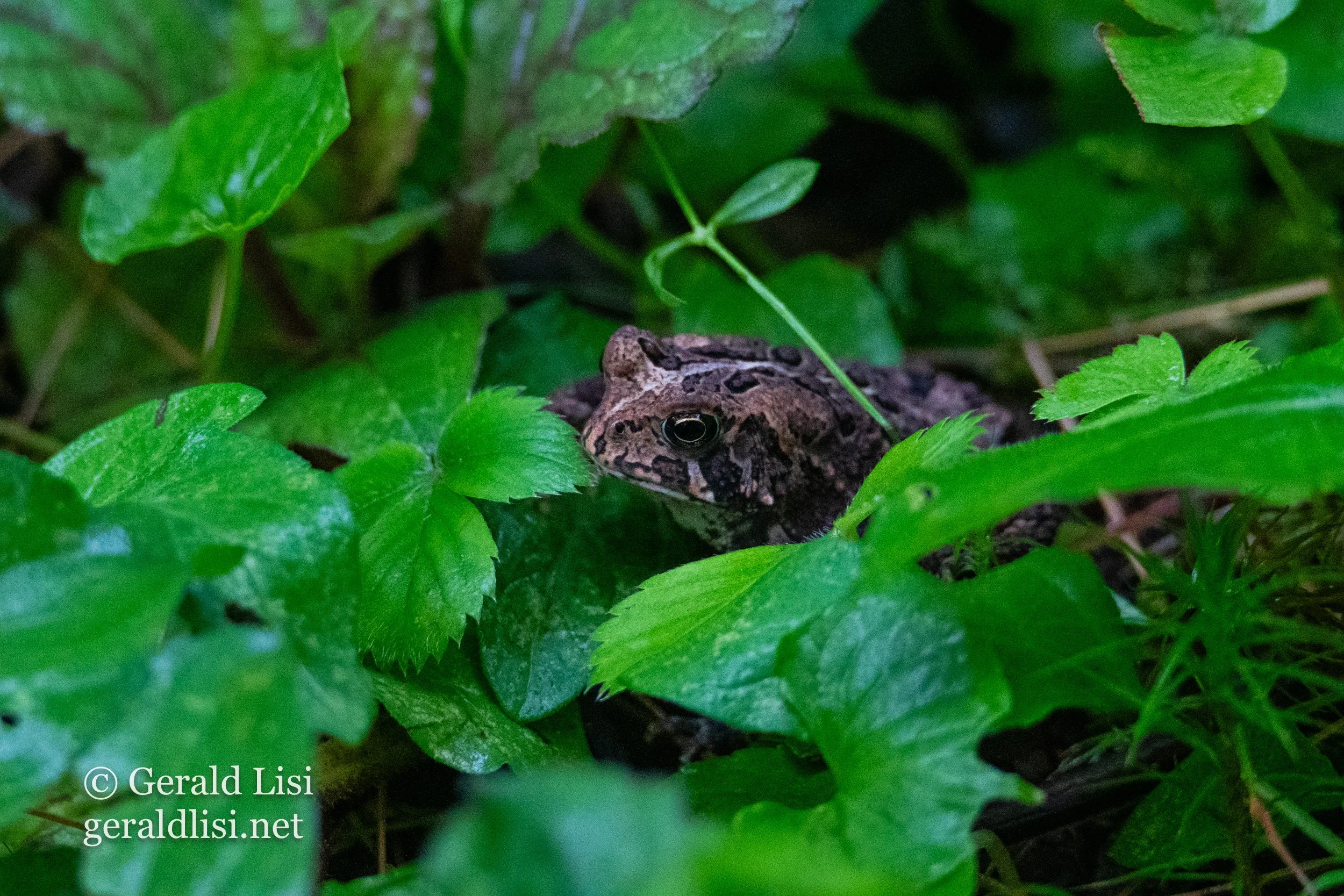
Wild Strawberry and Violet leaves provide cover for this American Toad. American Toads feed on a variety of invertebrates including slugs, snails, caterpillars and various insects.
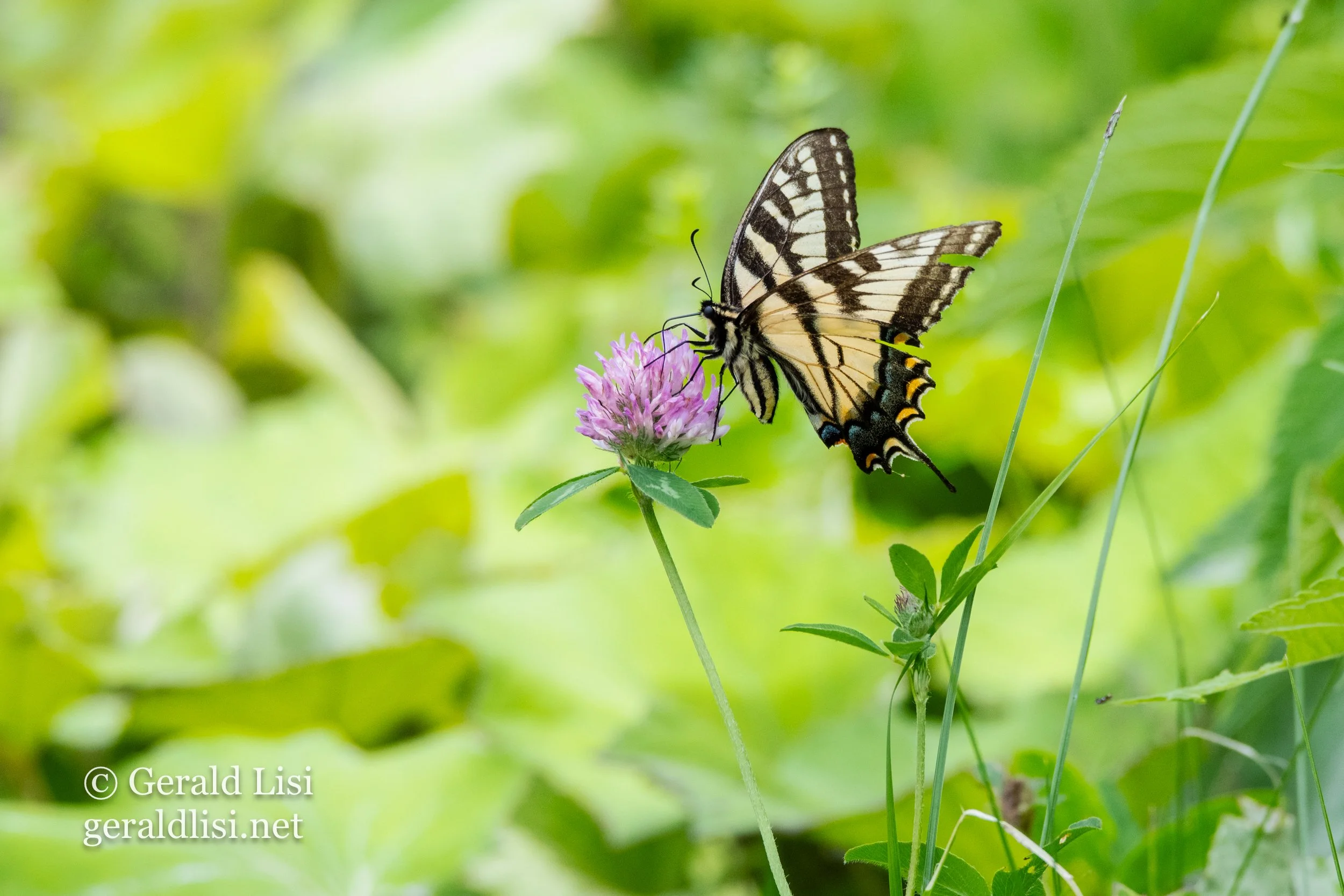
An Eastern Tiger Swallowtail feeds on Red Clover nectar. Too much mowing and mowing too short preventive the tall flower stalks of Red Clover from developing.
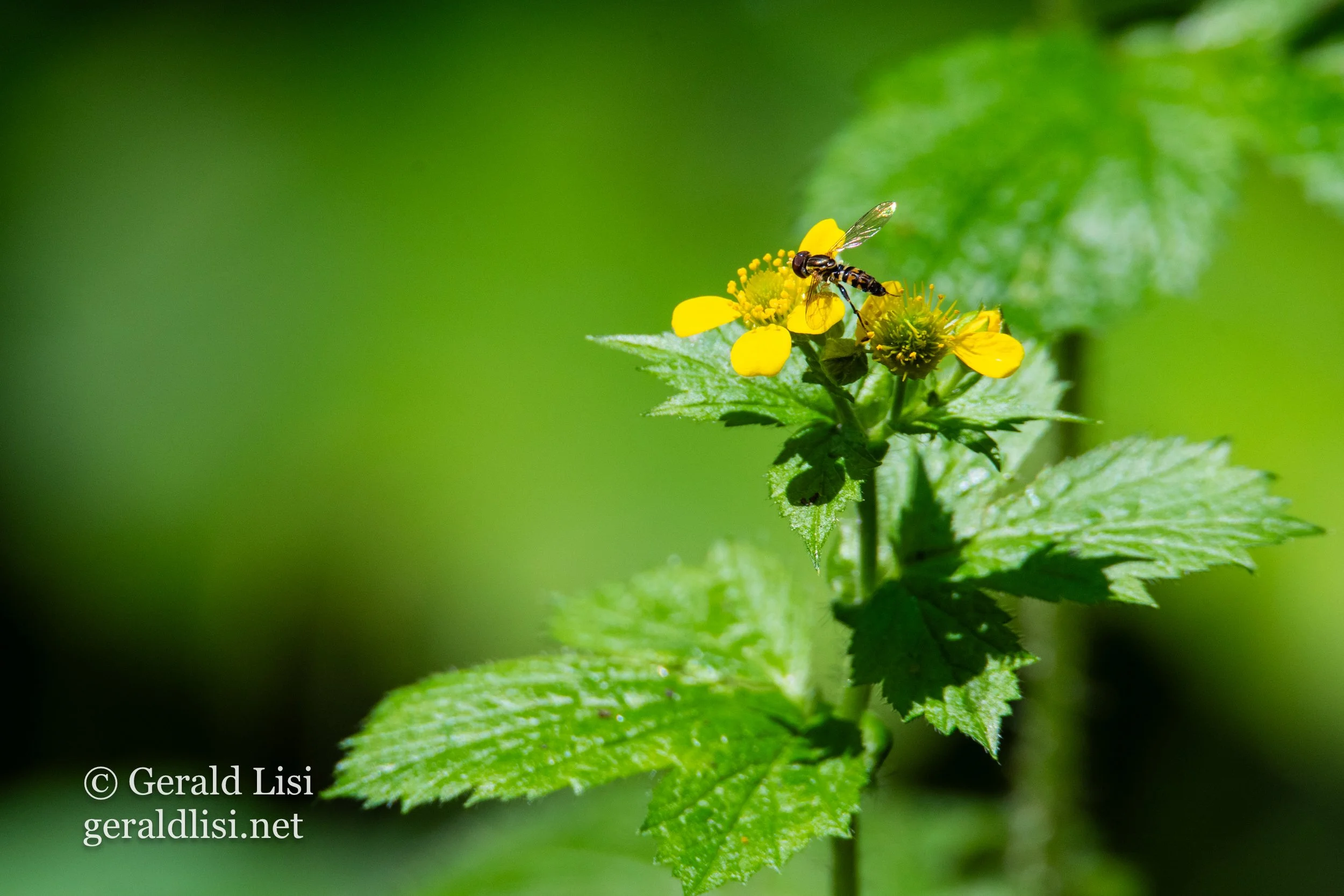
A hoverfly visits a Large-leaved Avens flower. Hoverflies are important pollinators, with over 200 species occurring in the northeastern USA alone. Large-leaved Avens is a native plant found primarily in wet forests, but if one of those abuts your yard it’s not uncommon to find it at that edge.
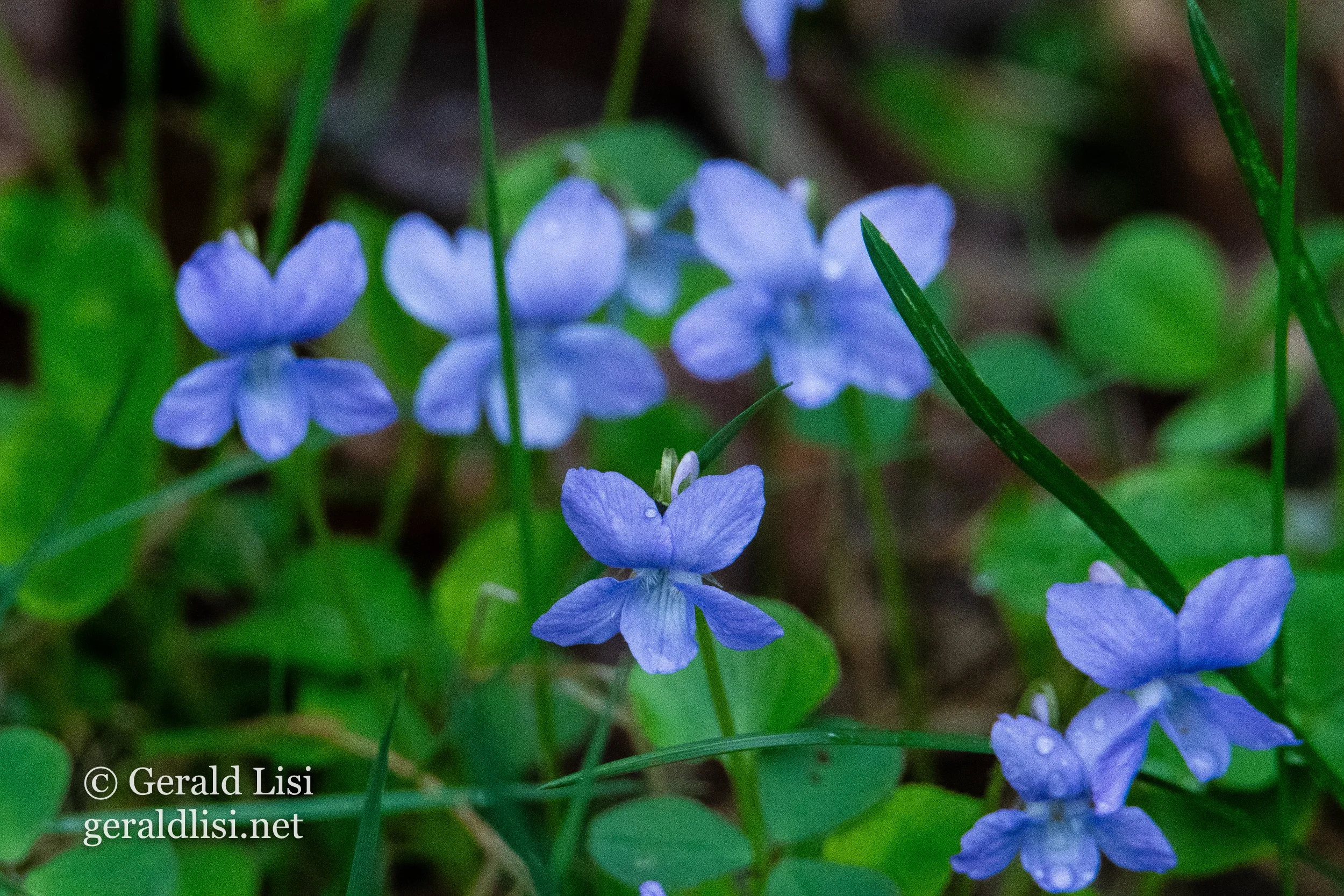
Blue Marsh Violet, I believe. Vermont alone had around ten species of blue violets. Apparently they’re hard to kill, although I can’t imagine why you would want to in the first place. Violets are a nectar source for various native bees and flies, and their leaves are the larval food of thirty species of fritillary butterflies.
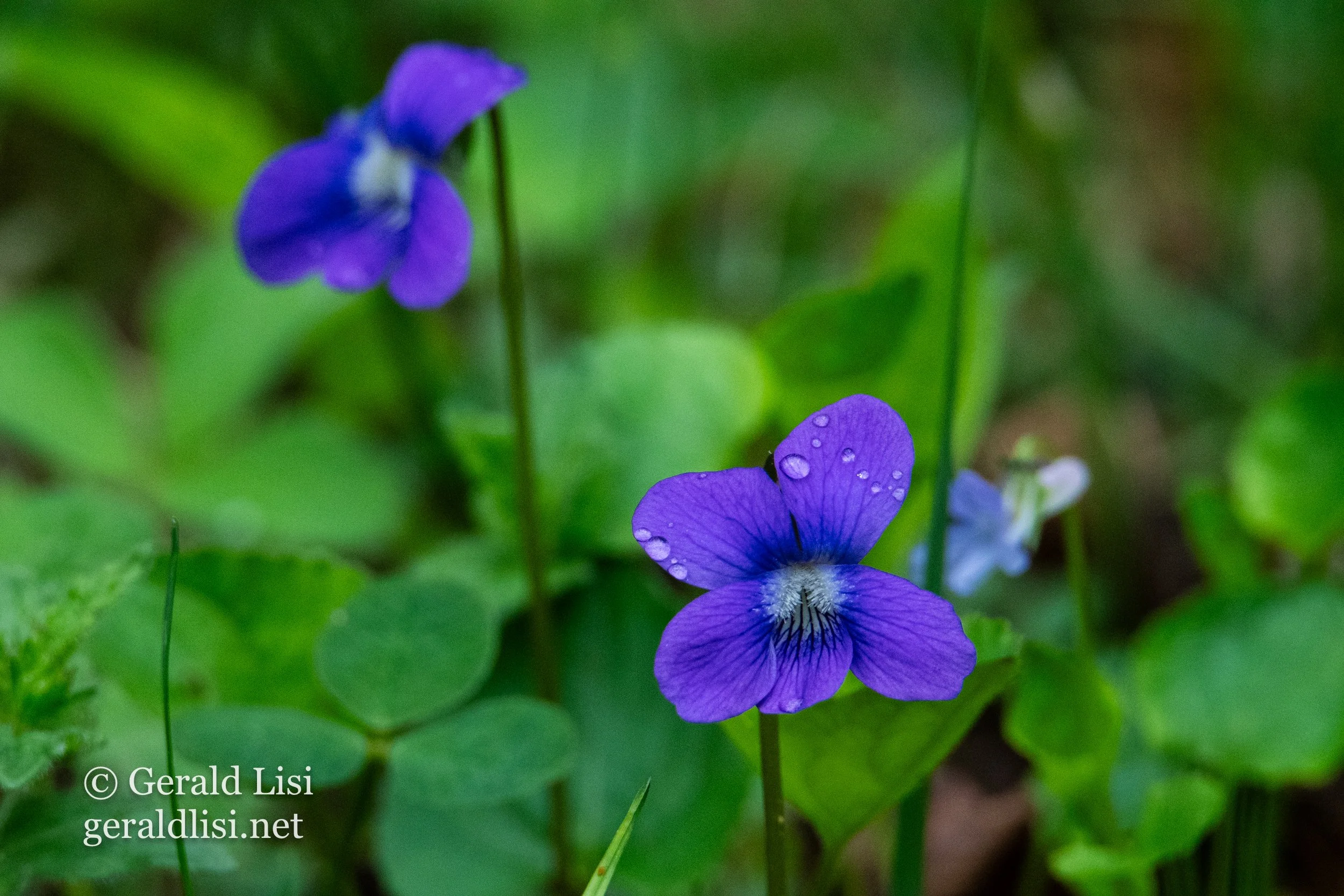
Another wild violet, possibly Le Conte’s.
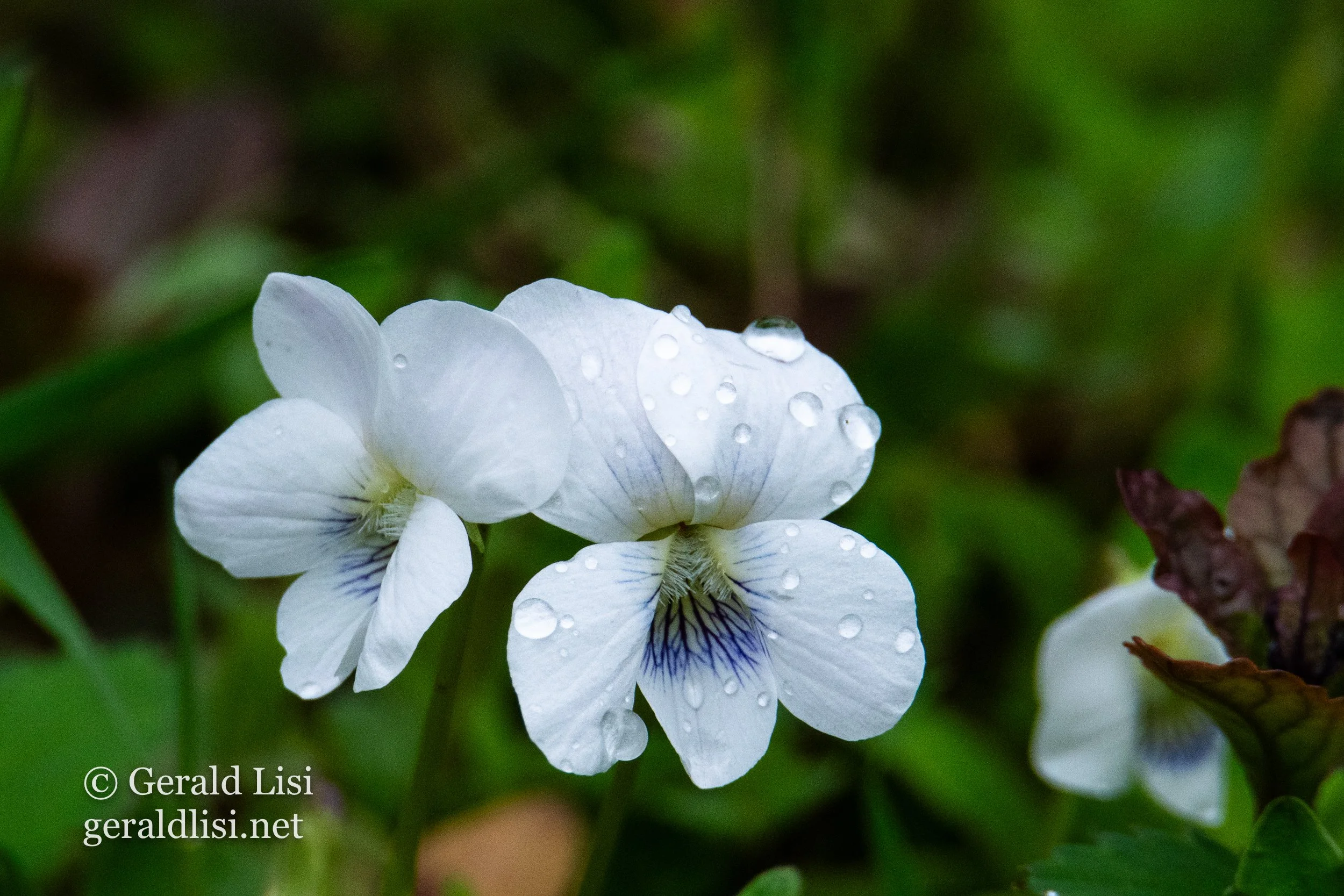
Sweet White Violet, I believe. Vermont is home to at least five species of white violets.
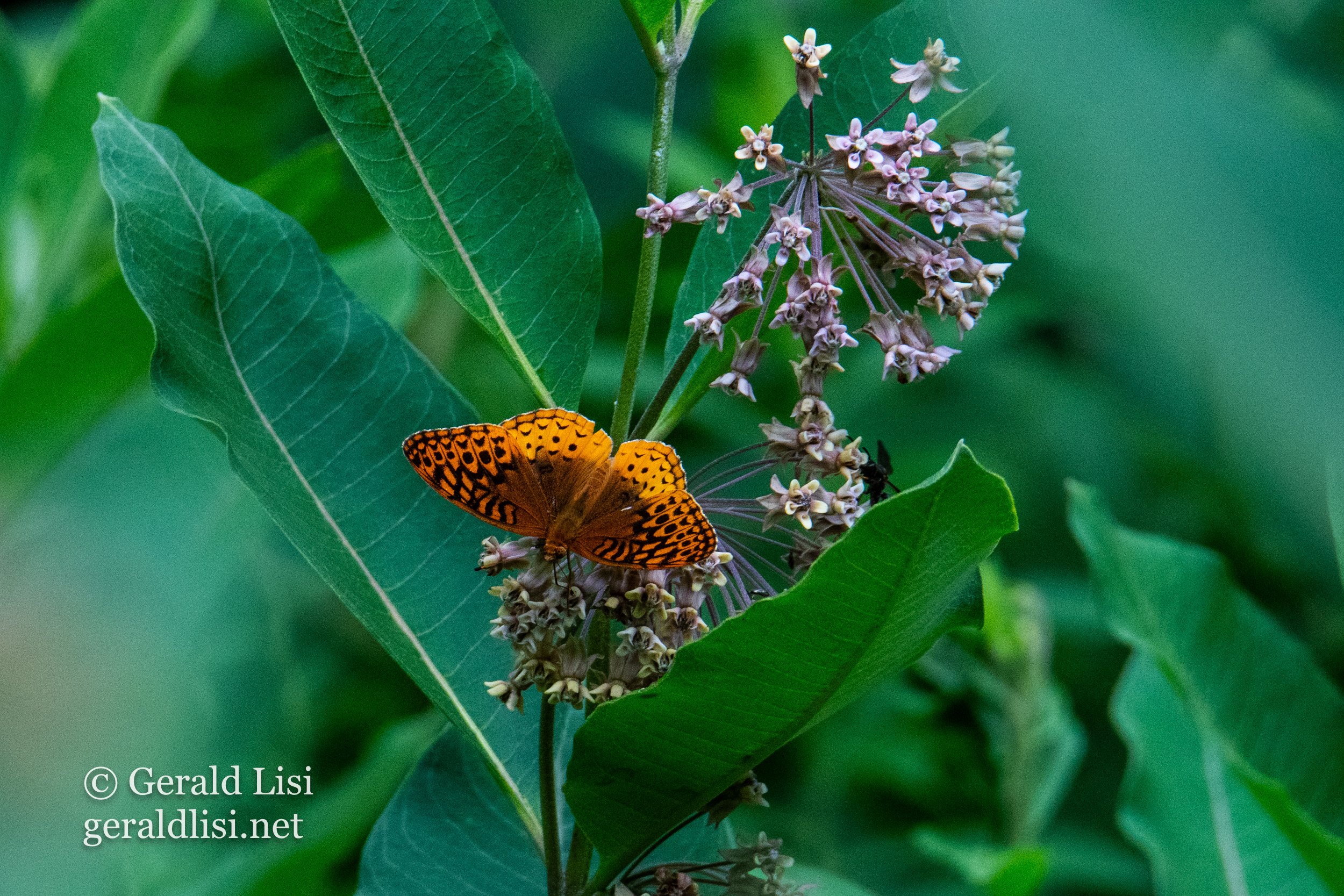
A Great Spangled Fritillary, who metamorphosed from caterpillar to butterfly on the nutrition of violet leaves, drinks the nectar of Common Milkweed flowers. Milkweeds are a vital source of summer nectar for many butterflies and other insects, and are rightly famous as the larval food of the magnificent and endangered Monarch Butterfly. Milkweed and late-summer wildflowers like Goldenrods and Asters aren’t compatible with many mows in a season, but they are essential to northeastern wildflower meadows, which I will cover in a future post.
Thanks for reading folks. I hope you found some beauty, learned a few things, and were inspired to get to know your local flora. If that flora is in Vermont or hereabouts I am available to help you with that journey. Take care of yourselves, of each other, and of the land you live on.
Gerald Lisi of Wild Niche
802-798-9813
Bird Party at the Pagoda (Dogwood)
Greetings and salutations, my friends. I’m going back to late summer here for a super zoomed in post. When the berries on a Pagoda Dogwood in my yard ripened I had the great pleasure of watching at least a dozen birds of several species visit this native shrub for a feast. As a lover of native plants and birds I relished this pagoda party, and I thought you might enjoy a few photos of the festivities.
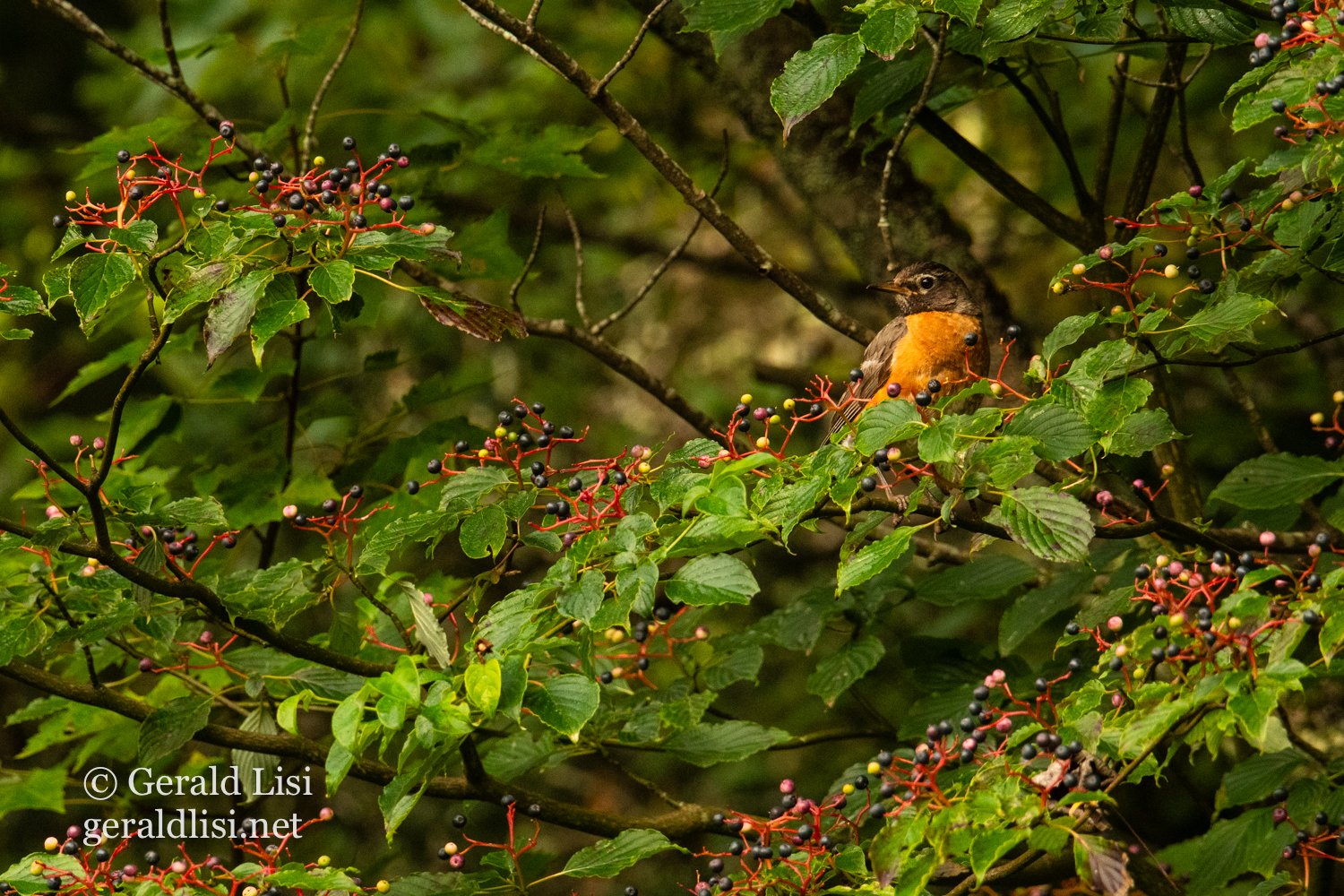
American Robins and other thrushes are serious frugivores (fruit eaters), so seeing a few Robing take more than their share of this bounty was no surprise.

The scarfing of berries happens so quickly, and often without a clear view, but I was glad to catch this Robin with berry in bill.

This juvenile Hermit Thrush would have been still getting used to feeding his or her self, which was temporarily quite easy in these bountiful branches.

Perhaps the same Hermit Thrush, or another juvenile. You can see that many of the red fruit-bearing stems had been picked clean at this point.

Black-capped Chickadees aren’t big fruit eaters, but they can be found wherever there’s action.

Tufted Titmice are larger cousins of Chickadees, with similar diets and habits.

This Titmouse found a nice caterpillar on the popular Pagoda Dogwood. While fruits are important foods for many birds, the greatest nutritional contribution of plants to birds is the caterpillars that feed on their leaves.

This female Yellow Warbler was a fun surprise as I had not seen this species in the yard before. She and her mate had likely finished raising this year’s young by now and she was enjoying the freedom to wander, and eat all the insects she caught herself.

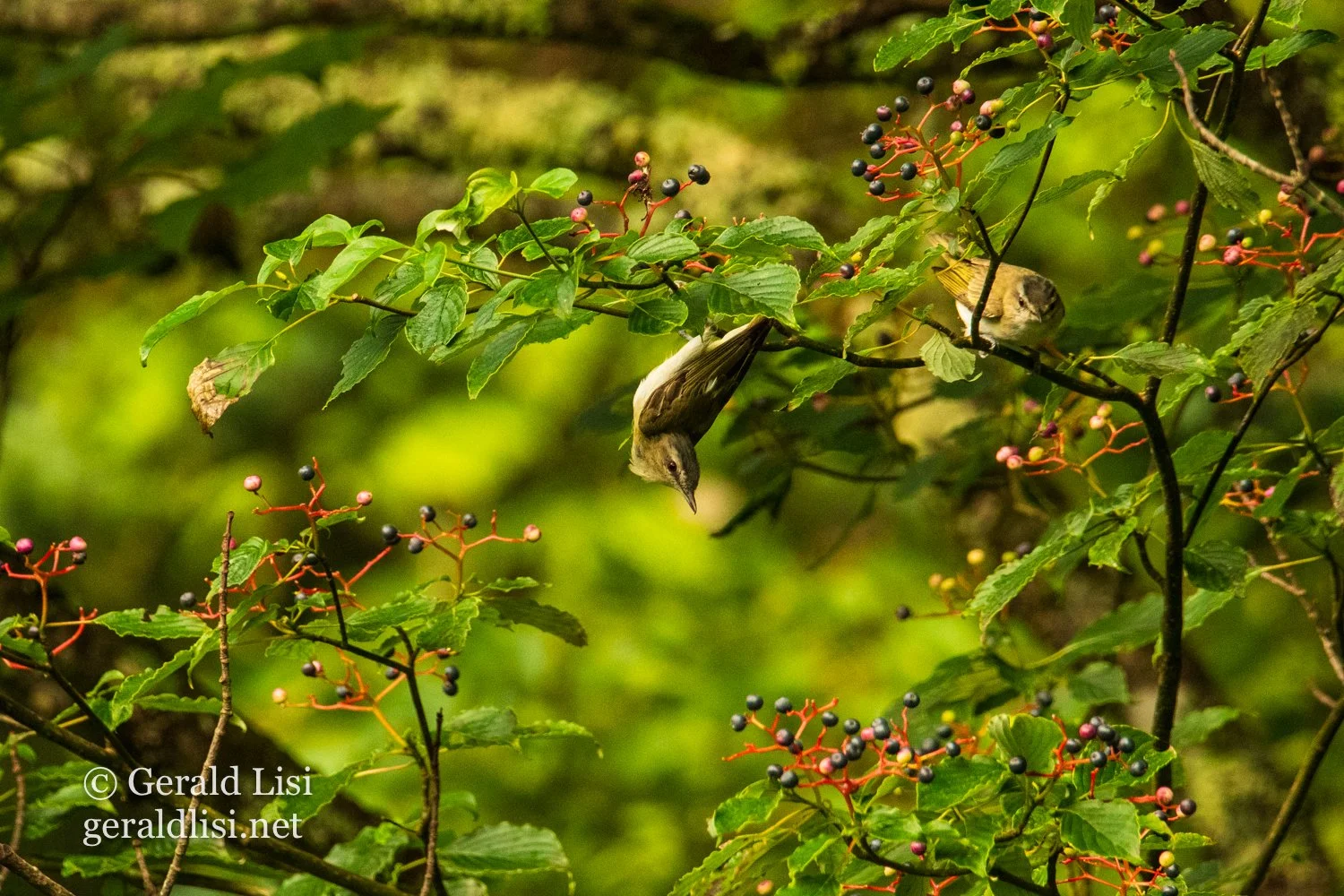
I’ve seen Red-eyed Vireos hunting caterpillars on many occasions. This was my first time seeing them eat fruit, and by far my closest look at them foraging.

I had seen and heard this Red-eyed Vireo pair a lot at this point, but getting to photograph them together in this beautiful plant was a real treat.
That concludes this little reminiscence of late summer. How distant it seems already. I do have some current news to share though: my 2026 calendar is now available! If you’re interested you can find it at my store, https://gerald-lisi.squarespace.com/store-1?p
Thanks for your time and attention, folks! I hope you feel it was well spent.


Midsummer Medly
The subtitle of this installment could be “Cool Beings I got good photos of in my yard this July and August.” At least a few hours of most of my weekends are spent slow birding. The more and the faster you move the more you are going to drive birds, and other wildlife, away from yourself. Stopping to smell the proverbial (and literal) roses isn’t just about enjoying their fragrance. The stopping part leads to observations, and while one quietly ponders them wild creatures nearby are put at ease. Next thing you know there might be birds foraging just a few arms lengths away. If you’re only interested in birds slow birding will have mixed results, and you should really consider broadening your horizons. A bit of botany, herpetology, mycology, geology, etc, can make any outdoor spot interesting. And as long as you don’t get tunnel vision in these other pursuits either I promise you, the birds will come to you. On that note let’s move on to those Cool Beings.
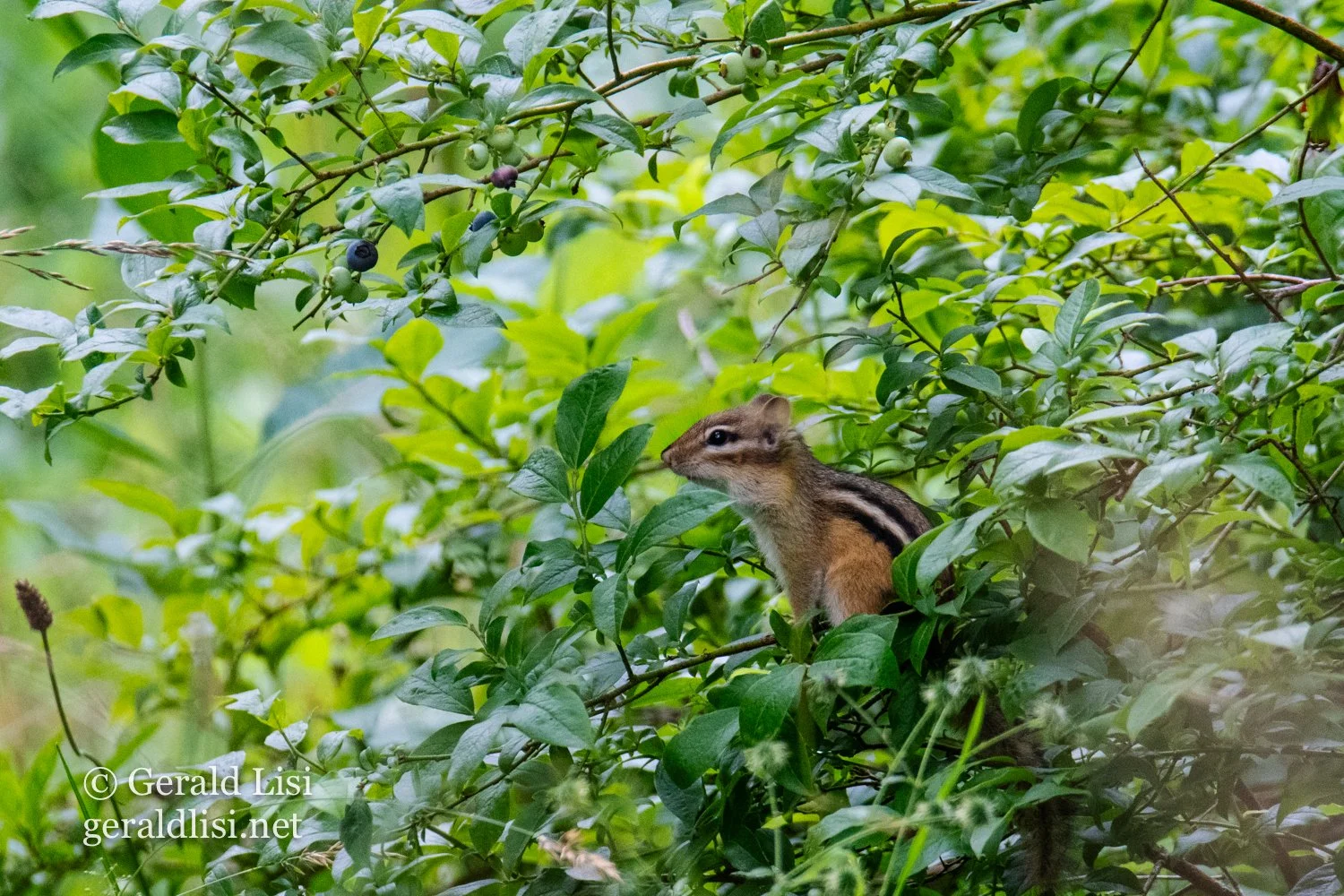
I feigned dismay when I saw this Chipmunk eating my blueberries, but I had already opted against putting nets over the bushes. She paused her harvest to make sure I wasn’t out to get her, giving me the opportunity to frame her sweet little profile with fruit-laden blueberry branches.

Ghost Pipe aka Indian Pipe, Monotropa uniflora, is a plant of the Heath Family, Ericaceae. Members of this family, including blueberries, often share mycorrhizal networks with trees, especially conifers. photosynthesis products from the trees are shared with the mycorrhizal fungi who reciprocate with minerals and nutrients reclaimed from the decomposition of organic matter. Many forest understory plants rely on the sugars made by the trees, who enjoy much better access to sunlight. In some cases species completely lose their own ability to photosynthesize. The complete lack of chlorophyll (a green pigment used in photosynthesis) in Ghost Pipe is a classic example of this phenomenon. Non-photosynthetic plants are generally referred to as parasitic. They do rely on the photosynthesis of the trees on the other end of their mycorrhizal networks, but it’s important to recognize the contributions these flowering plants make to the greater ecological communities to which they belong. Bumblebees are the pollinators of Ghost Pipe, and they raise their young on the pollen they gather from them, as is generally the case with Bumblebee-flower relationships. I have also noticed that this plant very often gets eaten, although I don’t know by who. Likely deer and other plant-munching mammals.
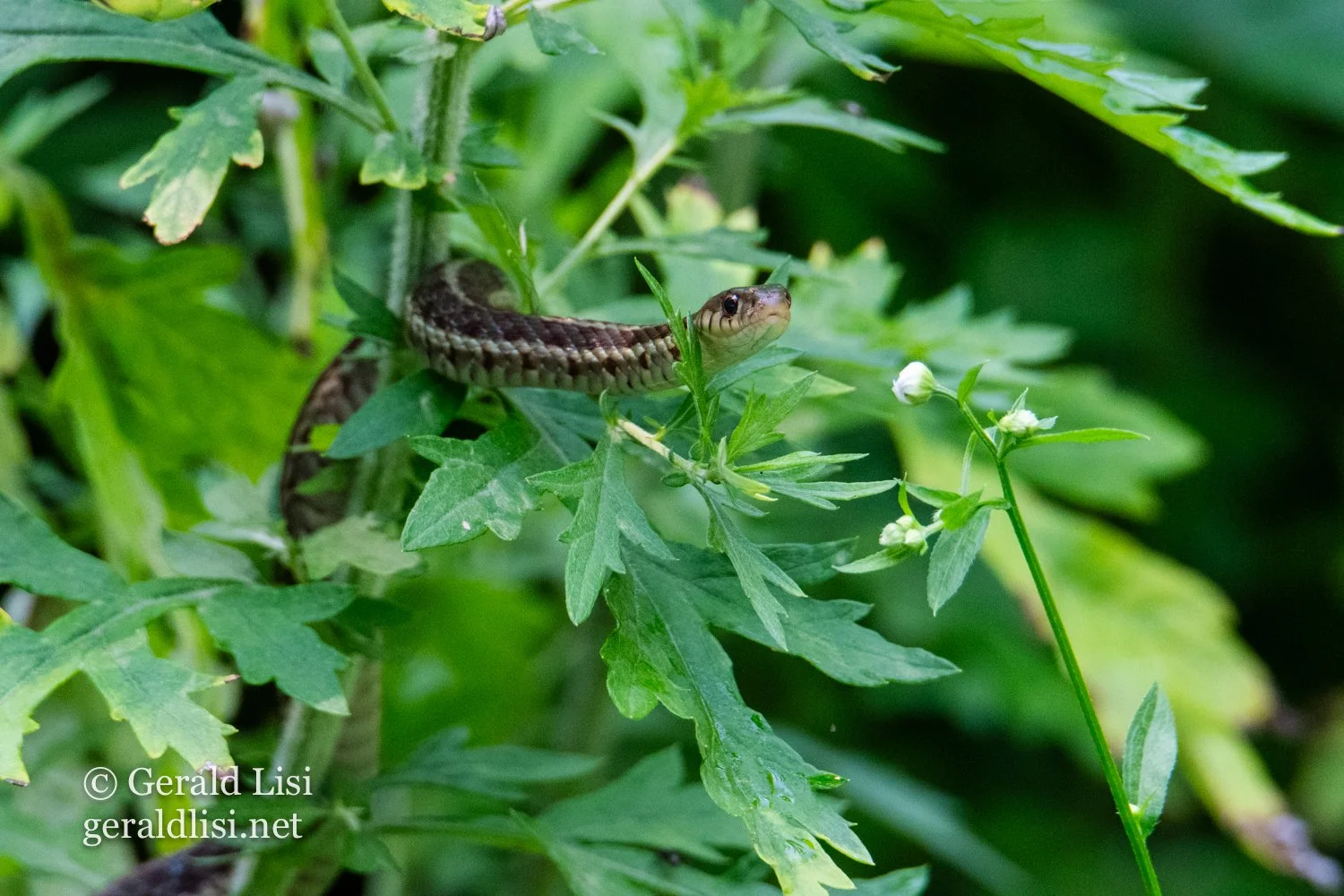
After glimpsing Garter Snakes fleeing my footsteps in my yard a few times, just a tail disappearing into a thicket, I was delighted to see this one’s sweet little face as he climbed a Mugwort. If you are afraid of snakes please let me assure you that Garter Snakes are not at all dangerous to people or pets. They are however predators of slugs and snails (and many other little critters), so gardeners should welcome them with great enthusiasm.

Great Spangled Fritillary on Common Milkweed.
Milkweeds are rightly famous as favored food plants of Monarch Butterfly larvae (caterpillars), their flower nectar feeds many many species of insects, including adult Monarchs.

American Toad in Polytrichum (his butt parasol is a Wild Strawberry leaf).
Toads are delightful creatures, and I am always happy to see one. The Hair-cap Moss complemented his portrait quite nicely.

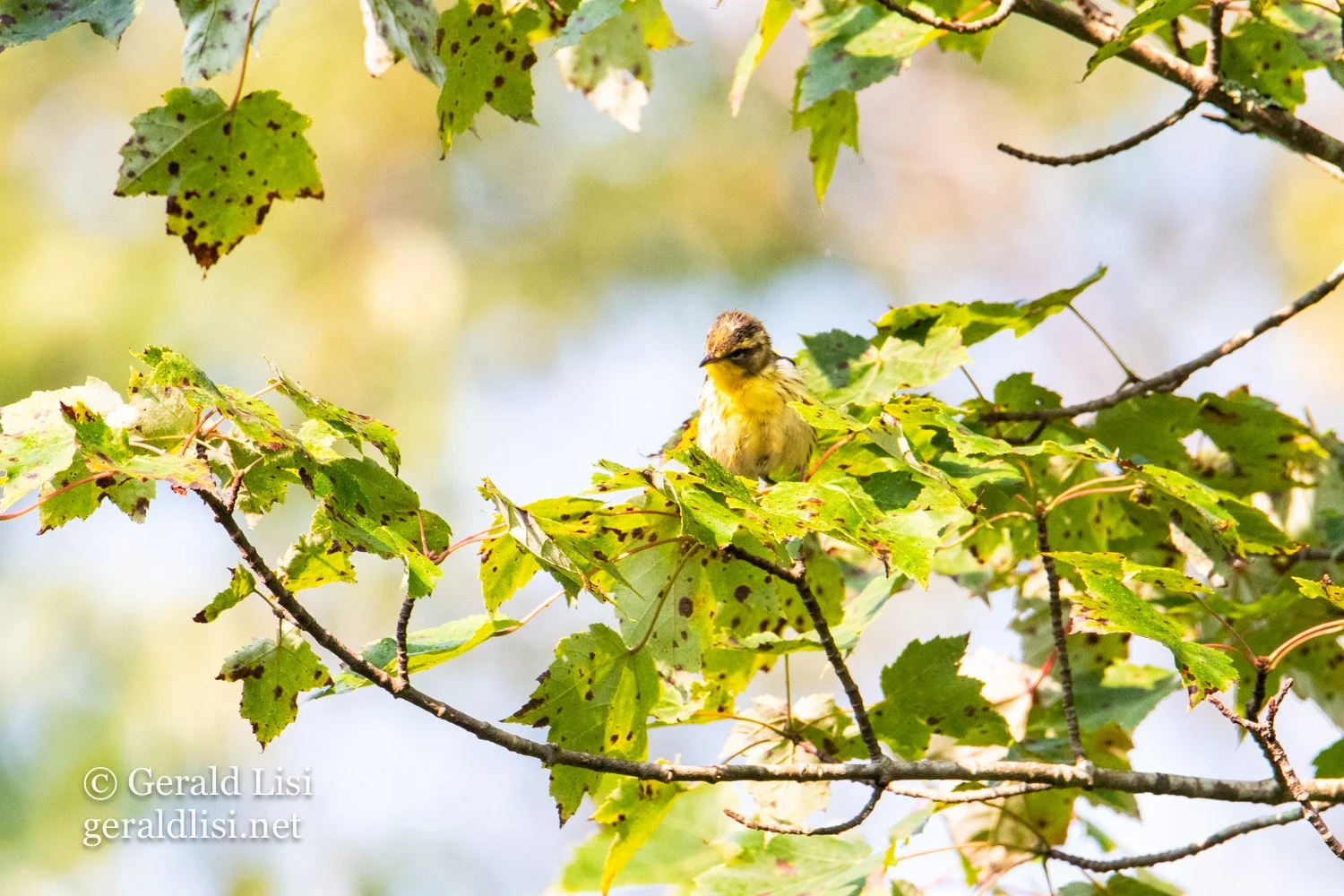
Chestnut-sided Warbler fledgling in Red Maple.
Chestnut-sided are one of the most abundant and conspicuous wood warblers in central Vermont. But once the chicks have fledged the songs of warblers, and other birds drop of dramatically. This is the time listen more carefully for the little voices of fledglings begging their parents for food.

Common Loon with chick
This is the only observation in this post that wasn’t made at home. This could well have been right up the road, but it was actually on Rollins Pond in the Adirondacks, where a friend of mine rents out boats.
Blackburnian Warbler male in Red Oak.
I heard him singing quite a bit this spring, and got a few way-up-in-the-trees shots of this. But as I often say, when they (various tree-top-singing-warblers) go quiet you might actually get a decxent look at them foraging in lower branches. In this case he was gathering food for his chicks. Continuing to hunt with prey items in the bill, rather than stopping to eat it before proceeding, is indicates that you’re watching a parent on one of their hundreds of daily foraging trips to feed their rapidly growing chicks.
As Douglas Tallamy keeps trying to tell us, one of the major contributions of wild plants to their ecosystems is in the feeding of myriad species of caterpillars, many of which are primary sources of nutrition for the young of most species of birds. Oaks, he reports in ‘Nature’s Best Hope,’ are one of the ecological heavy hitters in this way. “If you think of a plant as a bird feeder, which is exactly what it is, then in most regions the oak makes the most food” Tallamy writes.
Three weeks later I spotted this juvenile Blackburnian Warbler, who is almost certainly one of the progeny of the father pictured above. It’s awesome to have one of my favorite birds successfully breeding virtually right outside my door.
That’s all for now, folks. I hope you found some beauty here, and learned a thing or two. If you are reading this as an email please consider forwarding it to someone that might enjoy it. If you’re reading this on my website please consider subscribing at my home page, www.geraldlisi.net. Thanks for reading, and best wishes to you all.