Let it Grow
With spring about to unfold in central Vermont I eagerly await the emergence of so many green shoots from the ground. Leaves and flowers of great variety will unfurl, revealing their identities to those who care to notice. But to many people, perhaps most I’m afraid, the pageant of spring wildflowers is seen as an onslaught of weeds that need to be pulled, mowed or sprayed with herbicide. This bizarre fetish is incomprehensible to me, but more importantly it is inherently wasteful and destructive.
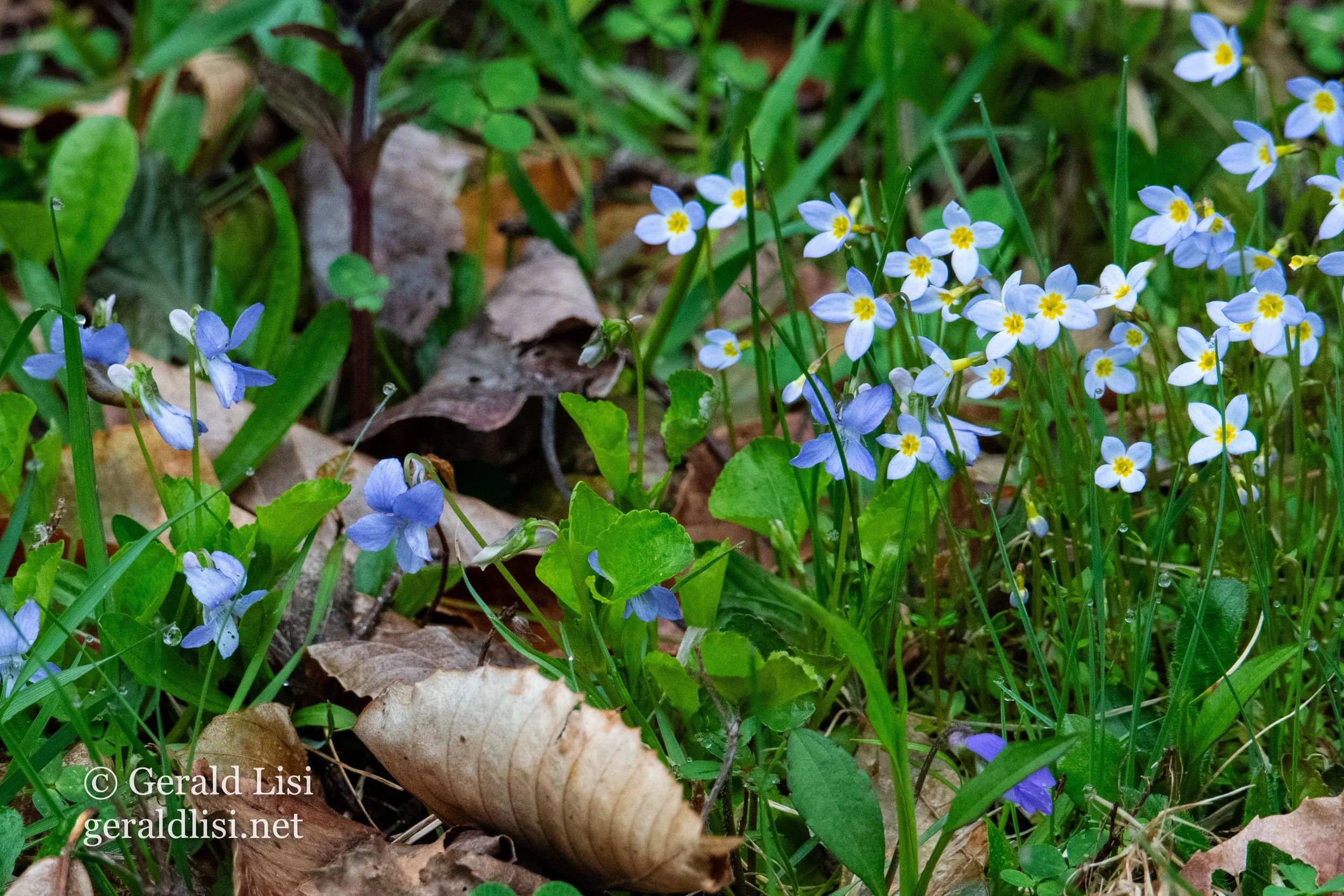
A beautiful mess. Nature is not tidy, and attempts to impose a simplistic order on it damage the biodiversity upon which Earth’s ecosystems rely. These Bluets and Violets provide crucial nutrition for Bumblebees and other insects in the form of nectar and pollen. The tree leaves from the previous autumn provide shelter for pupating butterflies and moths, and ultimately enrich the soil with organic matter.
To be clear, I’ve pulled or otherwise executed hundreds of thousands, if not millions, of weeds in my lifetime. As a gardener and a farmer I have cultivated crops and ornamentals, and as a restoration ecologist I have battled invasive plants species to protect native plant communities and the wildlife that depend on them. My appeal to you is that you get to know the wild plants that grow on your property, and consider their merits before you persecute them. “Weeds” are subjective. They’re just plants growing in a place that a human being doesn’t want them. Because many people value a monoculture of turf grass beautiful flowers, such as dandelions and violets, that nourish bumblebees and many other native pollinators are subjected to relentless campaigns of removal from people’s lawns. This is actually just a minor manifestation of the violent indifference to plant life that put that lawn there in the first place. A forest, or some other natural plant community was completely razed so the land could be “developed.” On just one acre of land there could have been over a dozen species of trees, shrubs and vines, as well as several dozen species of herbaceous plants, wildflowers, grasses, sedges, rushes, ferns and horsetails. This is to say nothing of the club mosses, mosses, liverworts and hornworts that may have grown there. I am not suggesting that we shouldn’t clear land to build homes (although perhaps we’ve cleared enough already at this point). I am asking that we retain more of the trees and other native plants around those homes. We can’t reverse the alarming declines of birds, insects and amphibians without retaining, protecting and restoring natural plant communities that feed and shelter them. But novel ecosystems, like peoples’ yards, can provide for wildlife too. Mowing less frequently and letting the “weeds” grow can significantly increase the habitat value of your yard. Many of the wildflowers that grow in our yards are naturalized non-native species. These are introduced plants that have established wild populations, but unlike invasive species they play well with others. Those others include various native plants that require the relatively open sunny environments that our yards provide.
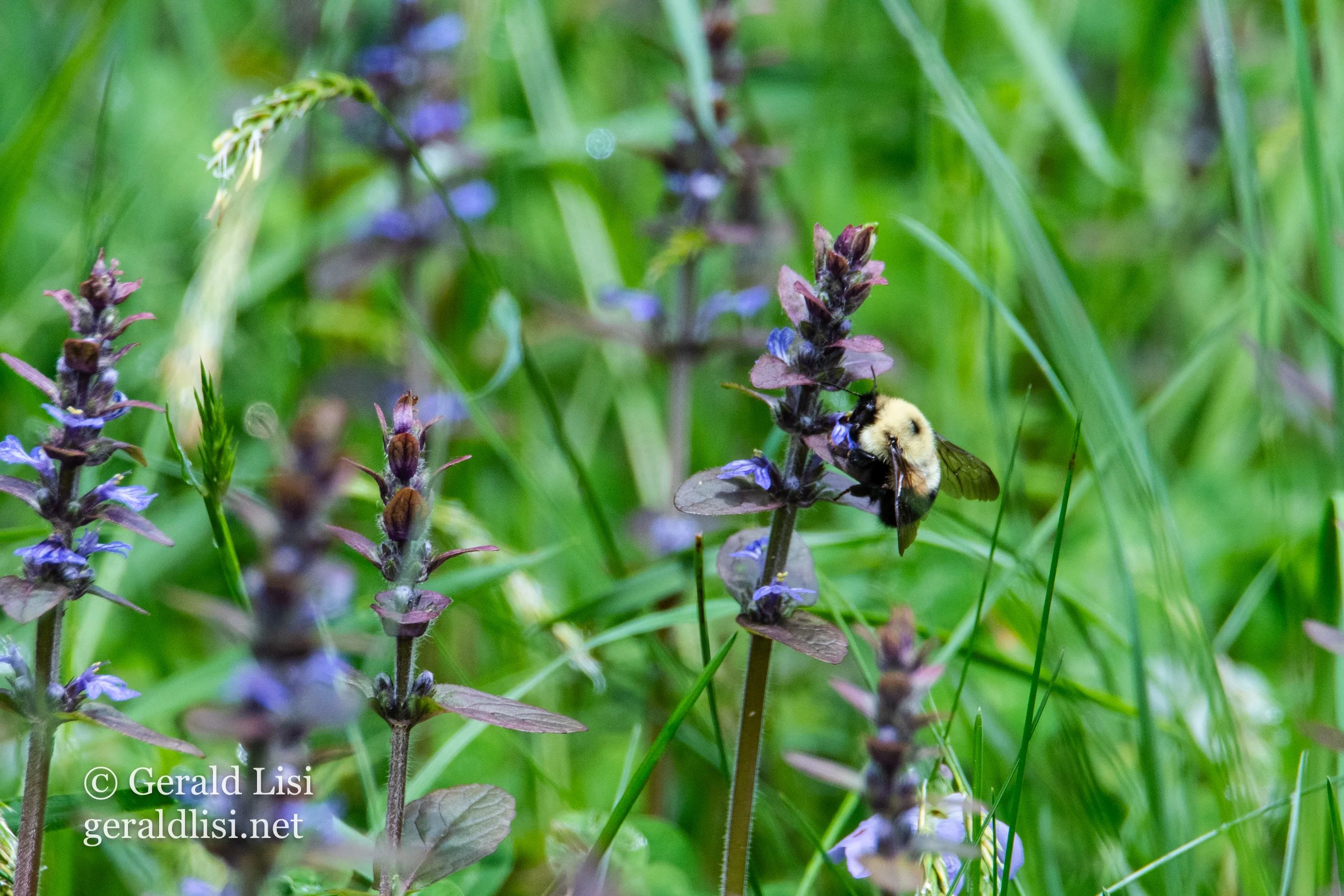
A Two-spotted Bumblebee drinks Bugleweed nectar. Two-spotted Bumblebees are one of seventeen species of bumblebees found in Vermont. Bugleweed is a Eurasian species in the mint family, and is commonly found in yards. It’s an attractive ground cover, and as shown here a food source for our bees. I identified this bumblebee in the Vermont Atlas of Life on the Vermont Center for Ecostudies website. Check out their very helpful Bumblebee field guide here: https://val.vtecostudies.org/projects/bumble-bee-atlas/bumble-bees-through-binoculars/
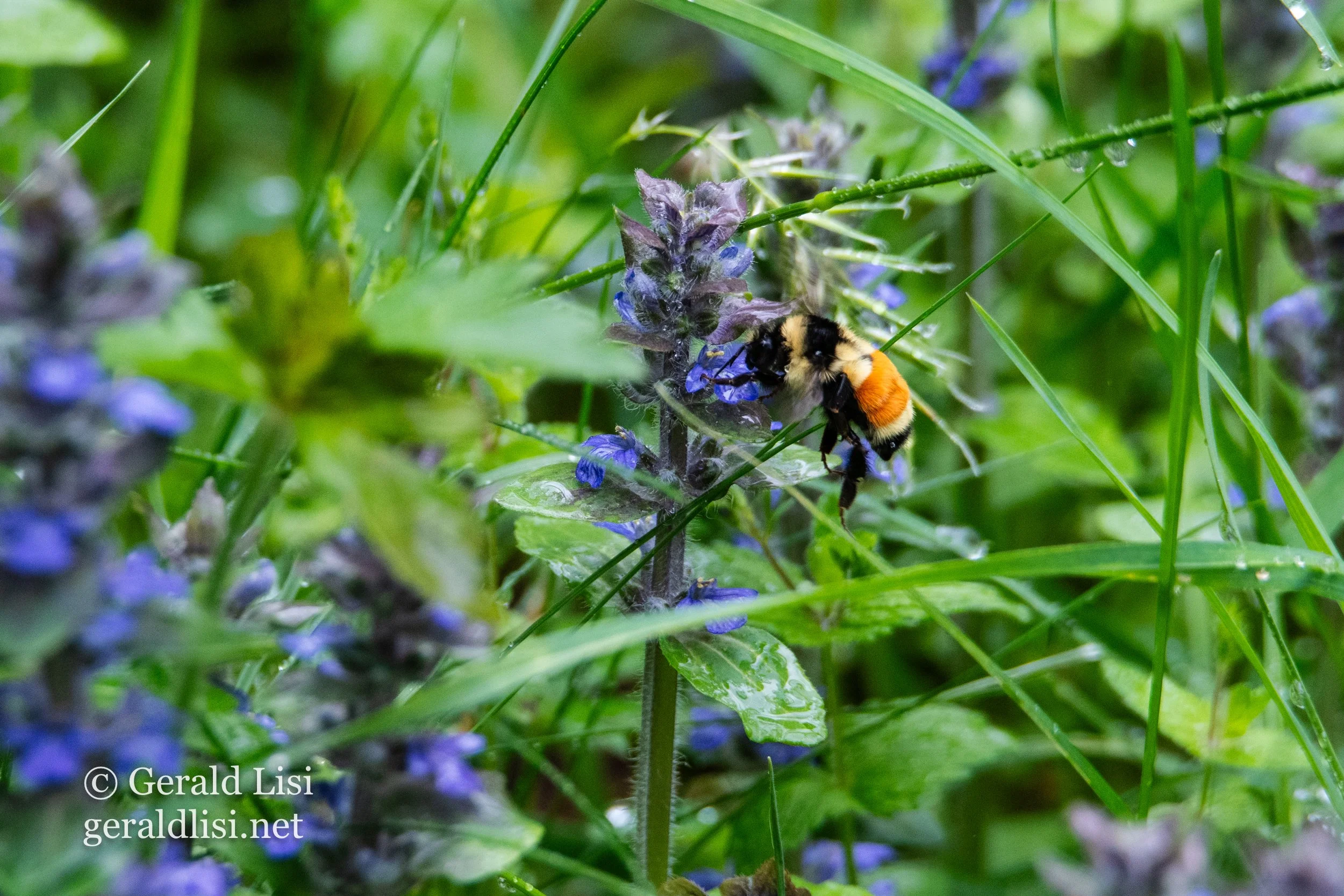
Here we see a Tricolored Bumblebee feeding on Bugleweed.
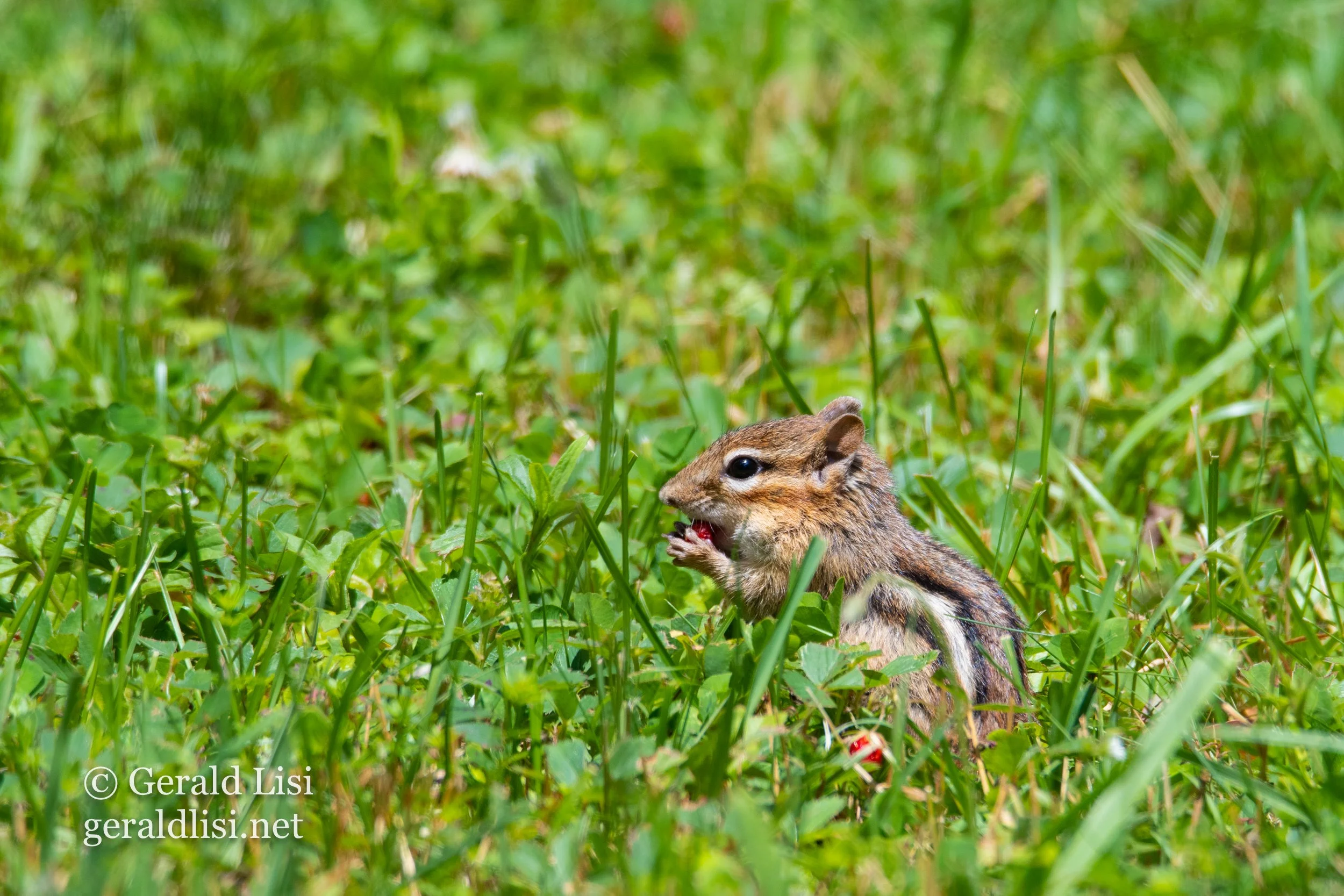
This yard has been mowed, but not too short and not too frequently. Wildflowers are welcome here, which means this Eastern Chipmunk gets to snack on Wild Strawberries.
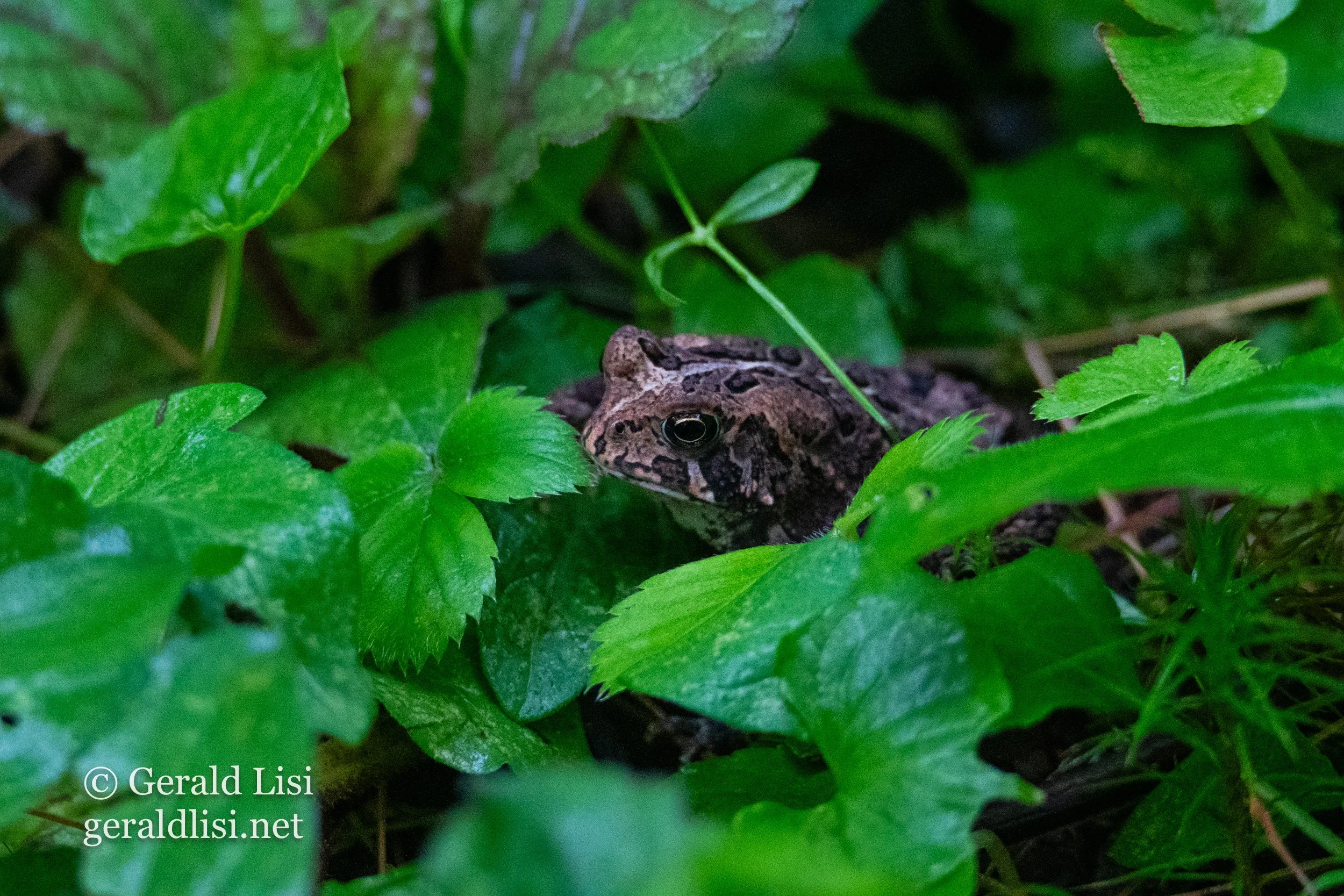
Wild Strawberry and Violet leaves provide cover for this American Toad. American Toads feed on a variety of invertebrates including slugs, snails, caterpillars and various insects.
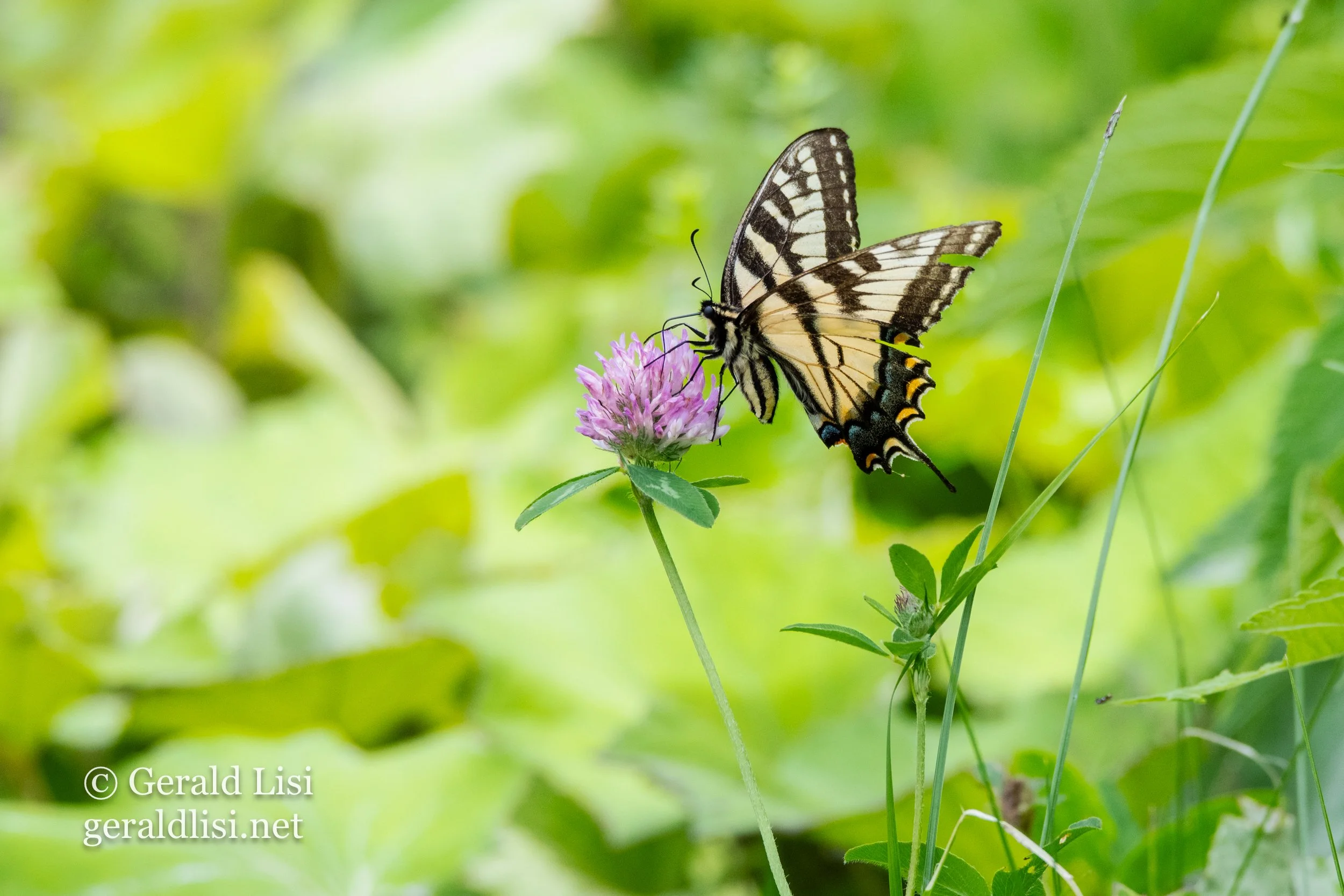
An Eastern Tiger Swallowtail feeds on Red Clover nectar. Too much mowing and mowing too short preventive the tall flower stalks of Red Clover from developing.
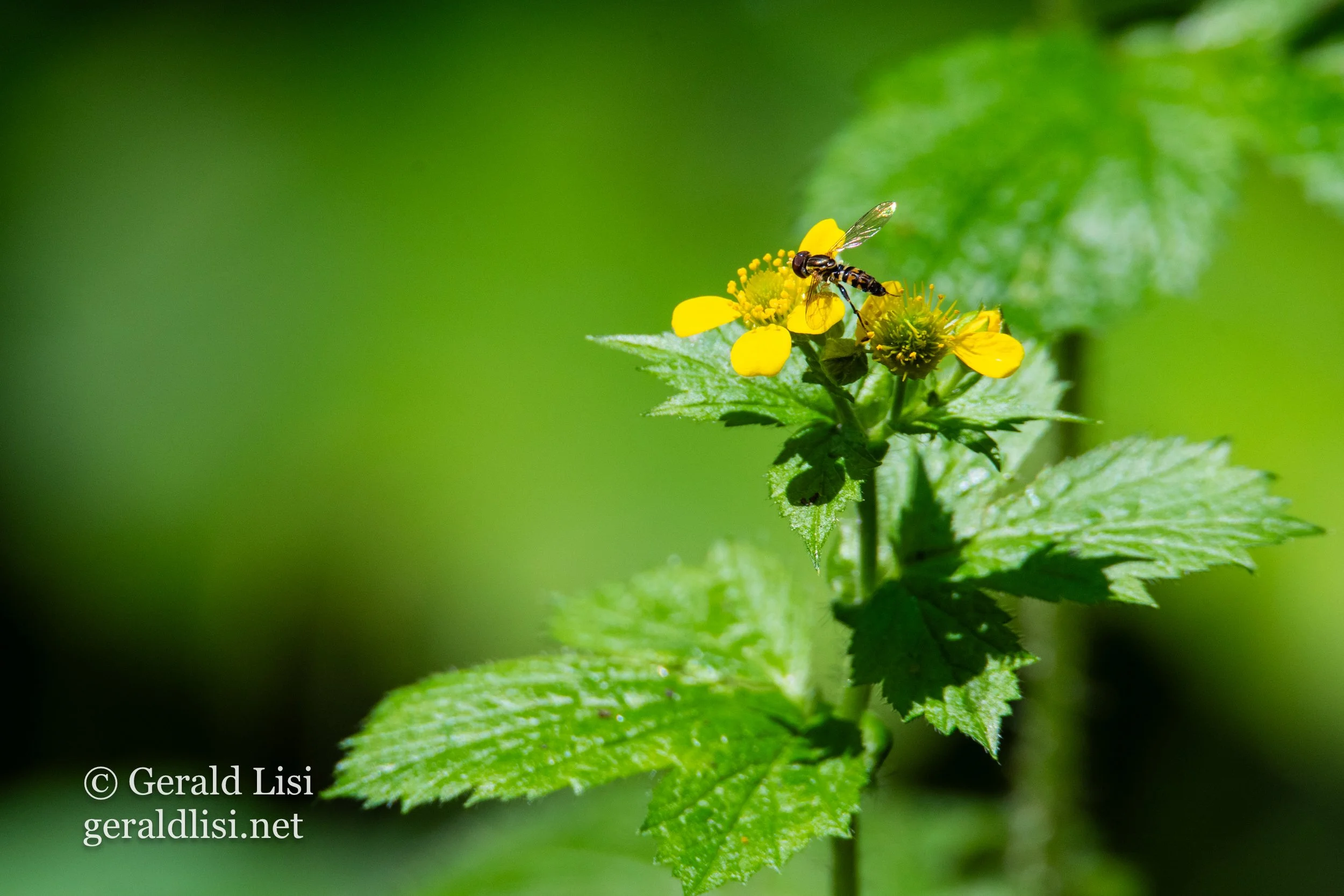
A hoverfly visits a Large-leaved Avens flower. Hoverflies are important pollinators, with over 200 species occurring in the northeastern USA alone. Large-leaved Avens is a native plant found primarily in wet forests, but if one of those abuts your yard it’s not uncommon to find it at that edge.
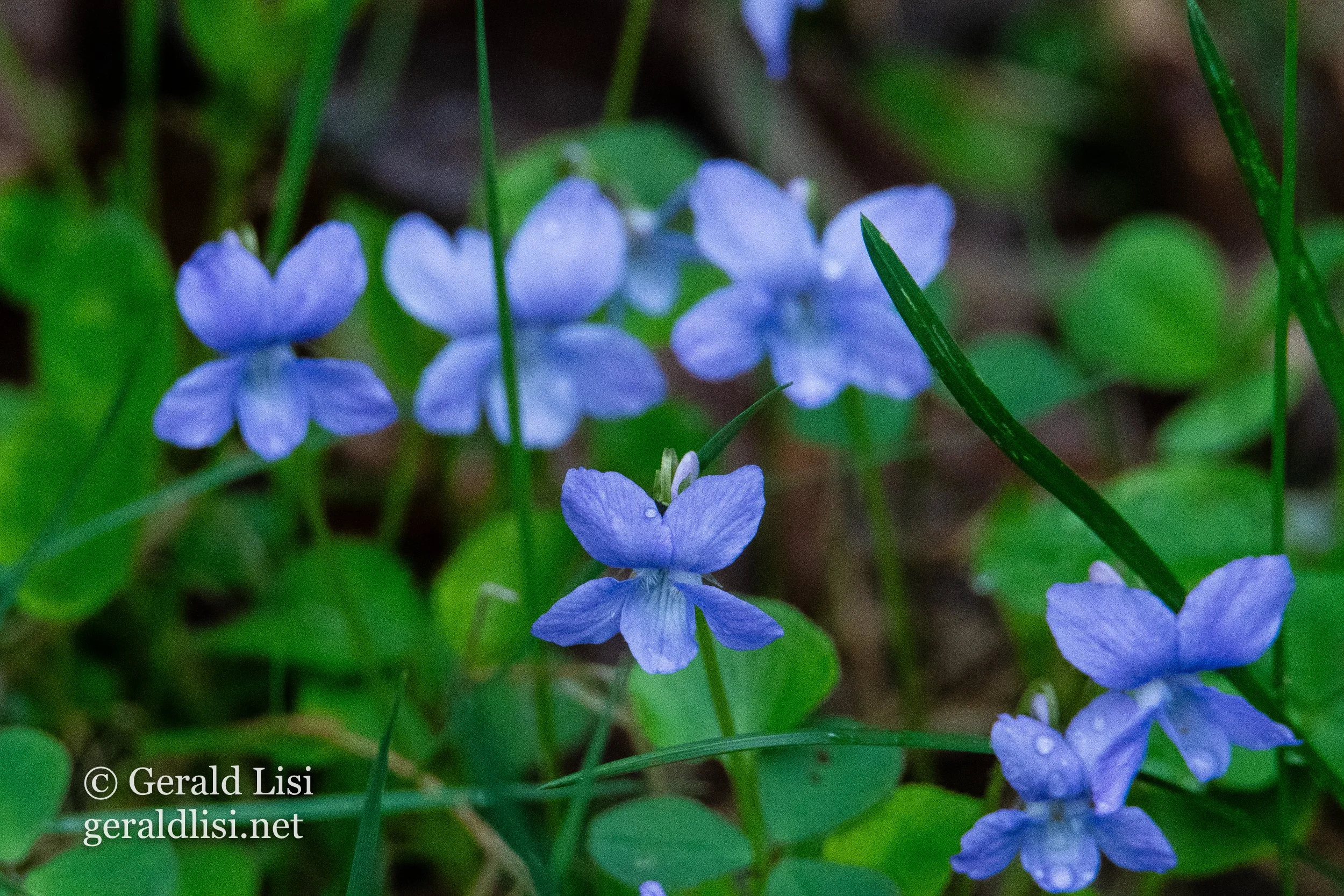
Blue Marsh Violet, I believe. Vermont alone had around ten species of blue violets. Apparently they’re hard to kill, although I can’t imagine why you would want to in the first place. Violets are a nectar source for various native bees and flies, and their leaves are the larval food of thirty species of fritillary butterflies.
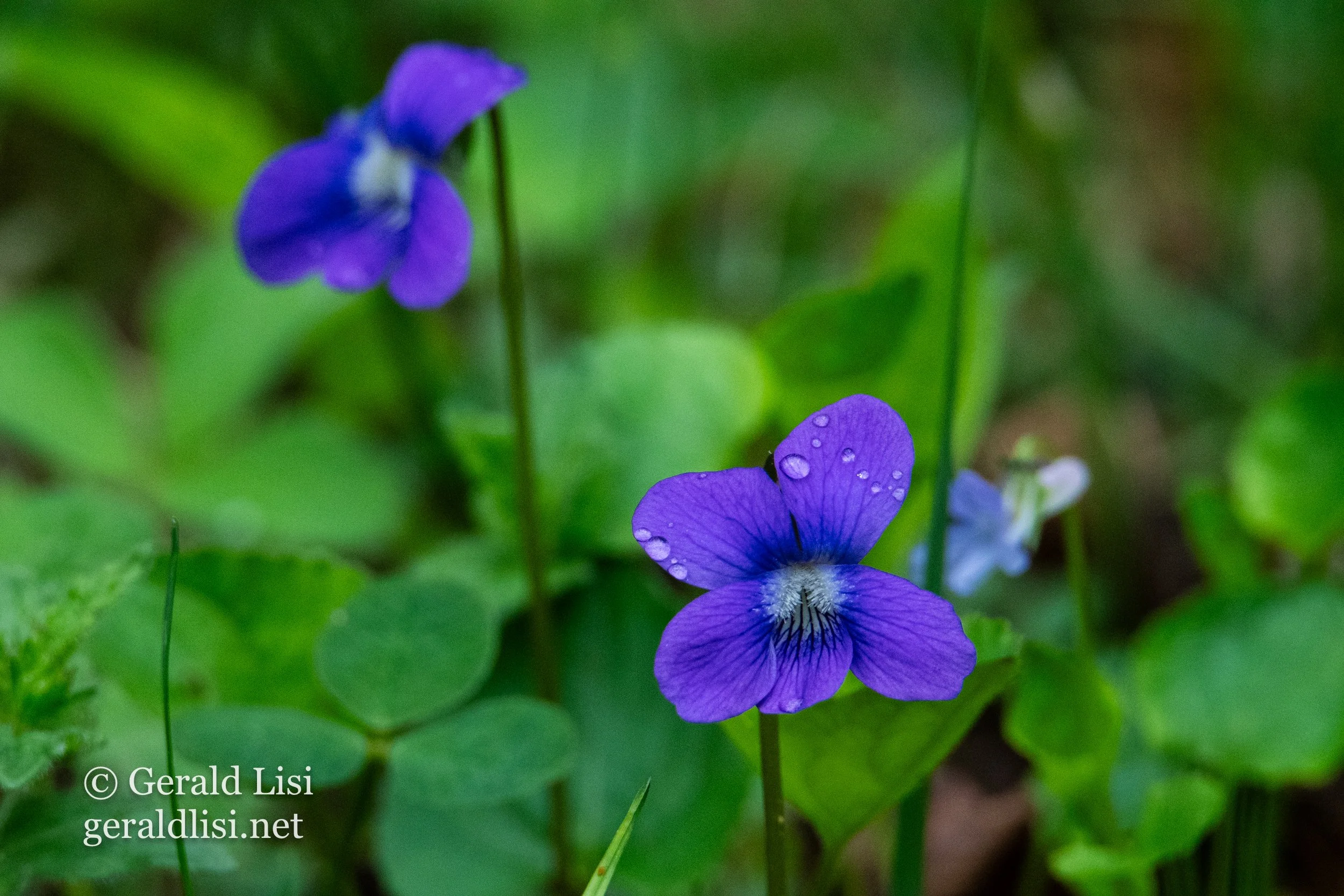
Another wild violet, possibly Le Conte’s.
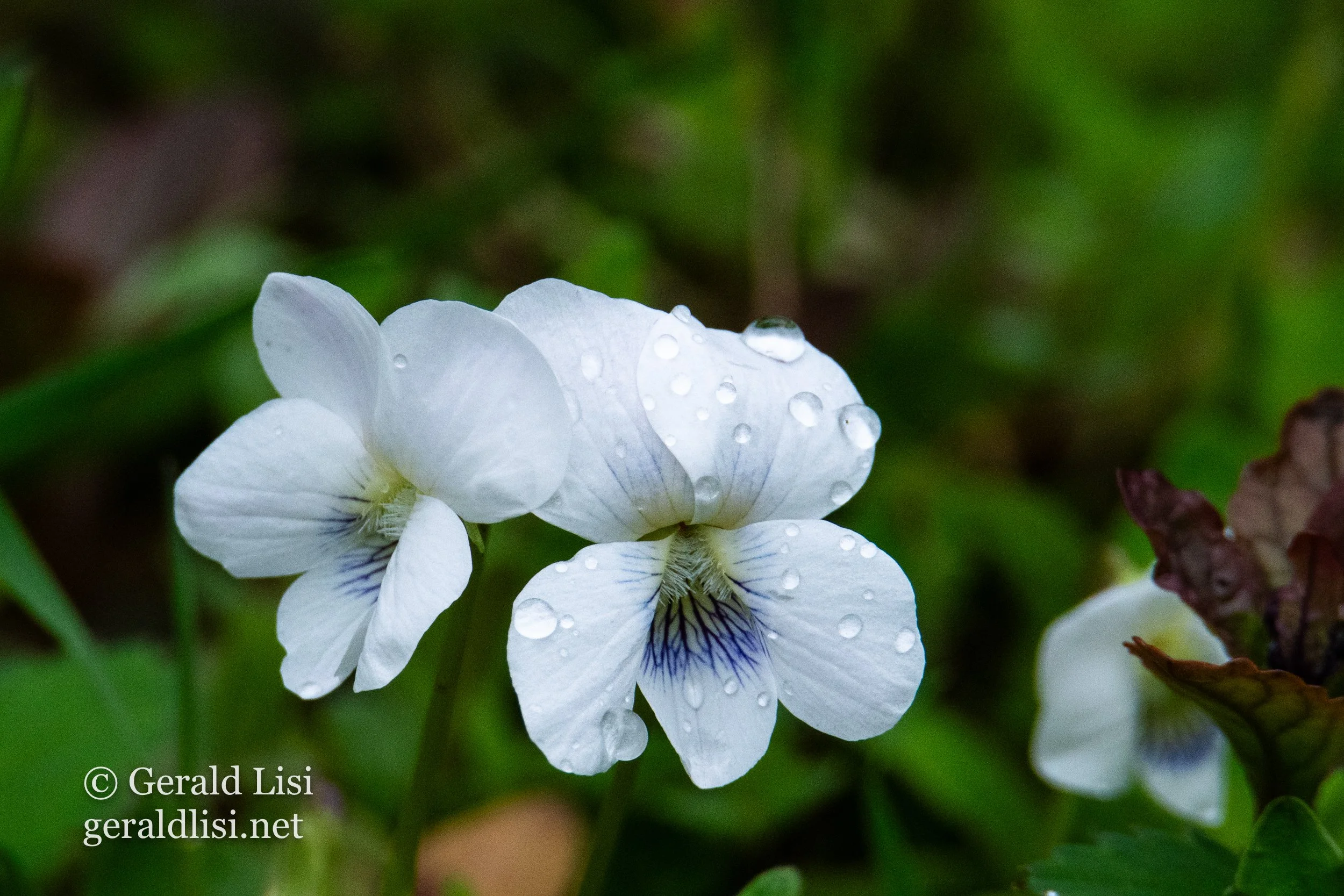
Sweet White Violet, I believe. Vermont is home to at least five species of white violets.
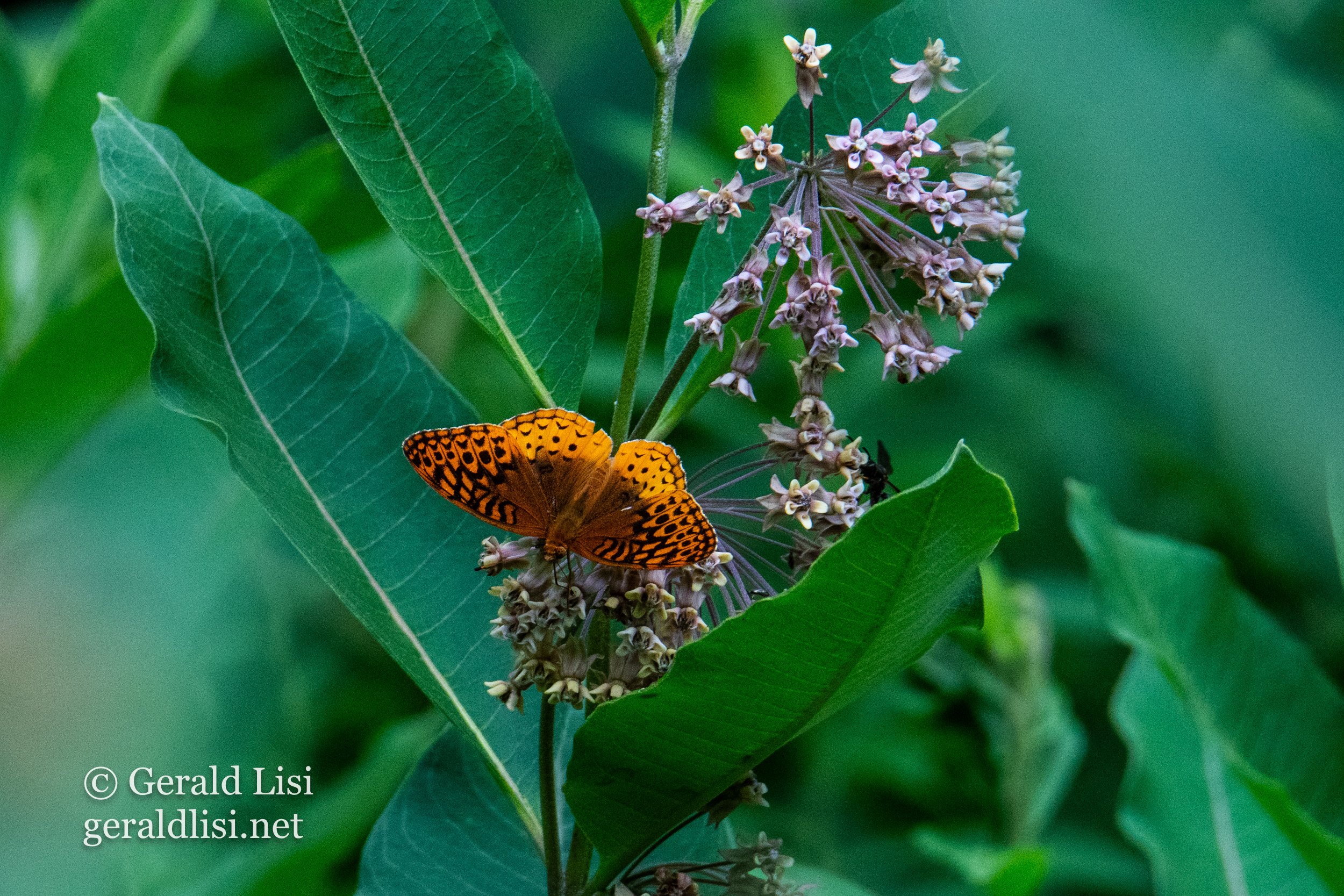
A Great Spangled Fritillary, who metamorphosed from caterpillar to butterfly on the nutrition of violet leaves, drinks the nectar of Common Milkweed flowers. Milkweeds are a vital source of summer nectar for many butterflies and other insects, and are rightly famous as the larval food of the magnificent and endangered Monarch Butterfly. Milkweed and late-summer wildflowers like Goldenrods and Asters aren’t compatible with many mows in a season, but they are essential to northeastern wildflower meadows, which I will cover in a future post.
Thanks for reading folks. I hope you found some beauty, learned a few things, and were inspired to get to know your local flora. If that flora is in Vermont or hereabouts I am available to help you with that journey. Take care of yourselves, of each other, and of the land you live on.
Gerald Lisi of Wild Niche
802-798-9813