August ‘26
With August just behind us it is late summer here in central Vermont. Many changes will occur as we move toward autumn (and the season not to be named at this time). But for now I’ll share a look back at the photographic highlights of my naturalist wanderings this August. Although I spend much less time trying to photograph birds than I did in past years I’m glad to report that some such efforts in August were fruitful. Along with the birds, who I so adore, I am honor-bound and pleased to share some favorite native plants with you. I am also happy to put a spotlight on a tiny sampling of the huge biological class of animals that is the insects.
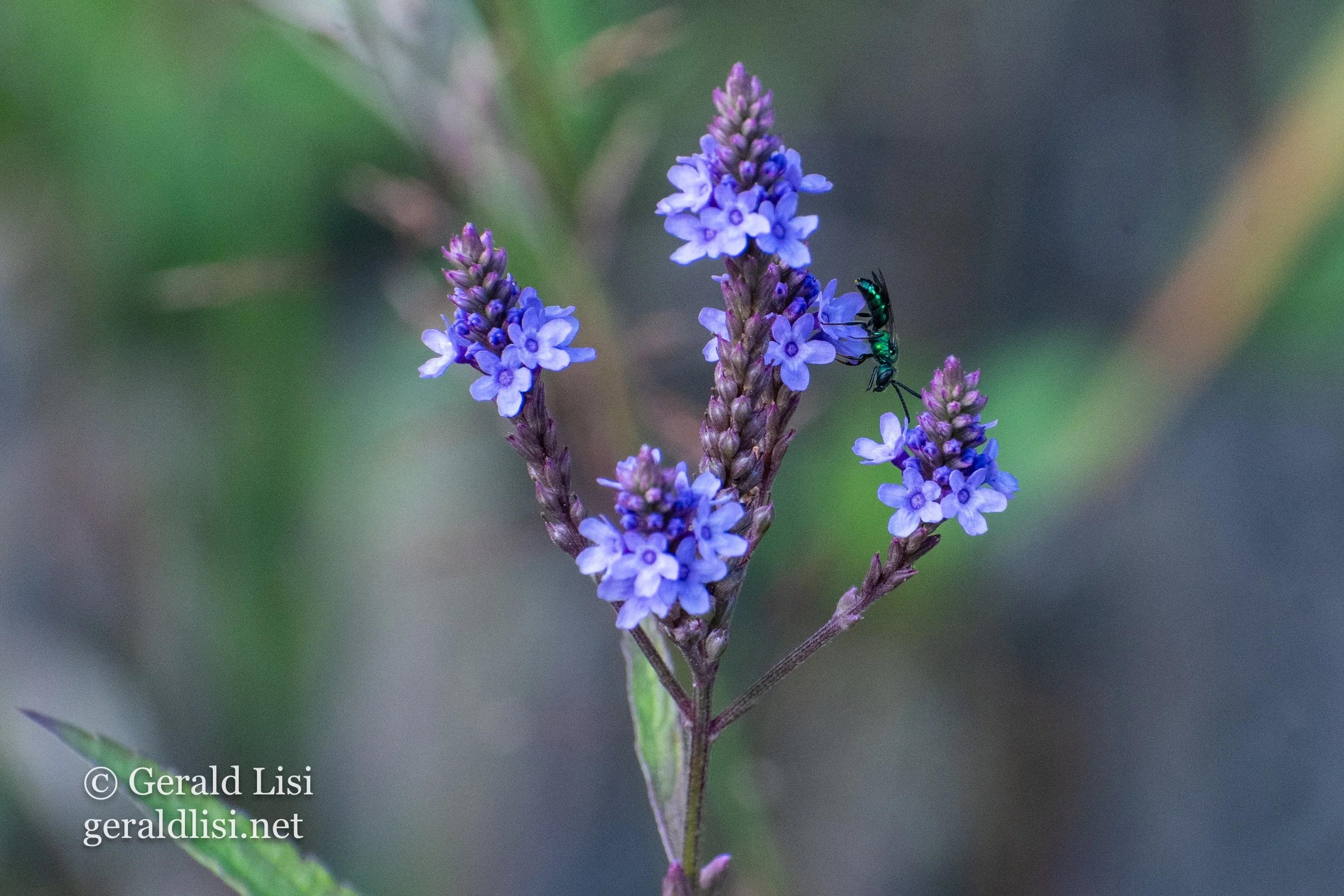
Striped Sweat Bee, Agapostemon species, on Blue Vervain, Verbena hastata.
If "the bees" means honeybees to you then you're really missing out. There are 352 wild bee species in Vermont alone, four of which are Agapostemon species.
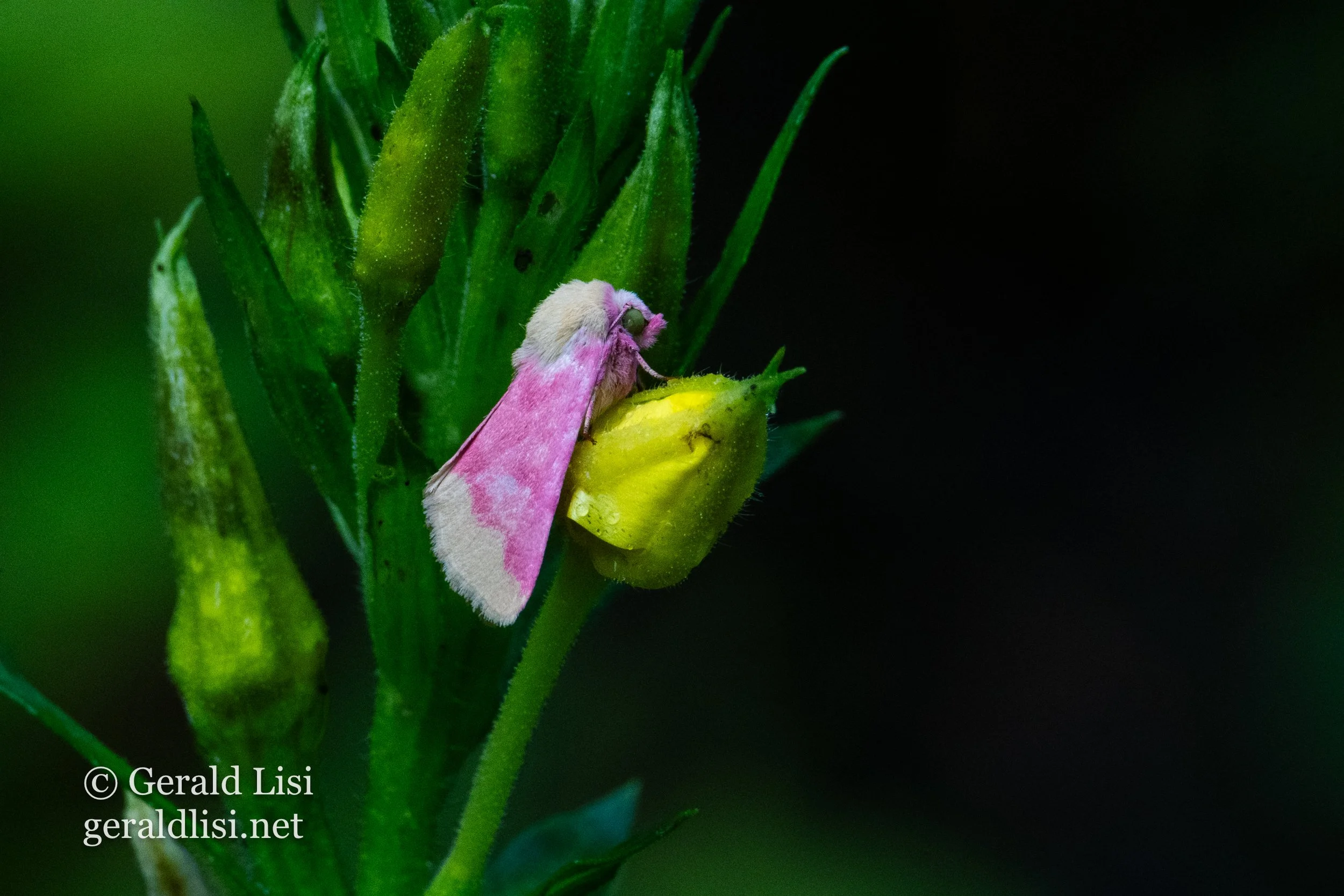
Primrose Moth, Schinia florida, on Common Evening Primrose, Oenothera biennis.
Primrose Moths were new to me in mid July, when I found one on a clients' property. Shortly thereafter I found one during a walk-through with other clients. As fun as this was for me and them, I was a little disappointed that none of the Evening Primrose at my place had them. I kept checking though and a few days later three showed up. One is pictured here. Evening Primrose is the larval host plant for these pink moths, and sixteen other species of moths and butterflies in Vermont. Evening Primrose is famously pollinated by moths from dusk through dawn as well. Primrose Moths are one of their pollinators, as are the awesome Sphinx Moths and Hawk Moths.
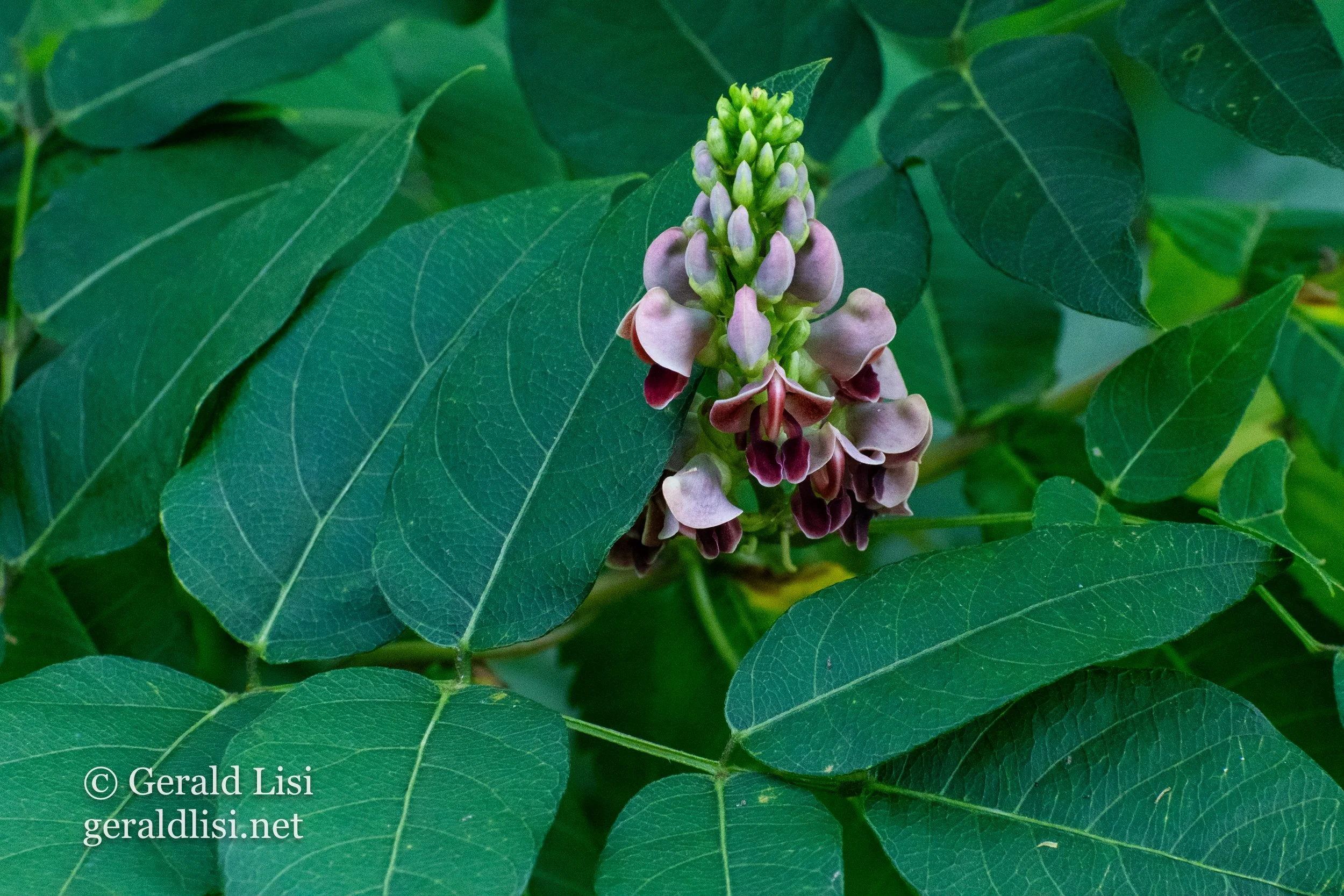
American Groundnut, Apios americana. This leguminous vine is named for the edible tubers it produces. It also makes edible beans. I haven’t harvested or sampled either, but this has been a favorite native plant since I first saw it. Just look at those exquisite flowers.
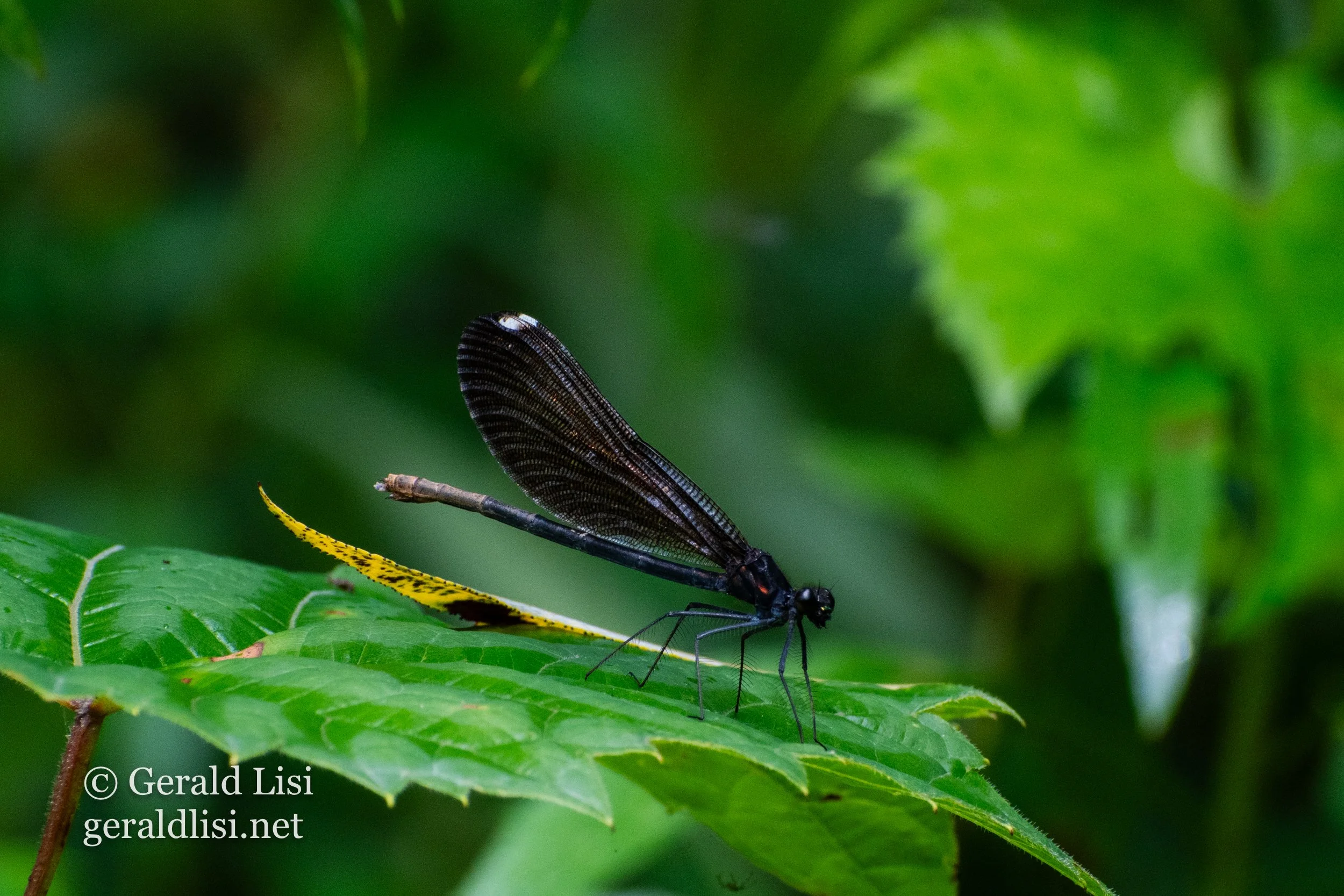
Female Ebony Jewelwing, Calopteryx maculata, on River Grape, Vitis riparia. Jewelwings are broad-winged damselflies who feed on Tiger Mosquitos and many other insects. They in turn are eaten by many birds, reptiles and fish.
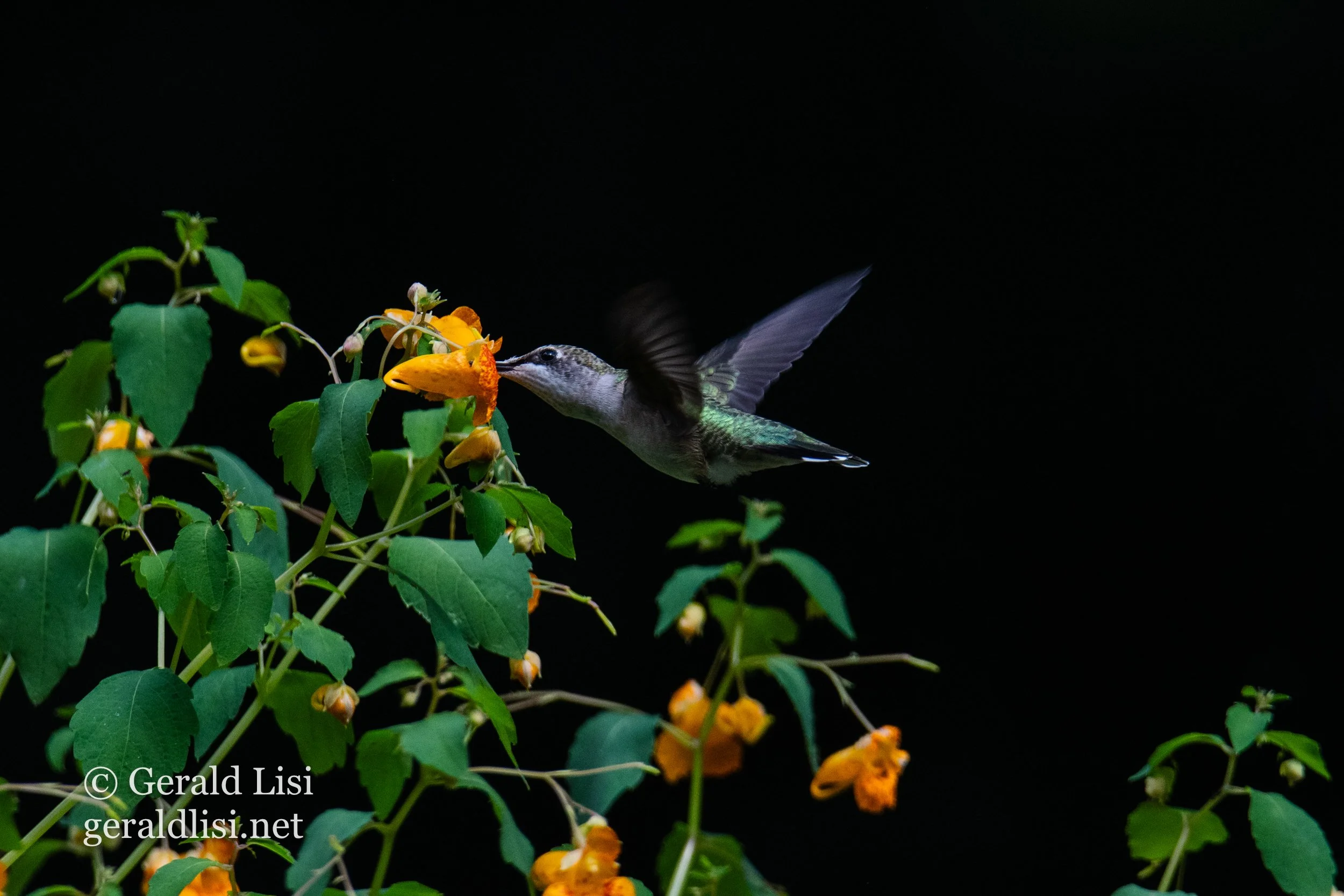
Ruby-throated Hummingbird, Archilochus colubris, drinking the nectar of Orange Jewelweed, Impatiens capensis. Jewelweed is an annual of moist woodlands. Judging by the frequent visits for several weeks by bumblebees and hummingbirds is a prodigious nectar producer. I covered some hummingbird biology in my last post, including their pollination of species of plants with which they coevolved. https://www.geraldlisi.net/blog/2026/7/31/july-26
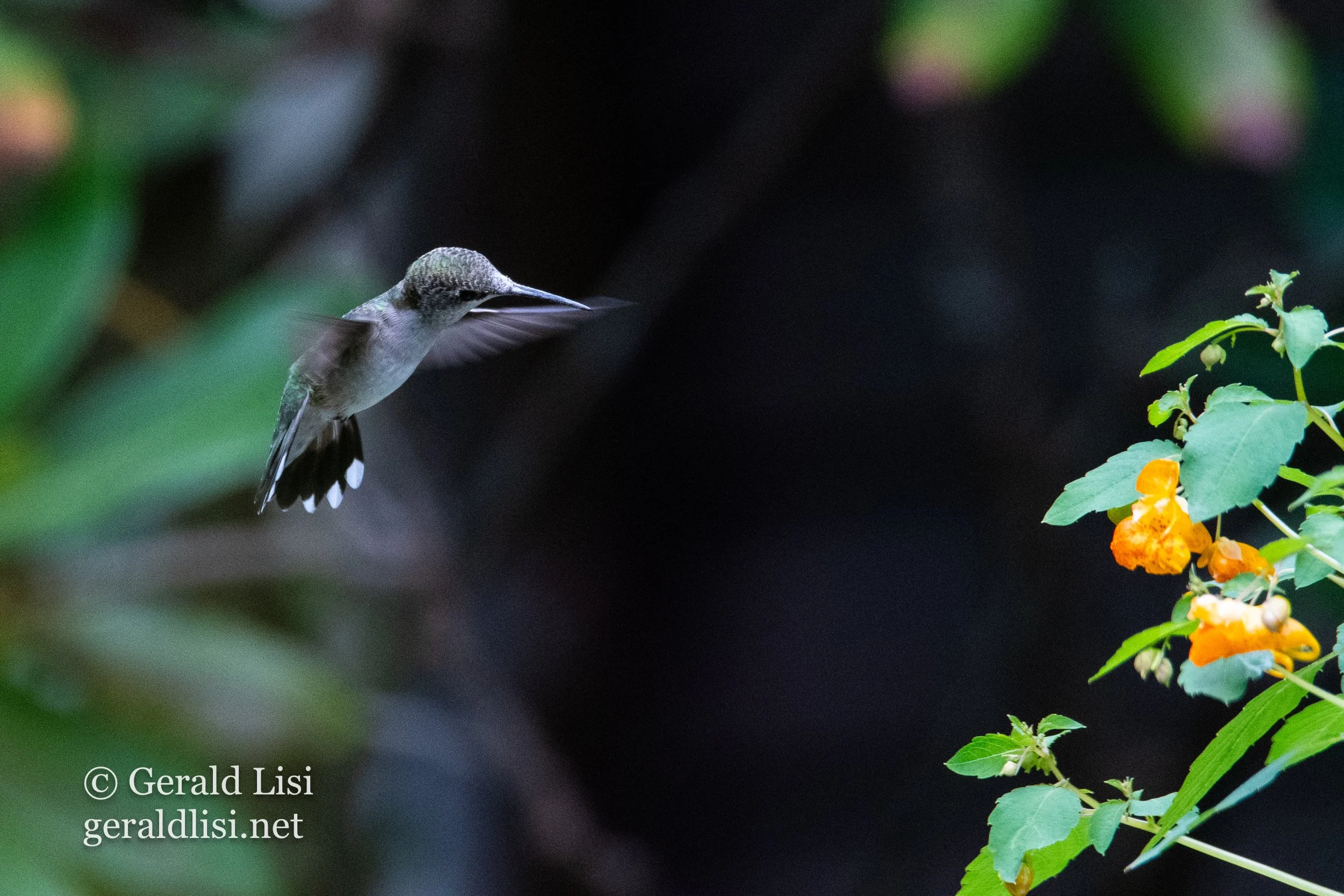
The white pollen of Jewelweed can be seen on the feathers at the base of this hummingbird’s bill.
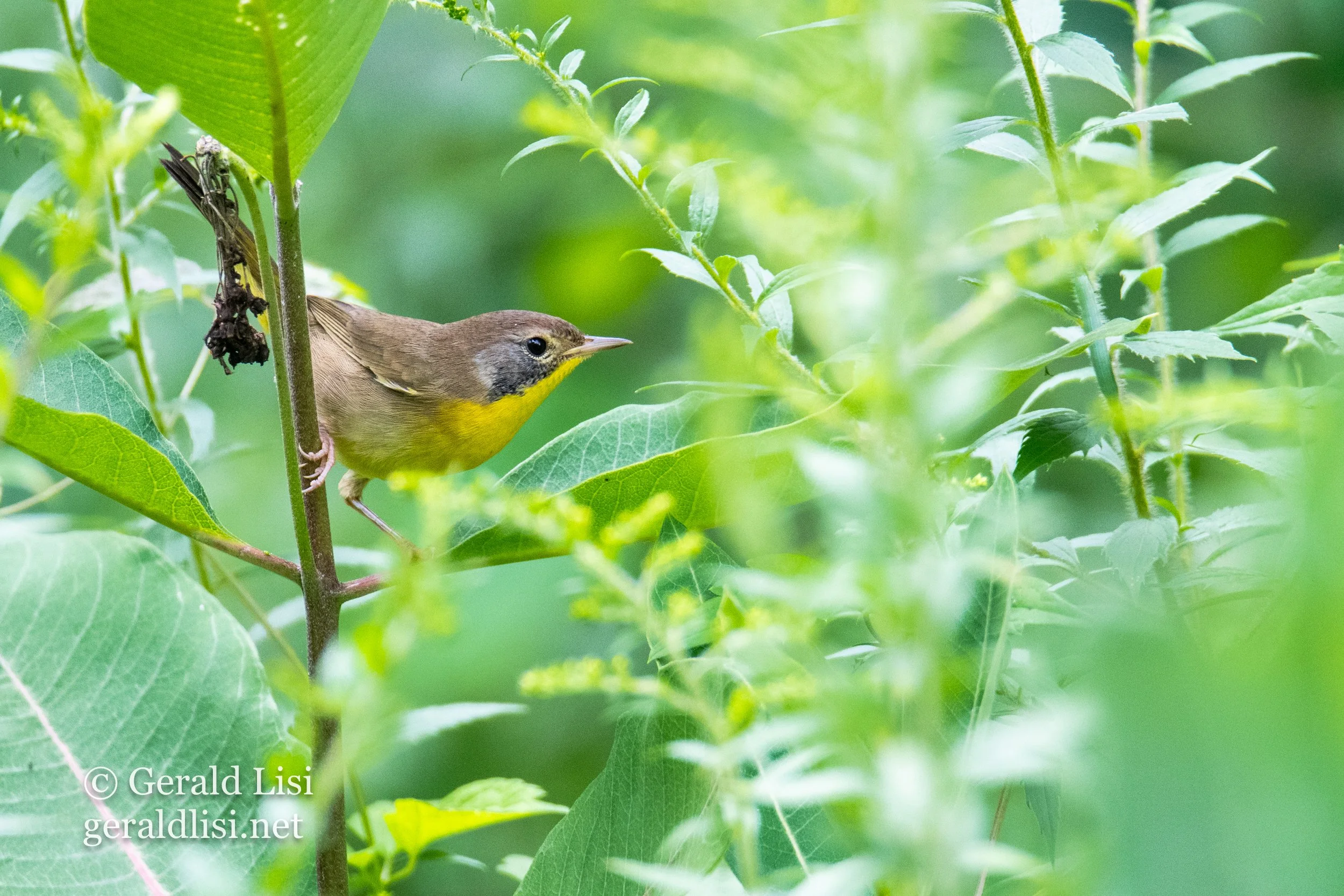
A first-year male Common Yellowthroat, Geothlypis trichas, searches a meadow of Milkweed and Goldenrod for insects and spiders. He was born here just a few months ago. Like his parents he will return to Central America or the West Indies for the winter. Then he’ll be back here in spring, with a full black mask having his first go at making and raising chicks of his own.
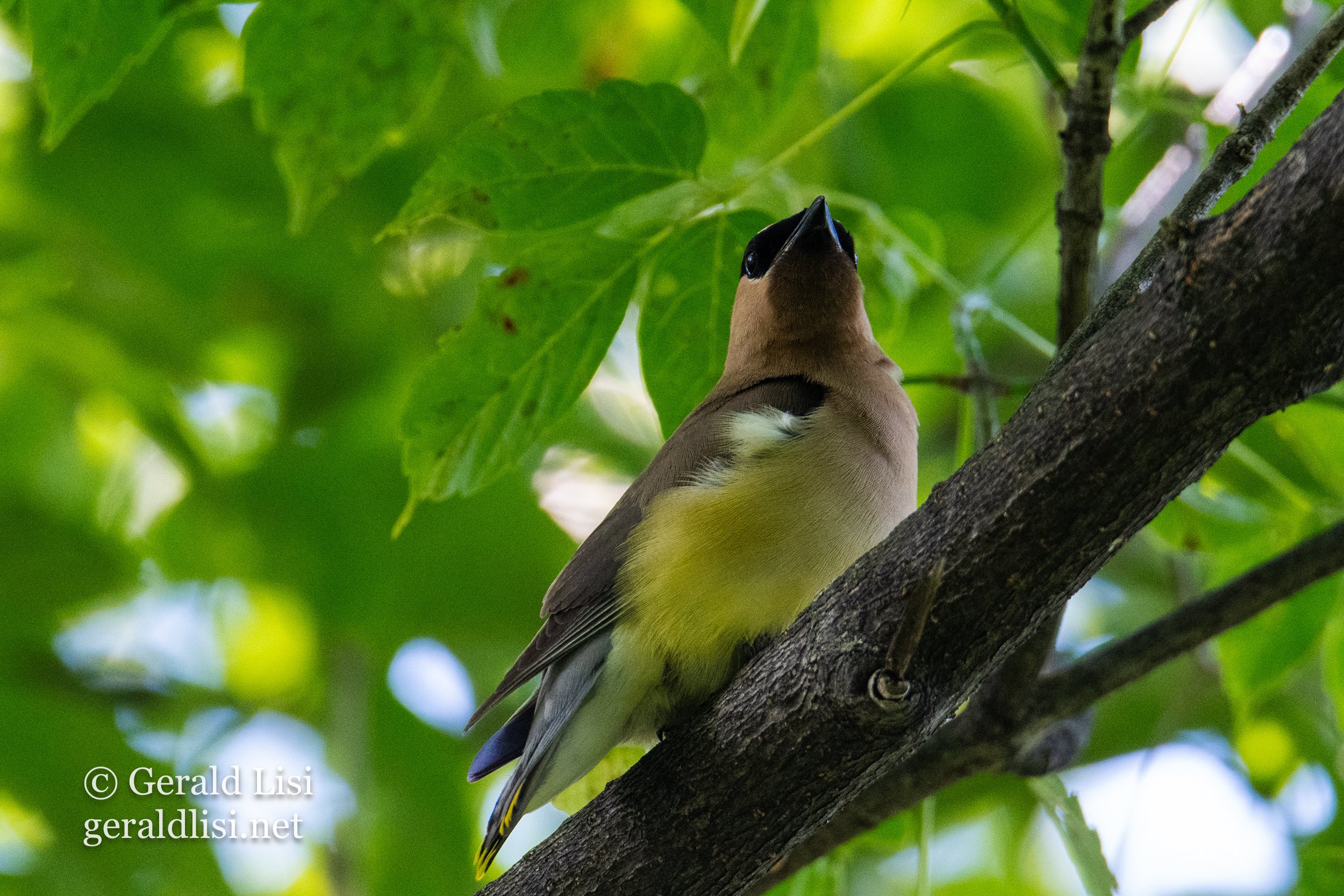
Speaking of black masks, this young Cedar Waxwing, Bombycilla cedrorum, already has his or hers. But, the lack of red waxy tips on his secondary wing feathers reveal him as a bird in their first summer.
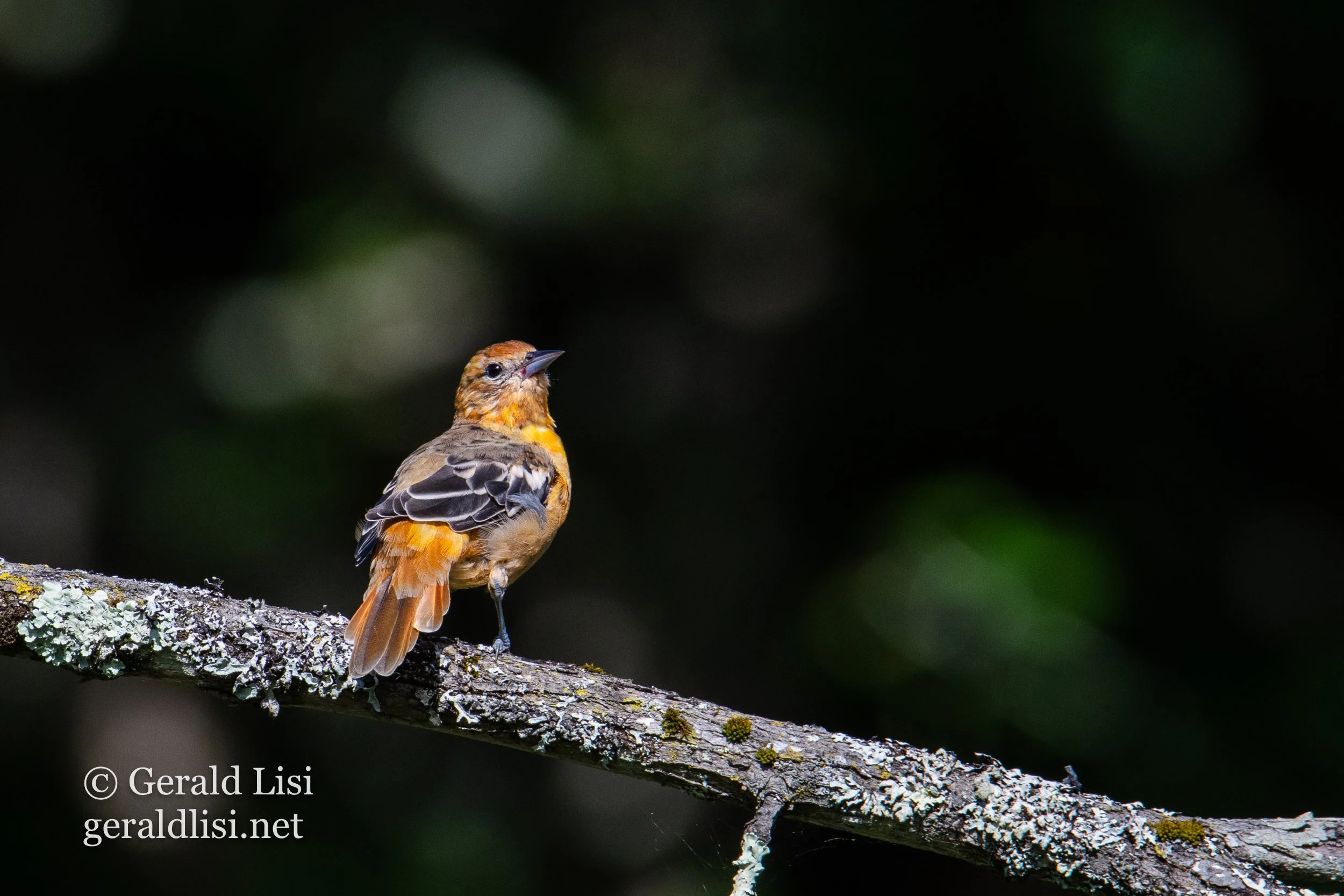
A female Baltimore Oriole, Icterus galbula, briefly watches me watch her before returning to her birdy business (most likely hunting insects).
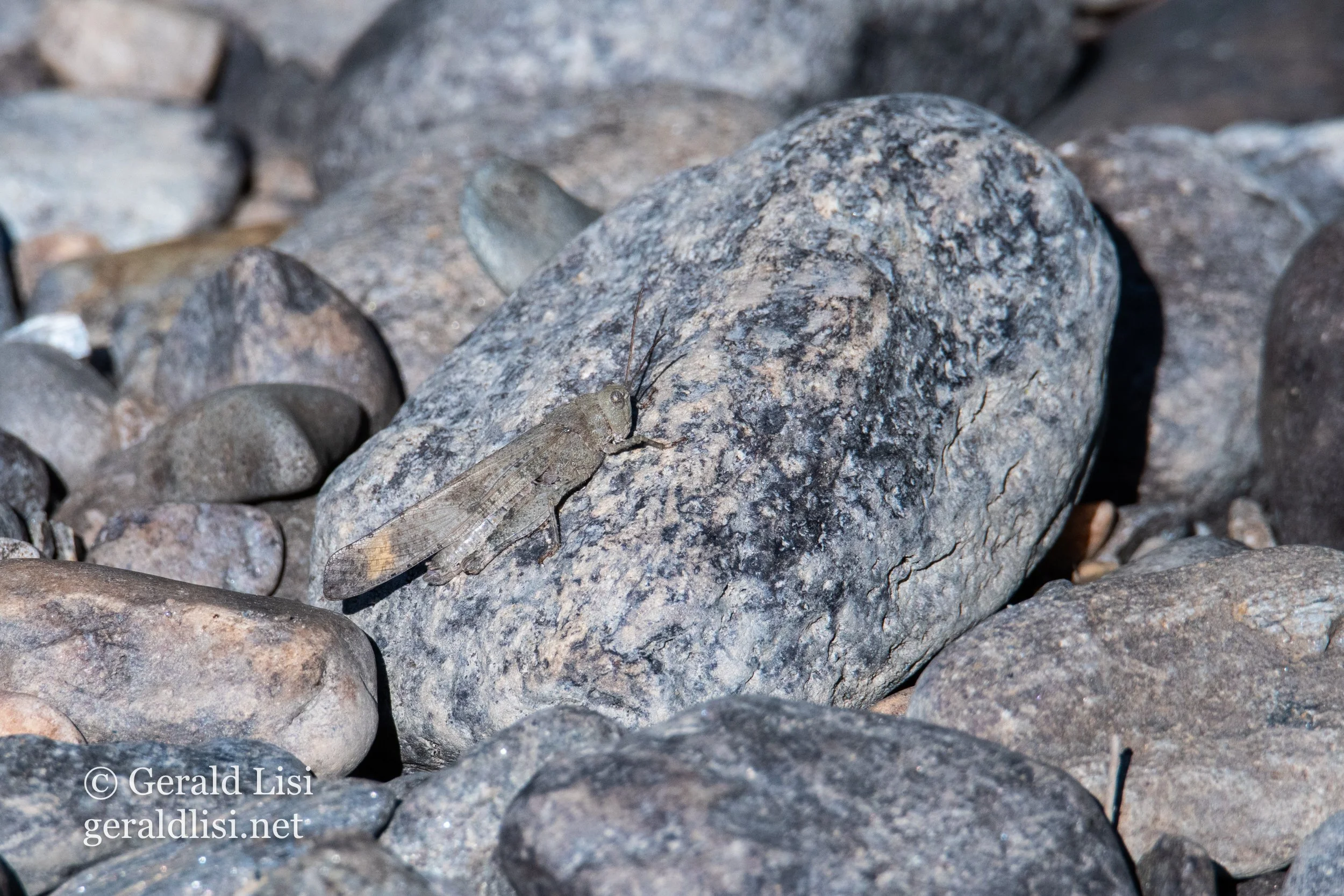
Band-winged Grasshoppers, subfamily Oedipondinae, are conspicuous during their short flights because of their bright hindwings. But, when they land their forewings, which are camouflaged like the rest of their body cover their hindwings.
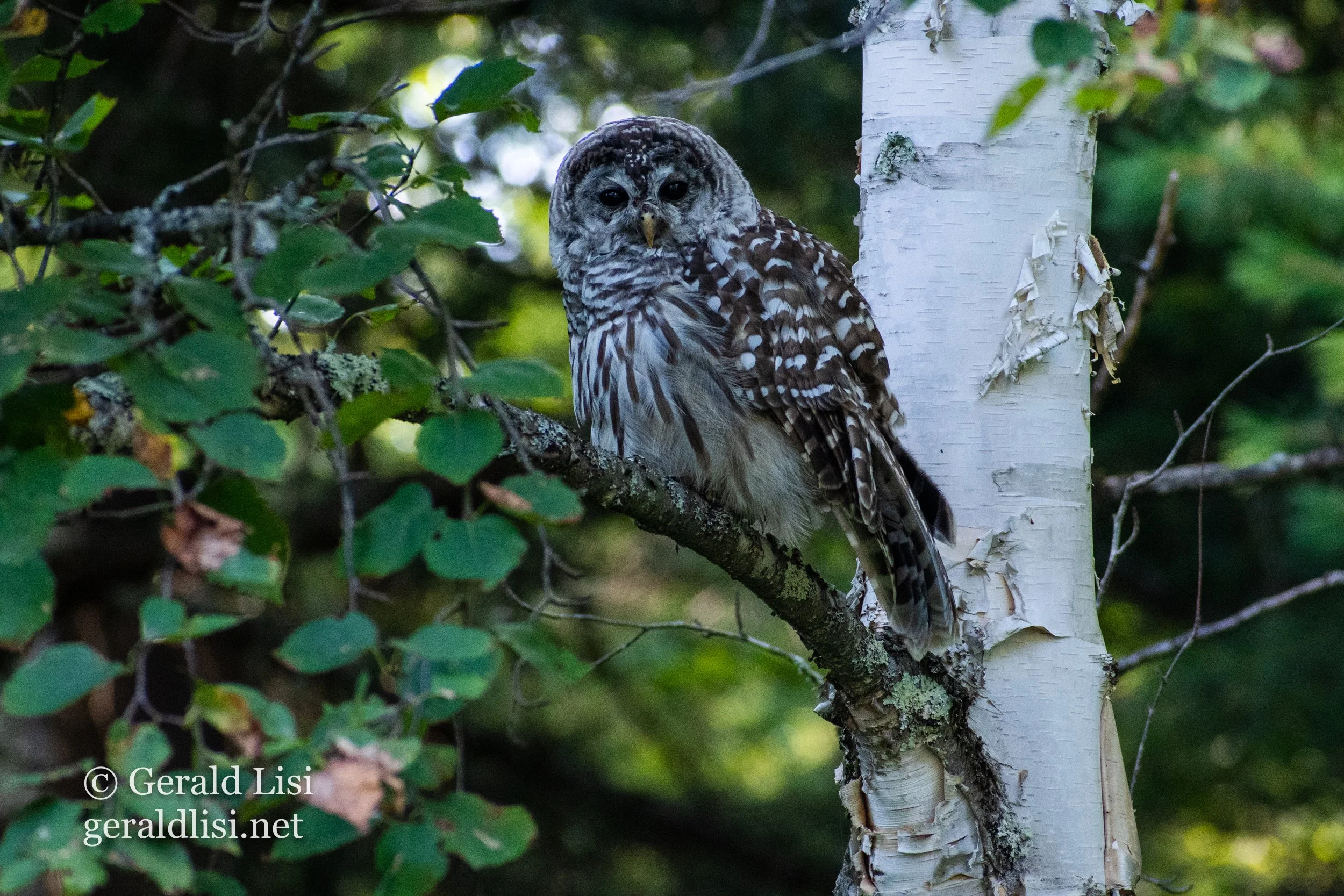
Barred Owl, Strix varia, in Paper BIrch, Betula papyrifera. While they are mostly nocturnal it is not uncommon to see Barred Owls hunt during the day. I have seen and photographed this species much more than any other owls, but this Paper Birch easily made for my favorites of my Barred Owl photos.
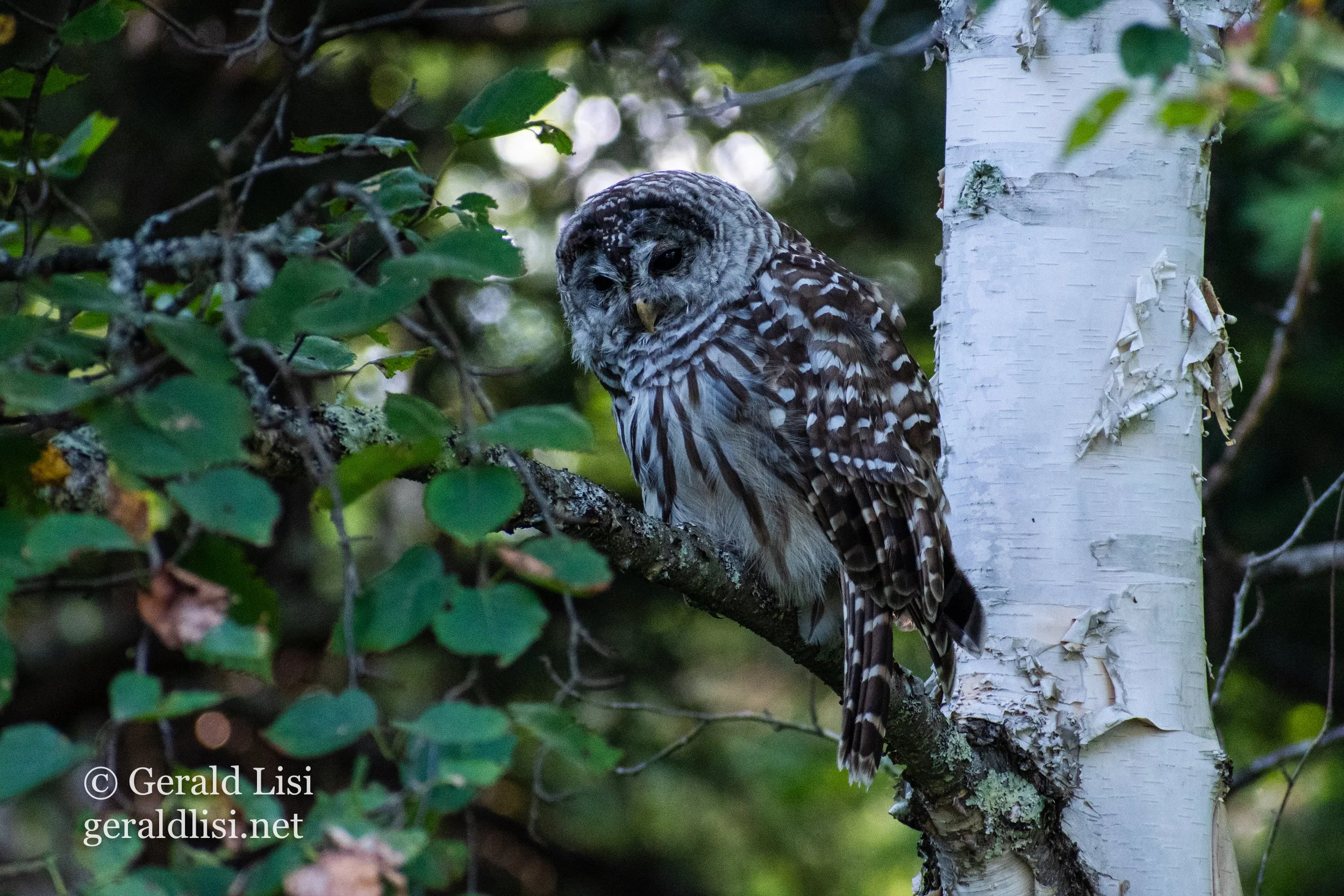
Searching the ground, where she can hear the tiniest footsteps.
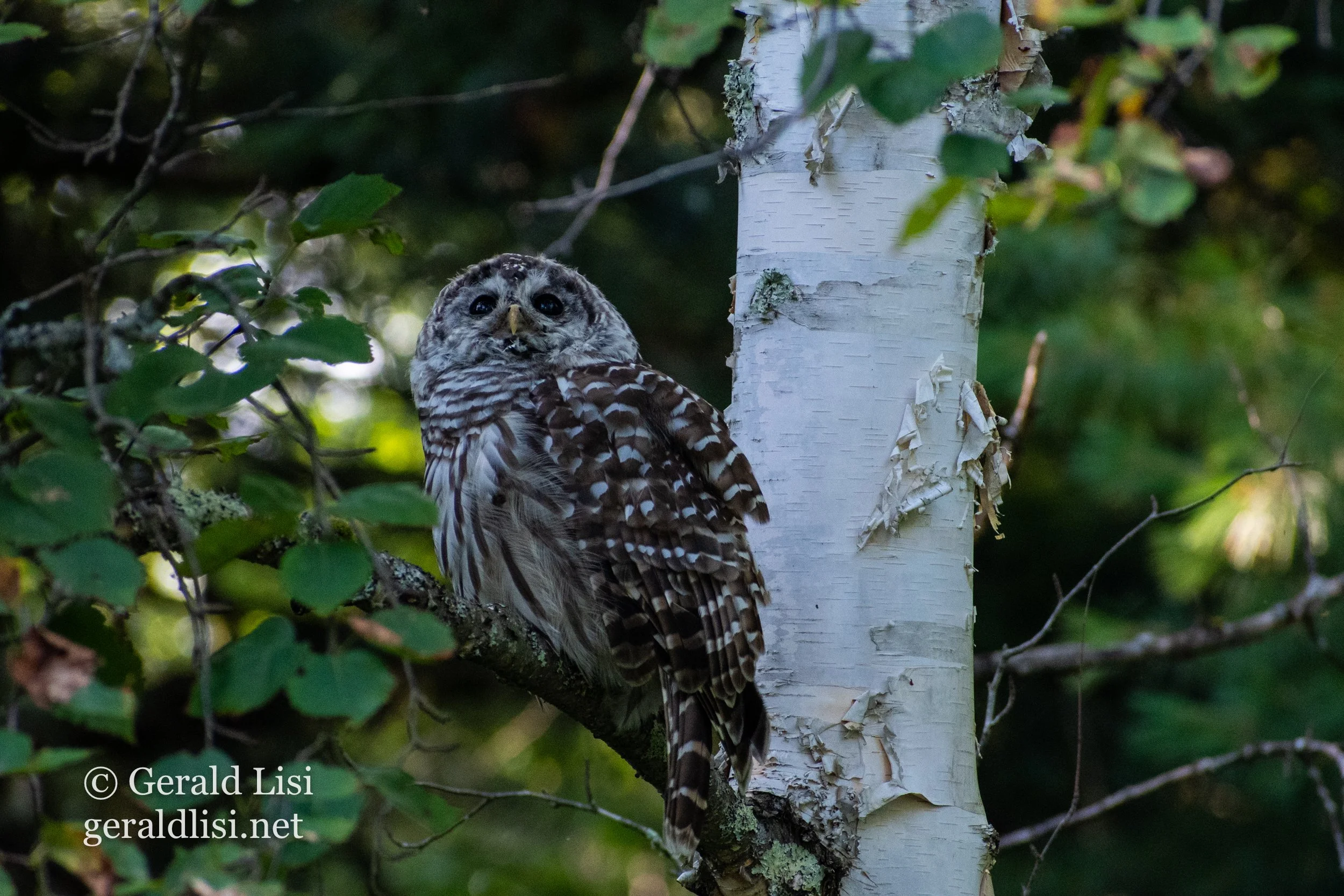
Here the calls of Tufted Titmice have grabbed her attention. If they spot her their loud alarm calls will ruin her hunting prospects. Shortly after this she flew into deeper cover.
That’s all for now, folks. I hope you found some inspiration here, as I did in the moments that I captured with these photographs. The fate of wildlife, including wild plants, is in our hands. If everyone who cares about them helps to preserve and restore their habitats we can save thousands of species from extinction, and prevent ecosystem collapse in the process.