September in Vermont, New Hampshire and Maine
September is one of my favorite months. The hottest days of summer have past, the sunshine is tempered with crisp air, and the cool nights are perfect for sleeping. The year’s last round of wildflowers includes some of the finest, and by the end of the month New England’s legendary fall foliage is nearing its crescendo. Birds seem particularly busy in September. Migrants are preparing for and embarking upon their southward journeys. Meanwhile year-round residents are reaping the plenty of the land before the onset of the lean months ahead. This September I watched Belted Kingfishers and Great Blue Herons hunt on Turtlehead Pond in Marshfield, Vermont and Casco Bay by Portland, Maine. I spent some time with Bald Eagles and Beavers while paddling the Waterbury Reservoir less than two miles from my home, and I sampled the beginning of the leaf changes in the White Mountains of New Hampshire. Scroll on to see the evidence.
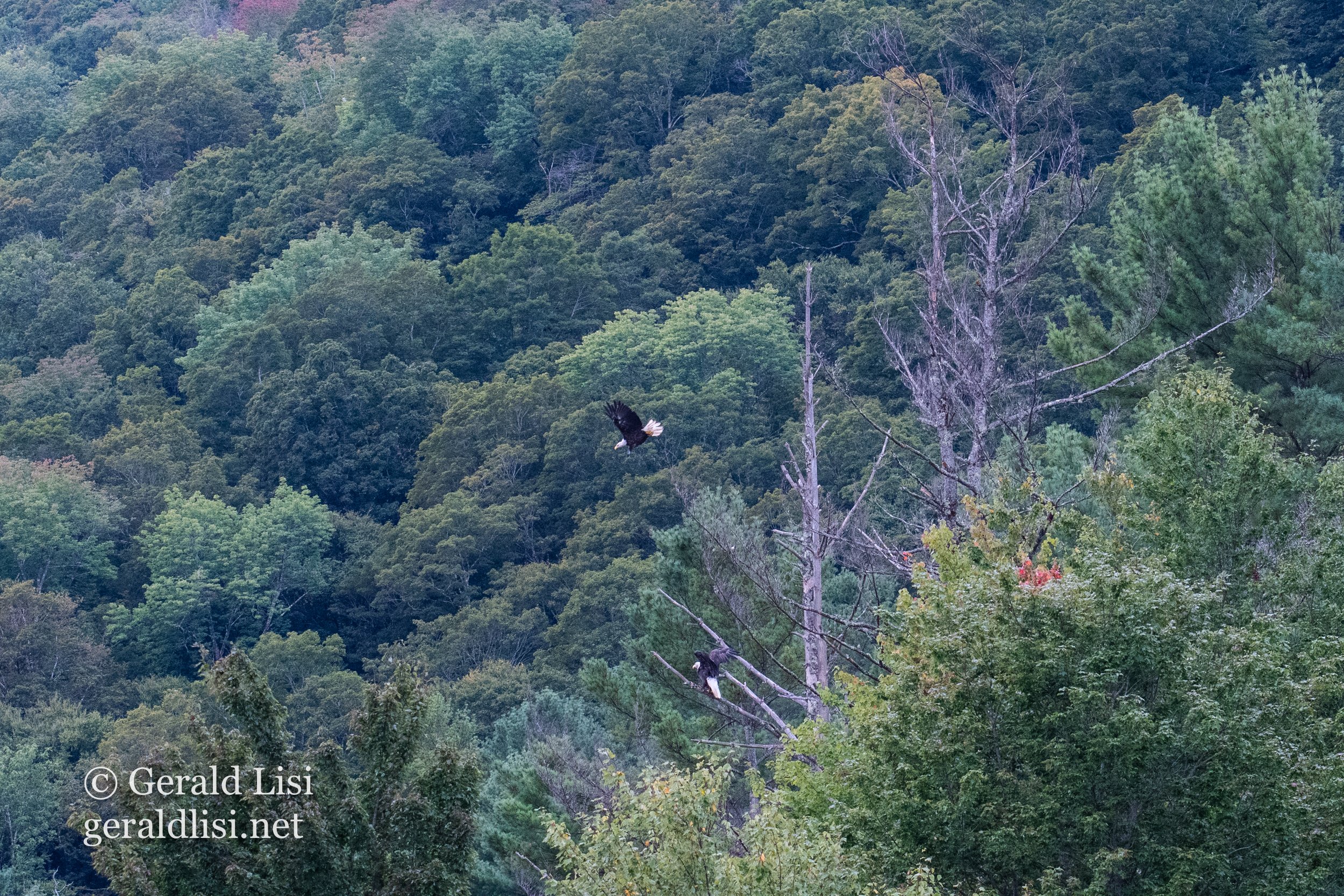
We begin with my paddle on the Waterbury Reservoir. I didn’t have much luck photographing either of the adult Bald Eagles of this mated pair at close range, but I did briefly catch them together in this one shot. Growing up in Vermont in the eighties there were no Bald Eagles to see. Living in the Seattle area from 1998 to 2024 I had the privilege of seeing them regularly. During that time they returned to Vermont, and many other places. This was thanks to Rachel Carson’s ‘Silent Spring’ and the subsequent banning of DDT in the ‘60’s , and to the passing of the Endangered Species Act in ‘73. Although Bald Eagles were just one of the neighborhood birds in Seattle I don’t take my occasional encounters with them in Vermont for granted.
Bald Eagle, Haliaeetus leucocephalus
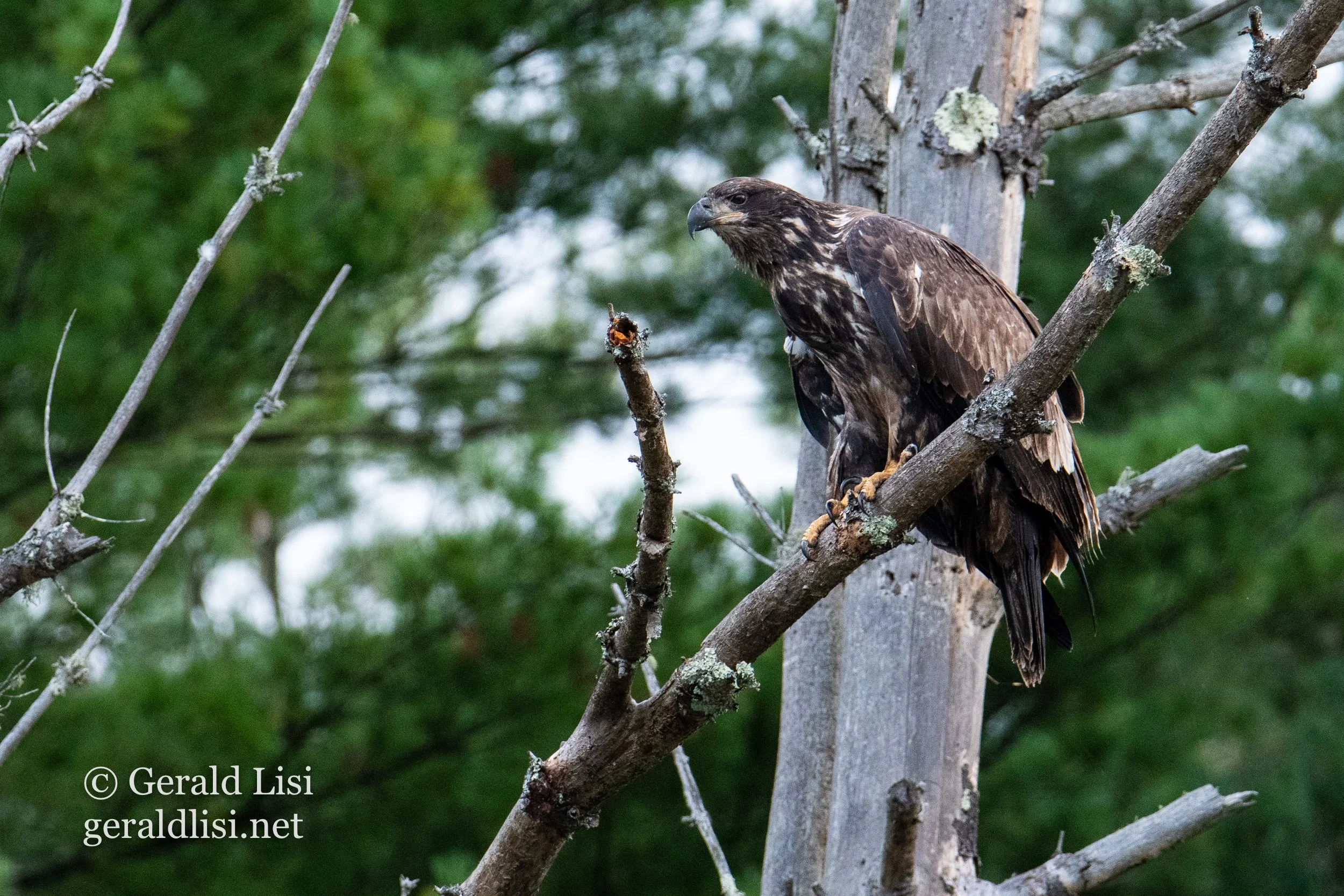
This juvenile eagle is most likely the progeny of the pair in the previous picture, based on his or her presence in the same area and vocal exchanges with them. Bald Eagles don’t grow adult plumage until their third or fourth year.
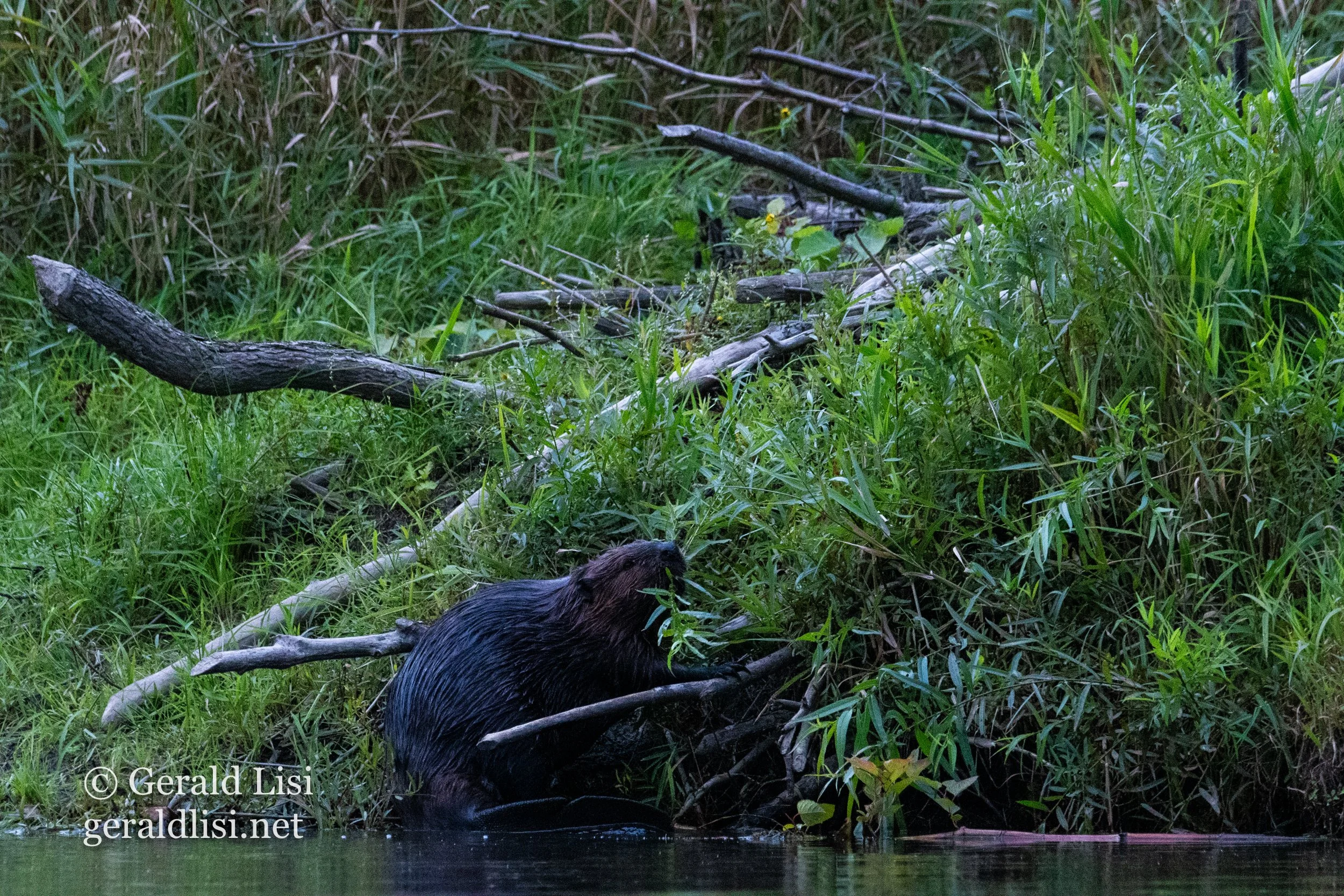
The late-afternoon paddle that led to the eagle encounters above had me returning to my launch site at dusk, which afforded me a few beaver encounters. This was the first, and I was glad when the head peaking out of the water led its body to the side of this beaver lodge to munch on some willow twigs. North American Beavers are another conservation/restoration success story. They were extirpated across much of their ancestral range by the 18th and 19th century fur trade. Thankfully beavers were reintroduced to much of their range in the 20th century, including in Vermont (from New York and Maine populations) in the early 1900’s. While such efforts have been successful at returning this keystone species to parts of its ancestral range the current population across North America is 10 percent of its pre-colonial level at best. The profound ecological benefits of beavers is now well documented, and common knowledge in many circles. But like every other species oppressed by human hegemony they need more advocates. If you’re not familiar with the ecology of North America’s largest rodent the PBS Nature episode ‘Leave it to Beavers’ is a great place to start.
North American Beaver, Castor canadensis
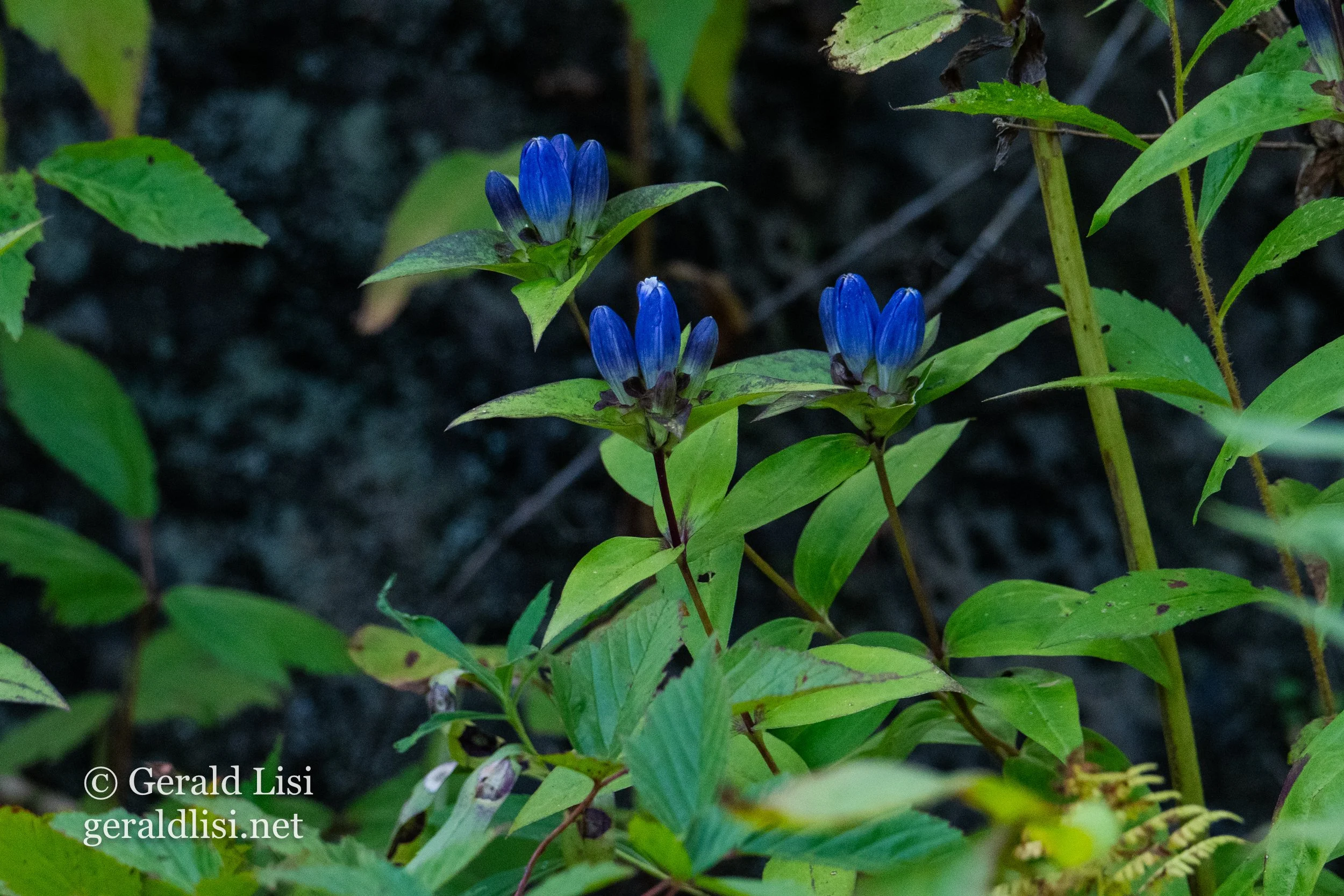
I have found several populations of Bottle Gentian this year that I was previously unaware of. I celebrate every one of them. This was a favorite of my Mom’s, and I am similarly enamored with the blue of these blossoms. Apparently bumblebee species are the only pollinators strong enough to pry open these petals to access the nectar and pollen inside. I have yet to see this spectacle, but I watch for it at my local patches every September.
Bottle Gentian, Gentiana clausa
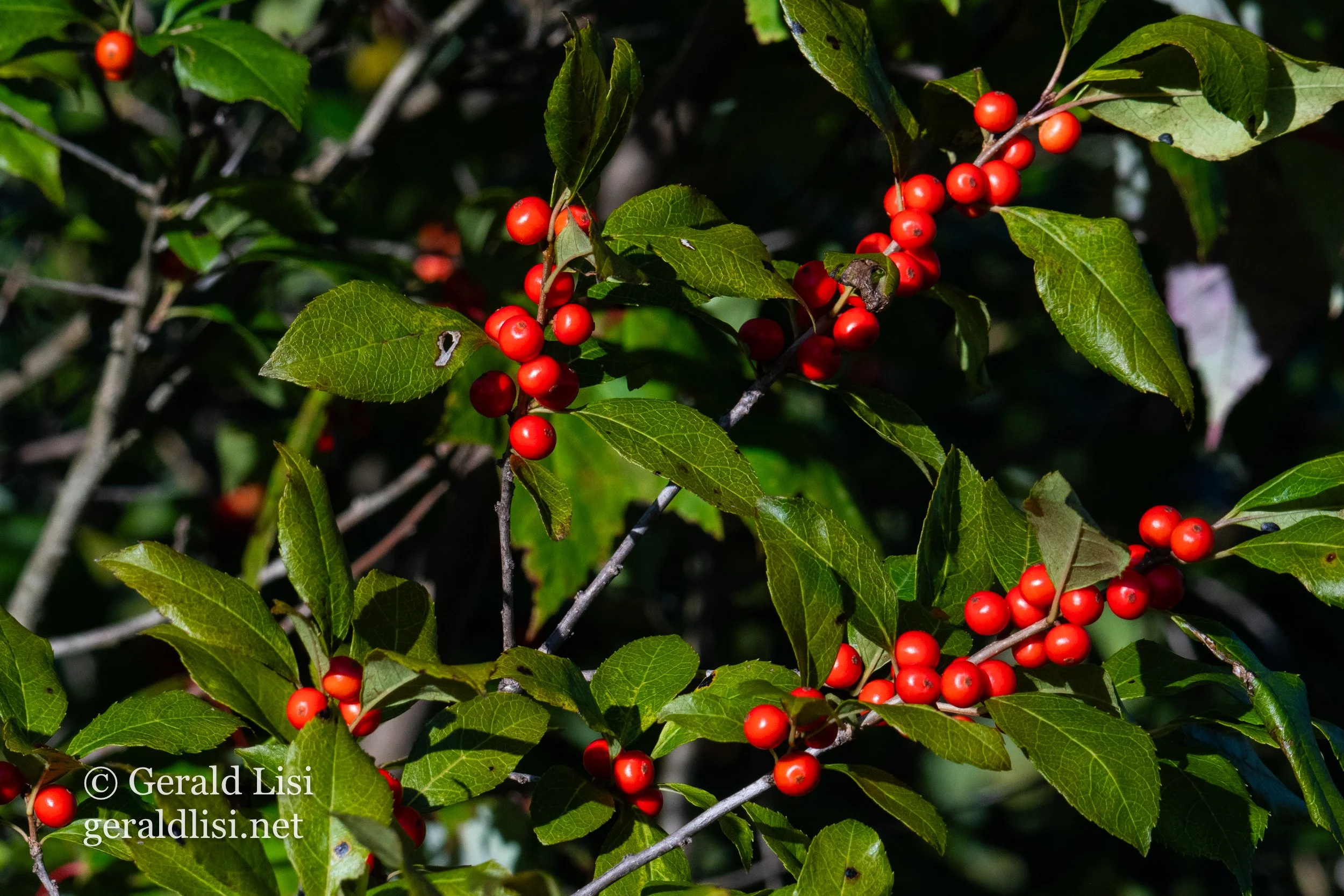
After the leaves of this northeast-native deciduous holly drop the remaining berries will demonstrate the name, ‘Winterberry”. Birds will eat them long before the winter has passed, and subsequently spread their seeds. Winterberry hosts the caterpillars of 33 species of moths and butterflies in Vermont.
Winterberry, Ilex verticillata
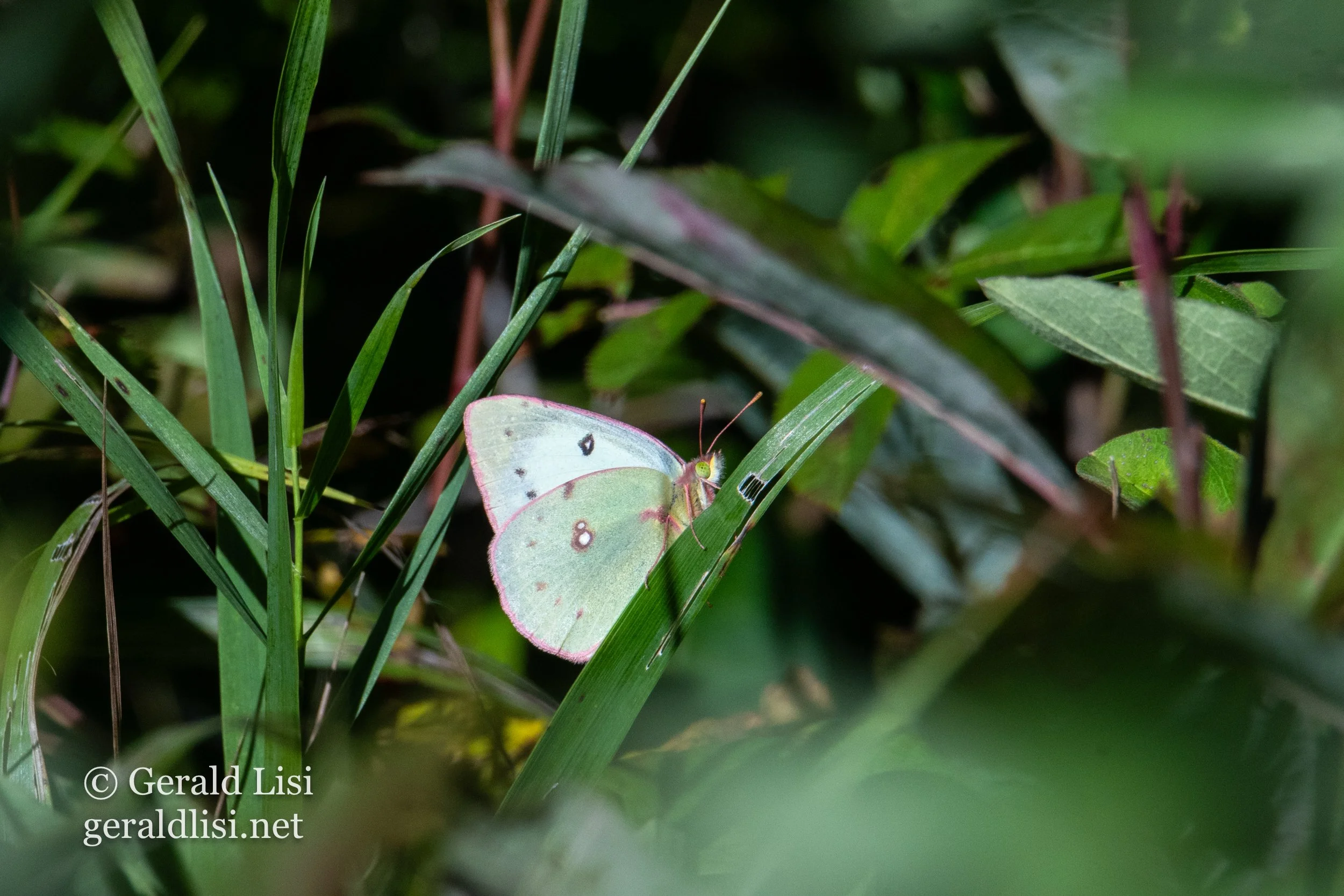
My latest lepidopteran “discovery” was this female Pink-edged Sulfur. Males have the same wing spots and edges, but are yellow. Blueberries are the larval food plant of this species.
Pink-edged Sulfur, Colias interior
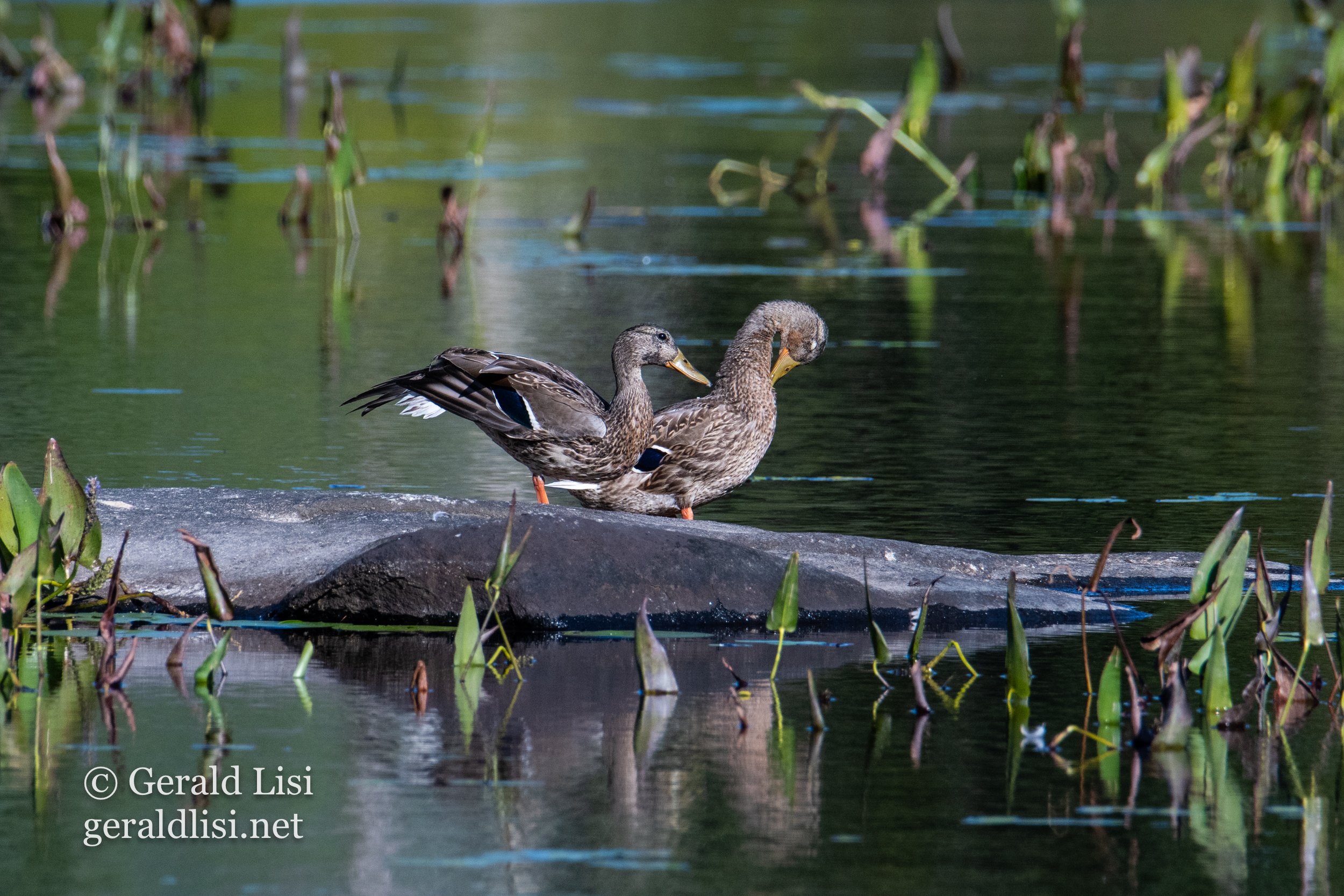
Mallards preening and stretching. I had forgotten how amusing they can be. These are males in non-breeding plumage, which looks like female plumage. The olive bills identify their sex. They are bright yellow in breeding plumage. Females have orange bills with dark spots.
Mallard, Anas platyrhynchos
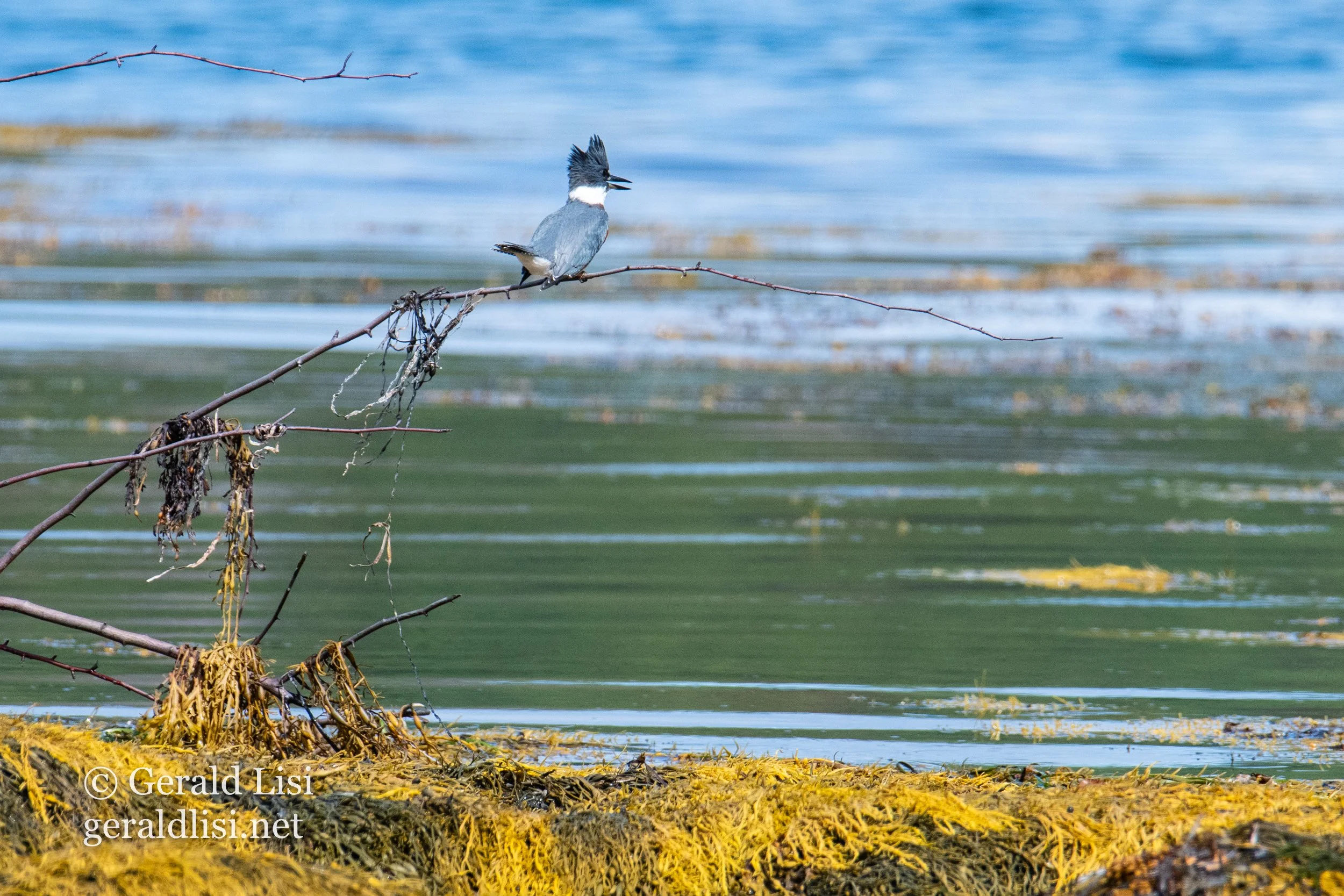
If you have spent time around Kingfishers you can probably hear this bird’s chattering call in your head. She is fishing on Casco Bay in Maine.
Belted Kingfisher, Ceryle alcyon
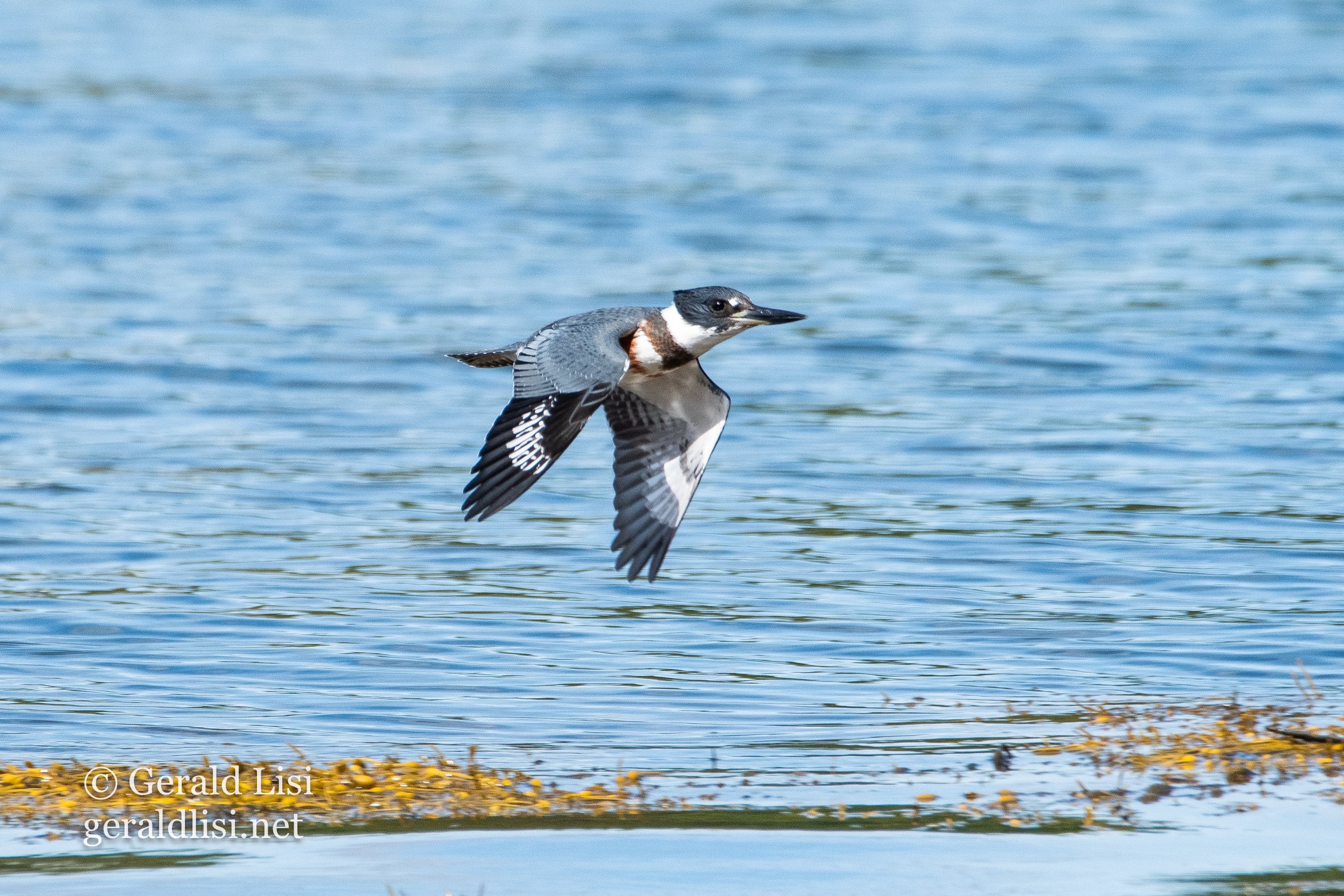
The rusty belly band that identifies this bird as a female is barely visible, and the hint or that color in the blue breast band indicated that she is young. Males have only the blu breast band, a rare example of females being the more colorful of the sexes in a sexually dimorphic species.
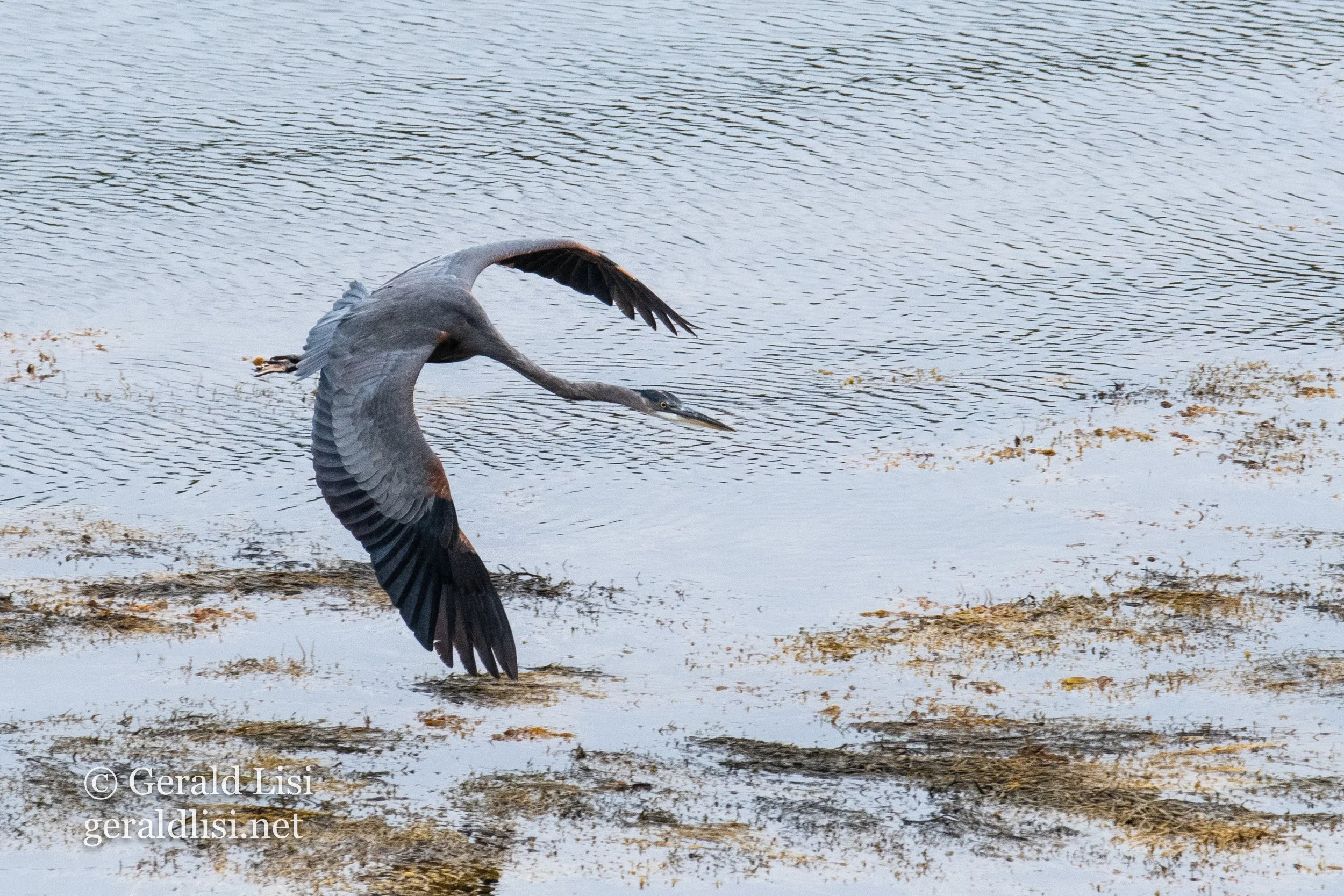
This heron’s hunting was interrupted when another heron had the audacity to attempt to hunt just a few hundred feet away.
Great Blue Heron, Ardea herodias
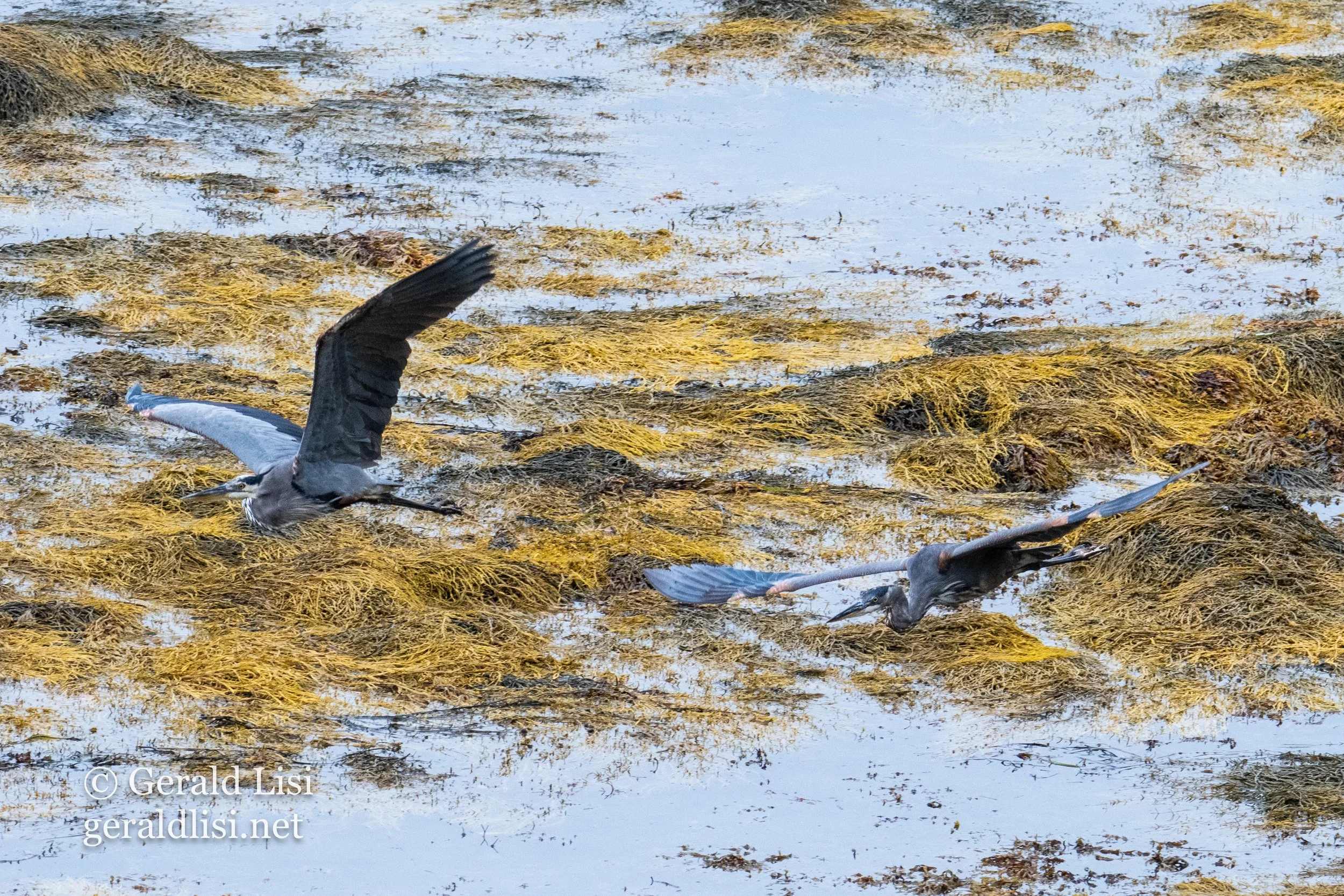
Here the interloper is being escorted out of the resident heron’s territory.
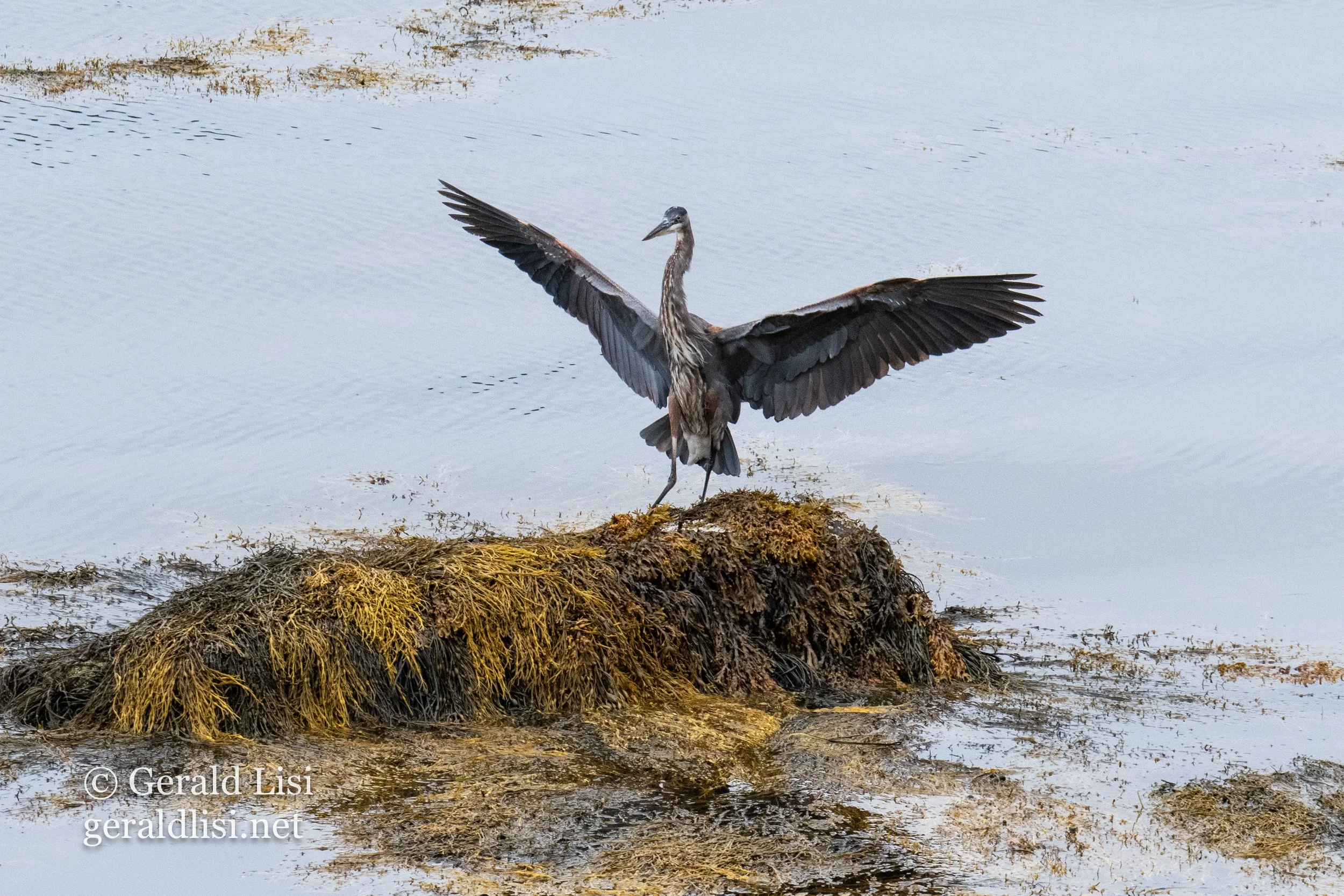
Having vanquished interspecific competition, for now, the dibs holder alights on a seaweed-covered rock. The wingspan of North America’s largest heron is quite impressive. This individual is a juvenile. Adults have a long plume at the back of their dark blue caps, with white rather than gray faces and upper necks.
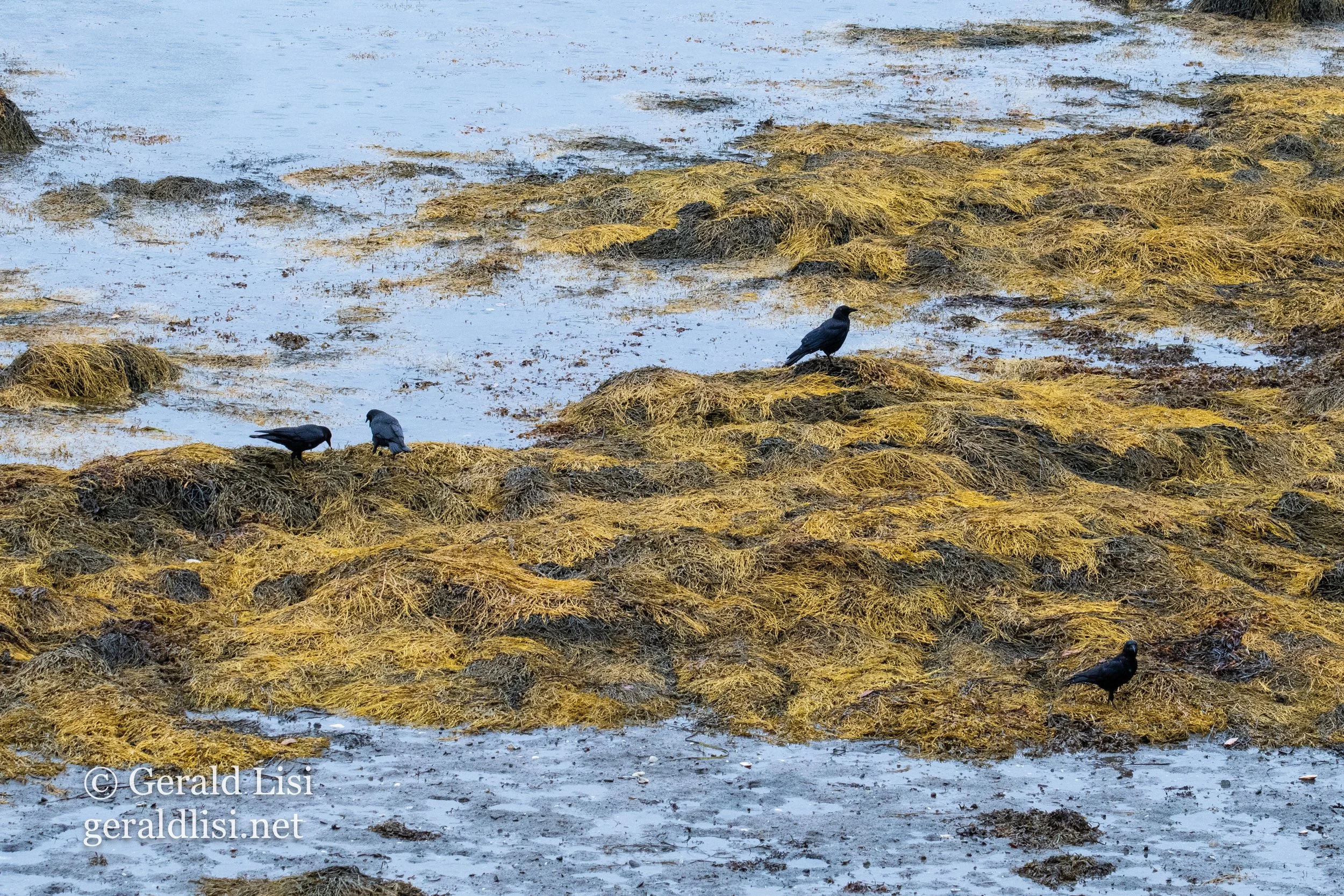
A family of crows searches the seaweed for tasty little critters at low tide. There were three other individuals. The seven birds are most likely a mated pair with the young from this year’s clutch.
American Crow, Corvus brachyrhynchos , Knotted Wrack, Ascophyllum nodosum
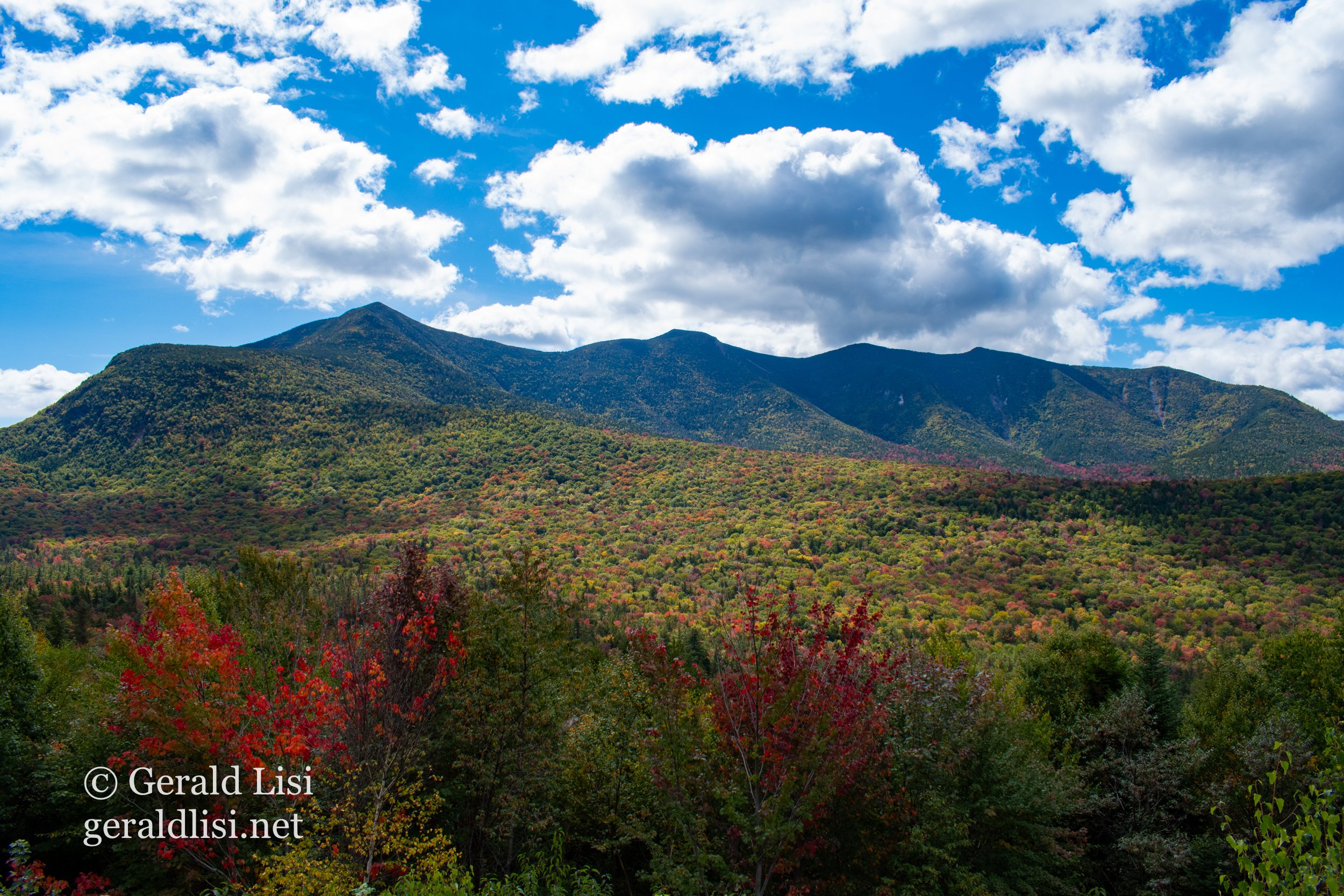
One of many spectacular views along Kancamagus Highway (NH Route 112).
White Mountain National Forest
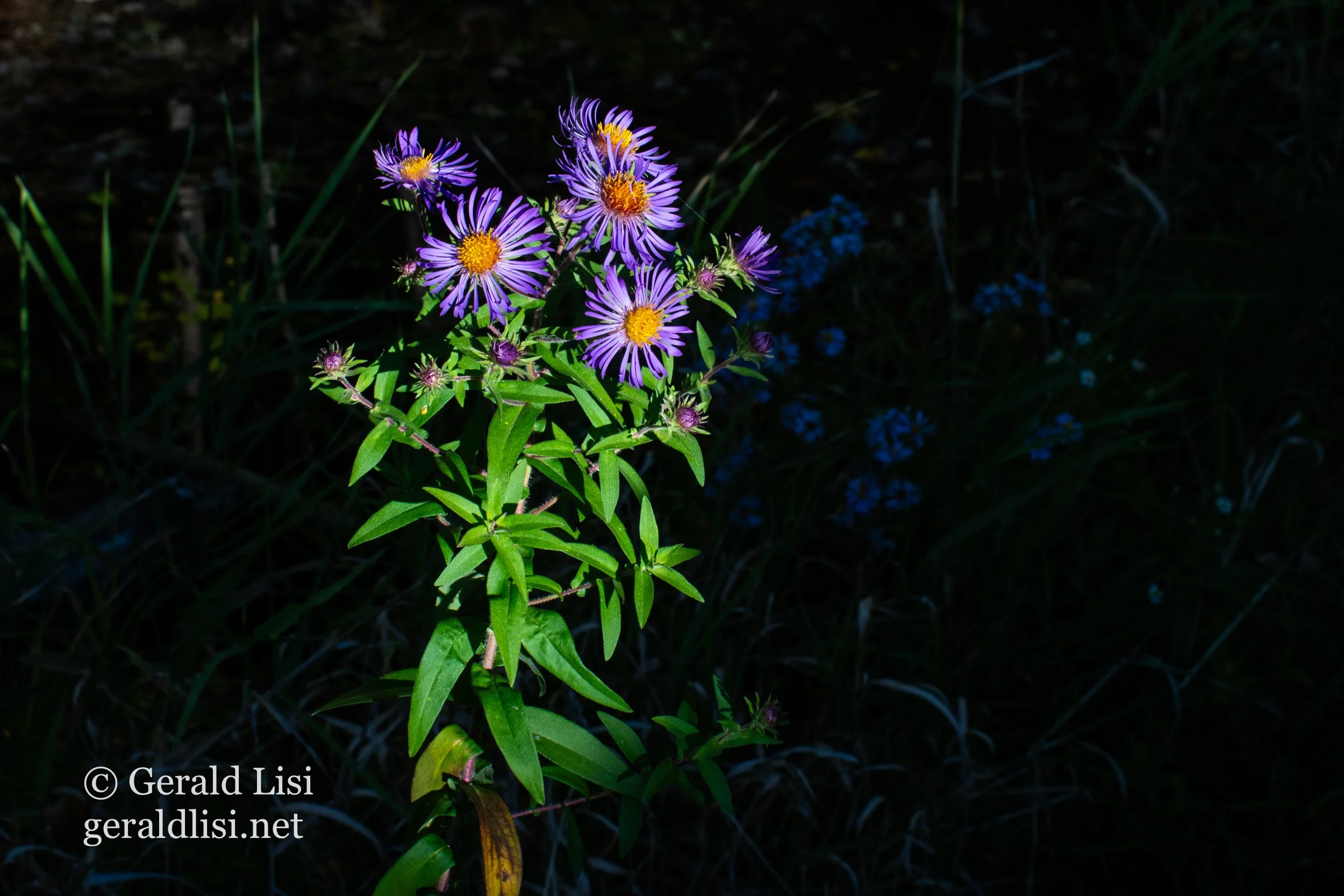
New England Aster doesn’t bloom in earnest until mid September. Its purple petals make it the most popular of our many native asters, but all are beautiful and very important to pollinators and other wildlife. In addition to the late season nectar and pollen resources they provide they host the caterpillars of ten species of moths in Vermont, four of which feed only on this genus.
New England Aster, Symphyotrichum novae-angliae
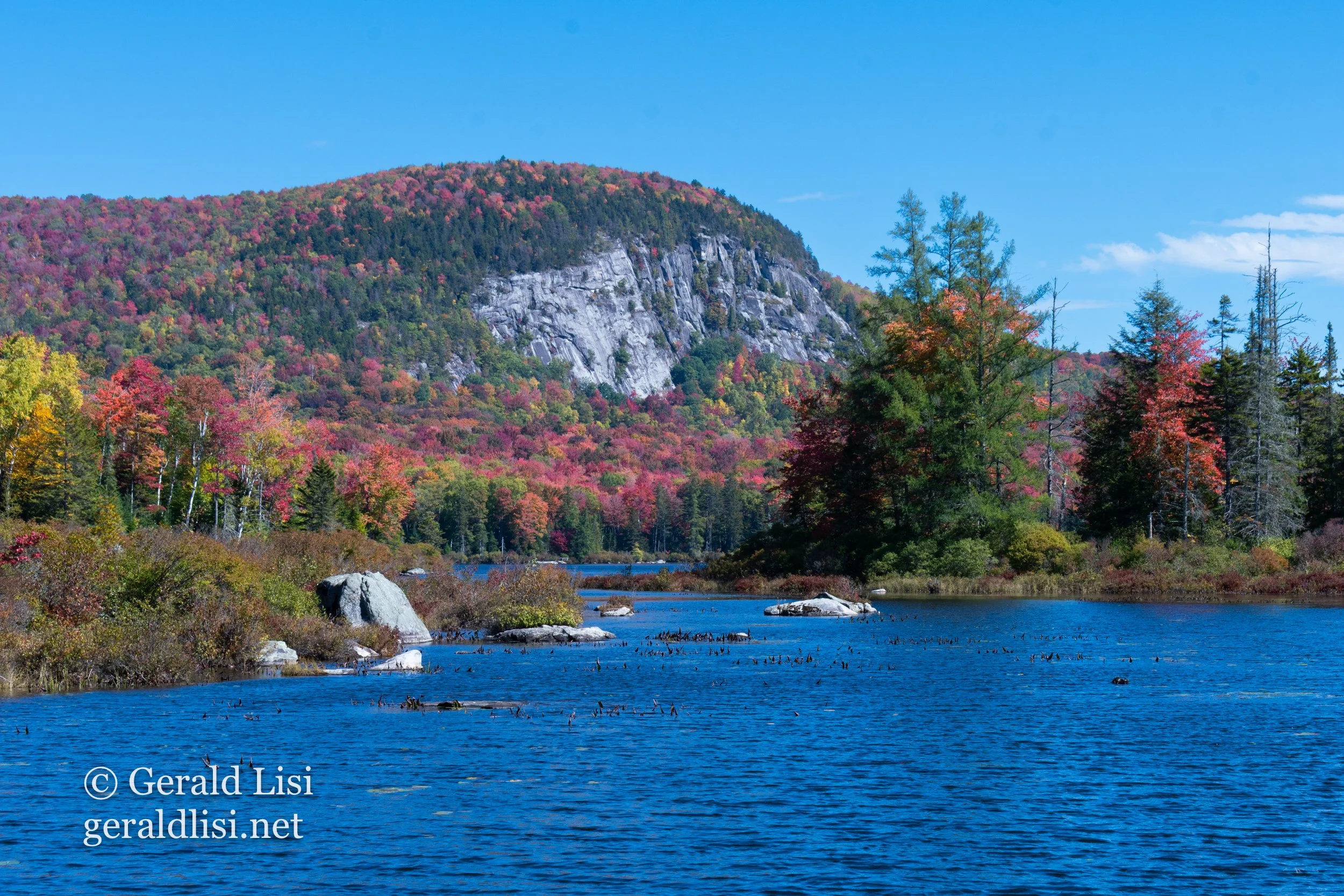
Marshfield Mountain seen across Turtlehead Pond. This is a favorite spot of mine, and is where I photographed the Mallards, Winterberry and Pink-edged Sulfur above.
That’s it for this time, folks. Thanks for your time and attention. I hope you feel that they were well spent. If you’re reading this on my website please leave a comment below. Enter your email at the bottom of my home page, www.geraldlisi.net, to get my posts in your inbox. If you’re already a subscriber, thanks! Forwards and replies are much appreciated. Please take care of yourselves, of each other, and of the land that you live on.