July, ‘26
We’re not too far into a Vermont summer at the beginning of July, but before the end of the month we realize it’s already midsummer. Fireflies’ namesake activity drops off, but is replaced with the sounds of crickets, grasshoppers and katydids. Many flowering plants are forming fruits, our have already gone to seed. But there are plenty of July wildflowers to be seen, and those that brighten August are beginning their show by the last week of July. Birds are busy as always, but they get a lot quieter overall since the business of mating and nesting is done. The fledglings of most species are now juveniles, honing the foraging skills their parent or parents taught them as they wrapped up their paternal feeding duties for the year. The young of many small mammals are fully grown already, although with some species there’s a second or third batch in the works. Larger mammals are busy raising their young, and does are seen leading their spotted fawns through the forest and fields. In this edition we’ll look at some flowering plants, some Odonata (dragonflies and damselflies), and some birds, with special emphasis on two juvenile Ruby-throated Hummingbird siblings.
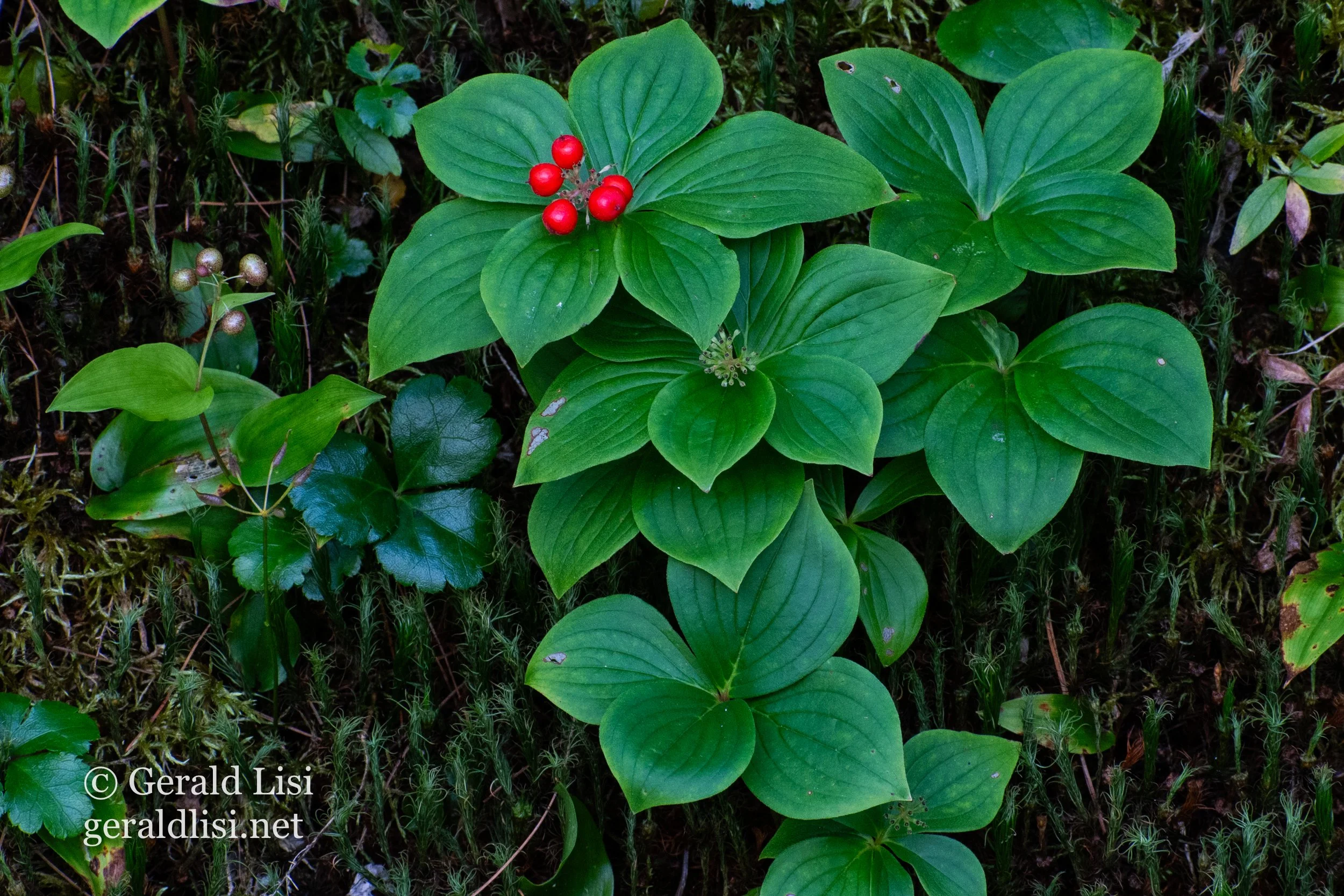
Here we see a cluster of Bunchberry plants, Cornus canadensis, with one bearing red berries. Moving to the left in the middle of the frame are Goldthread, Coptis trifolia, and Canada Mayflower, Maianthemum canadense, both with fruits as well.
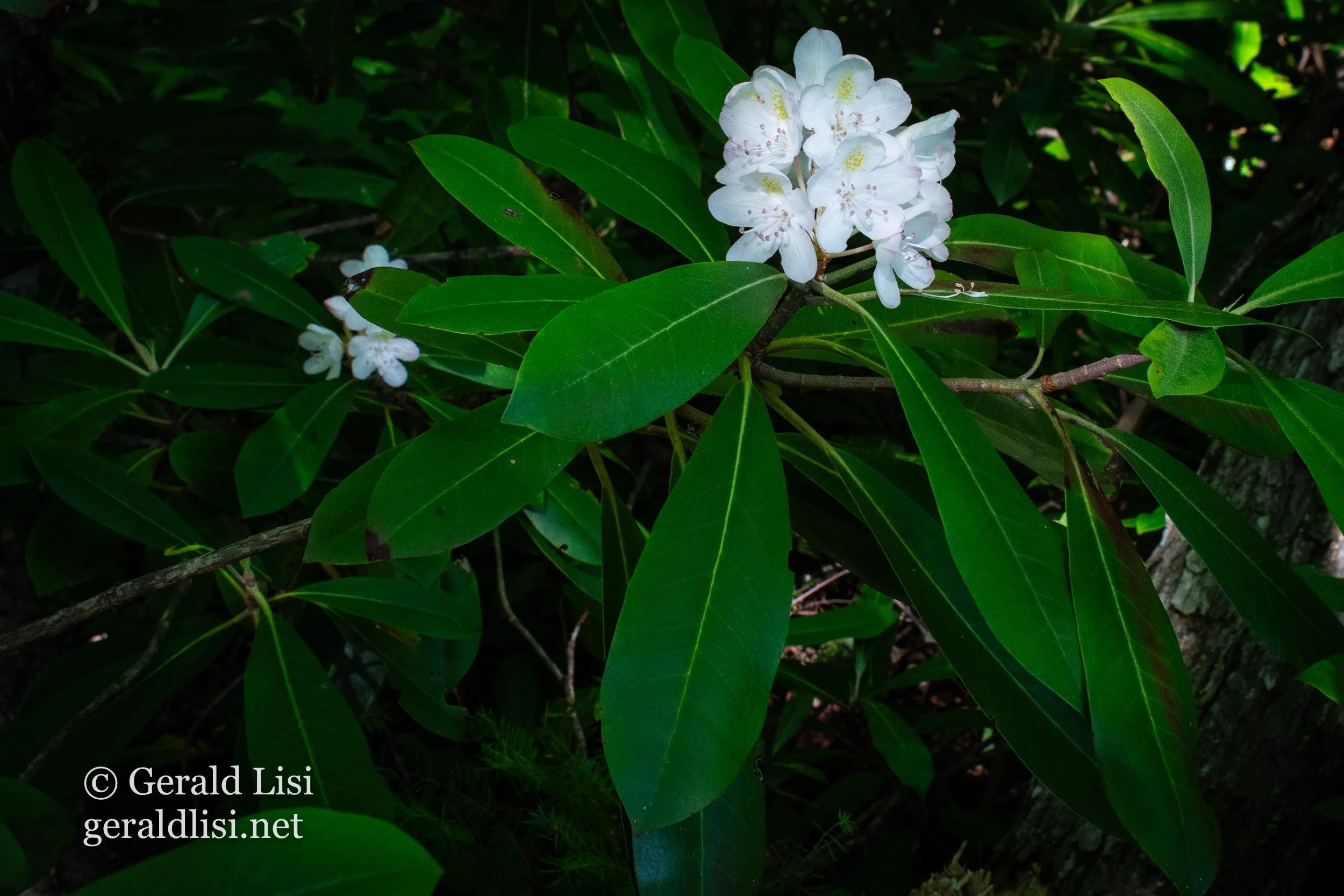
Great Rhododendron, Rhododendron maximum, is one of several species in the Rhododendron genus that is native to New England, but the only one that's clearly a part of the group that includes garden Rhododendrons, or “rhodies.” While it's common further down the Appalachian Mountain chain Great Rhododendron is rare in New England, especially here in the north. Where it is found it can be abundant though. I came across a nice population (already well known to others) in the summer of '24, but it was past flowering time. Last year I missed their flowering again, so I'm glad to say that I got there on time, barely, this month. You can get Rhododendron maximum (best scientific name in the genus) at some nurseries, although not so many here in Vermont as I would like to see. This species has several other common names that I don't like, since they're taxonomic misnomers, such as great laurel and rosebay.
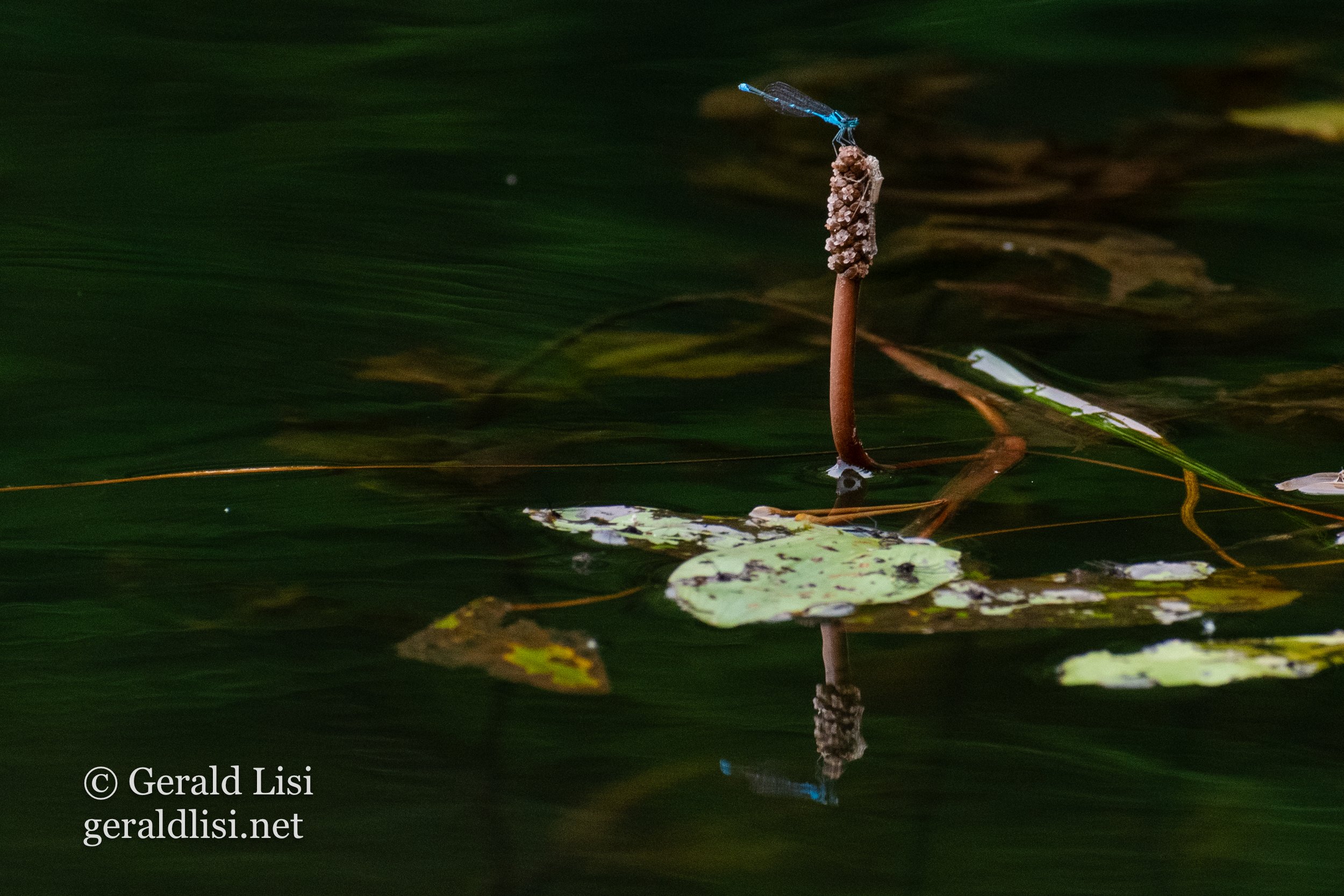
When I photographed this damselfly on what I guess is Water Smartweed, Polygonum amphibium, I didn’t notice that on the opposite side of the flower stalk is a skin shed. Based on the size it may have even been a damselfly of the same species that left it there. Larval damselflies and dragonflies are aquatic predators that eventually crawl out of the water onto a plant stem where they metamorphose into the familiar and beautiful winged hunters. I think this damselfly may be a species of Bluet, genus Coenagrion, but I am not at all familiar with Vermont’s 46 species of damselflies.
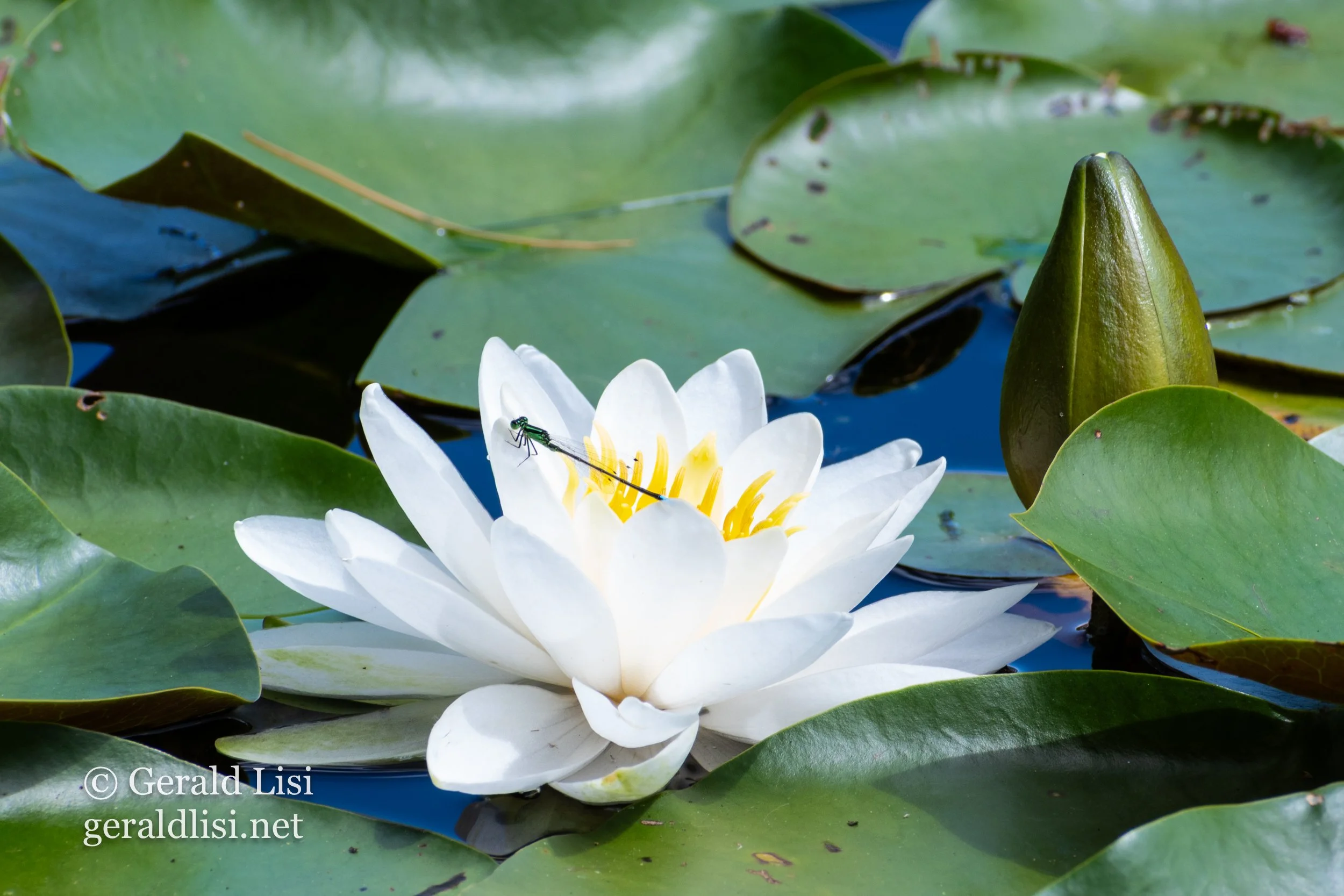
Here’s another species of damselfly perched on a flower of White Water Lily, Nymphaea odorata. Damselflies are distinguished from Dragonflies by their smaller size, especially their narrow abdomens, and their habit of folding their wings over said abdomens when they are perched. Their six legs are concentrated at the front of their thorax, enabling them to easily grab other flying insects on the wing.
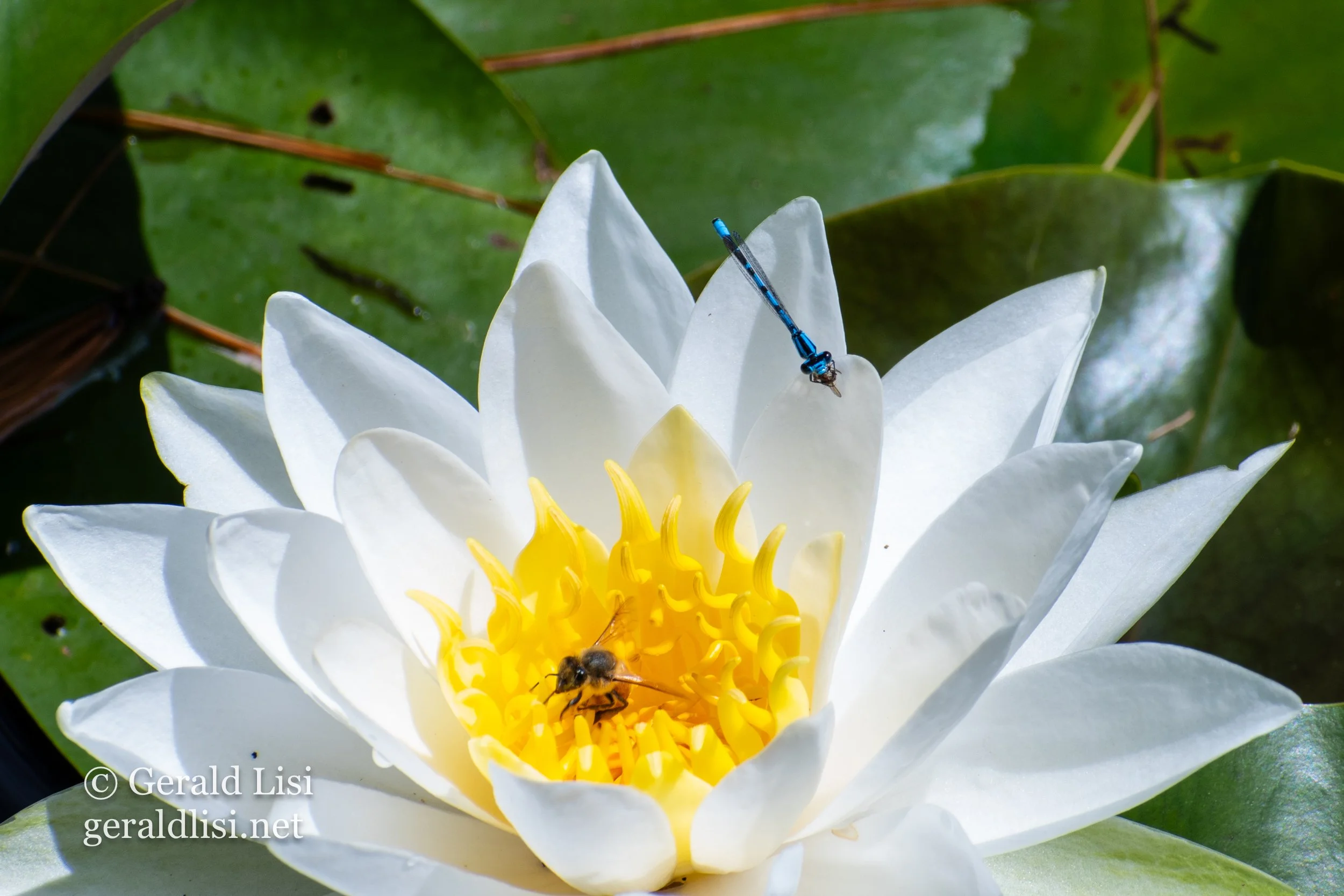
Here another damselfly eats a very small fly they just caught while it was flying to or from the White Water Lily. The Honey Bee foraging in the flower gives you a sense of how petit this damselfly is, and how large the flower is. Unfortunately I can’t share the blossom’s fragrance here.
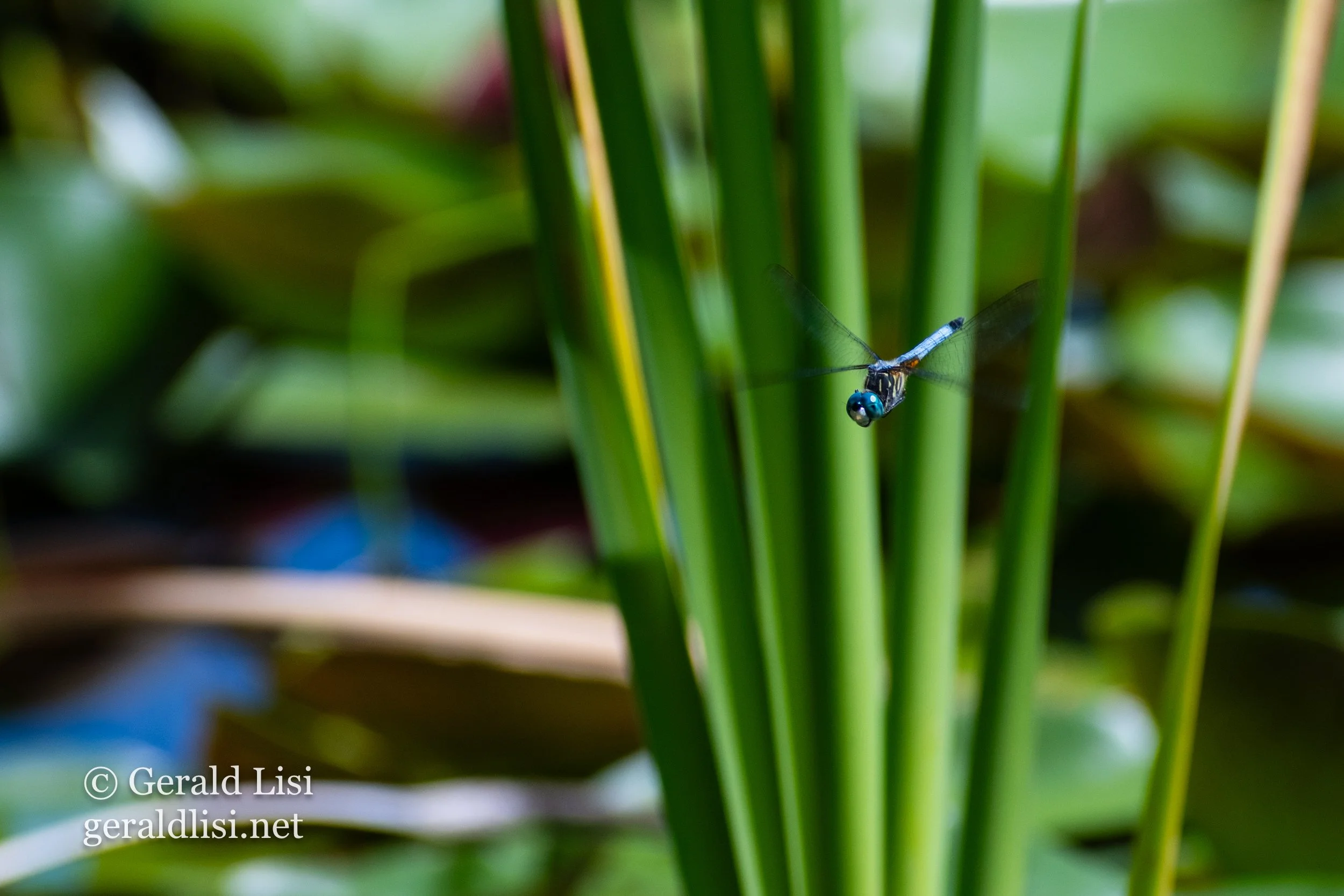
I was lucky to have this dragonfly hover briefly in the midst of their zipping about. Too bad this was taken with my 300mm rather than my long lens, but I’m still happy to have captured my first decent dragonfly in flight shot. I am somewhat more familiar with dragonflies than damselflies, but still am incredibly ignorant of Vermont’s 101 species. Please do reply to this email, or comment at the bottom of the post on my website, if you can identify any of the Odonata in this post.
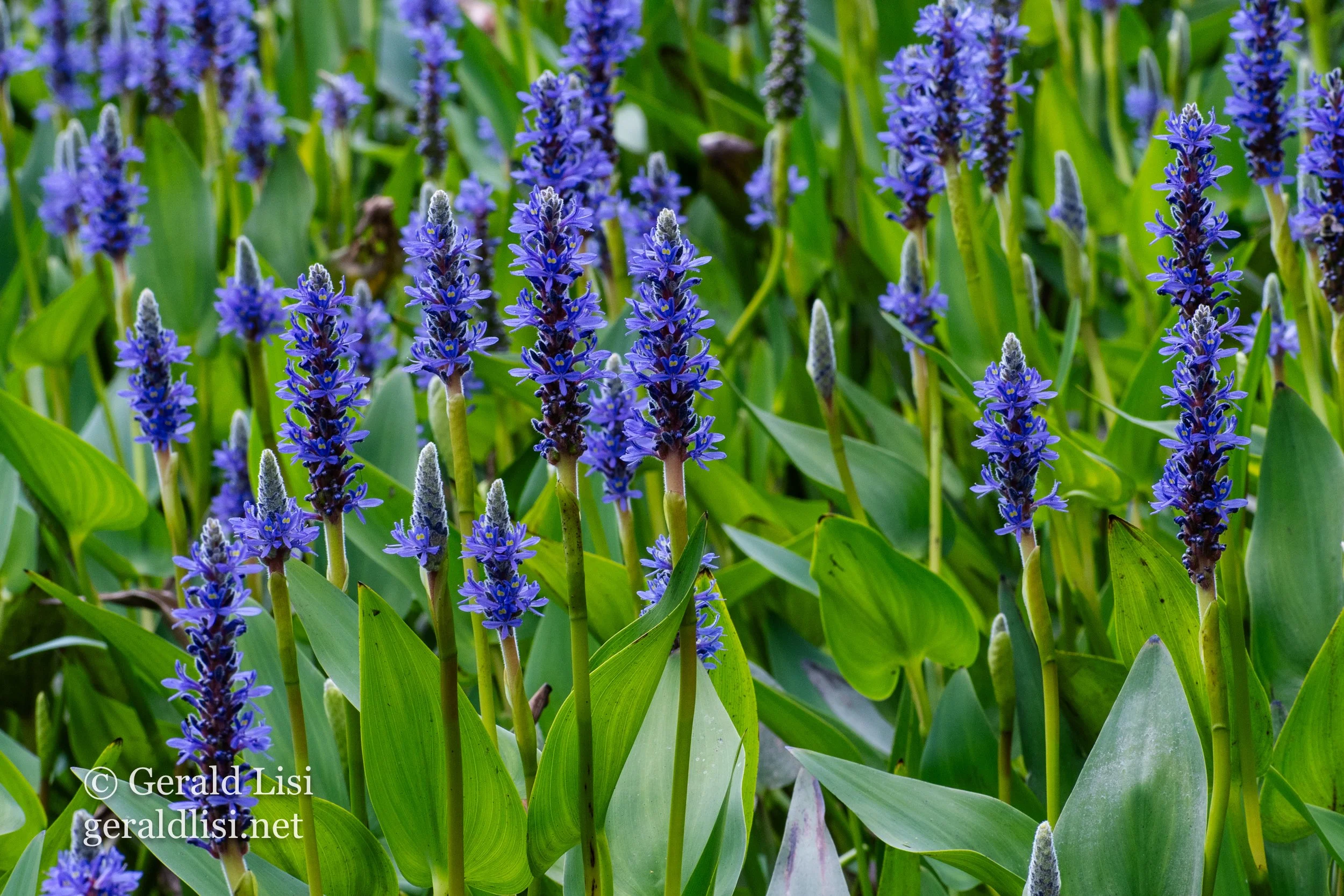
Pickerelweed, Pontedaria cordata, is in full flower by late July in Vermont. This aquatic wildflower is found in various kinds of freshwater wetlands throughout much of eastern North America, and is present on the west coast as well.
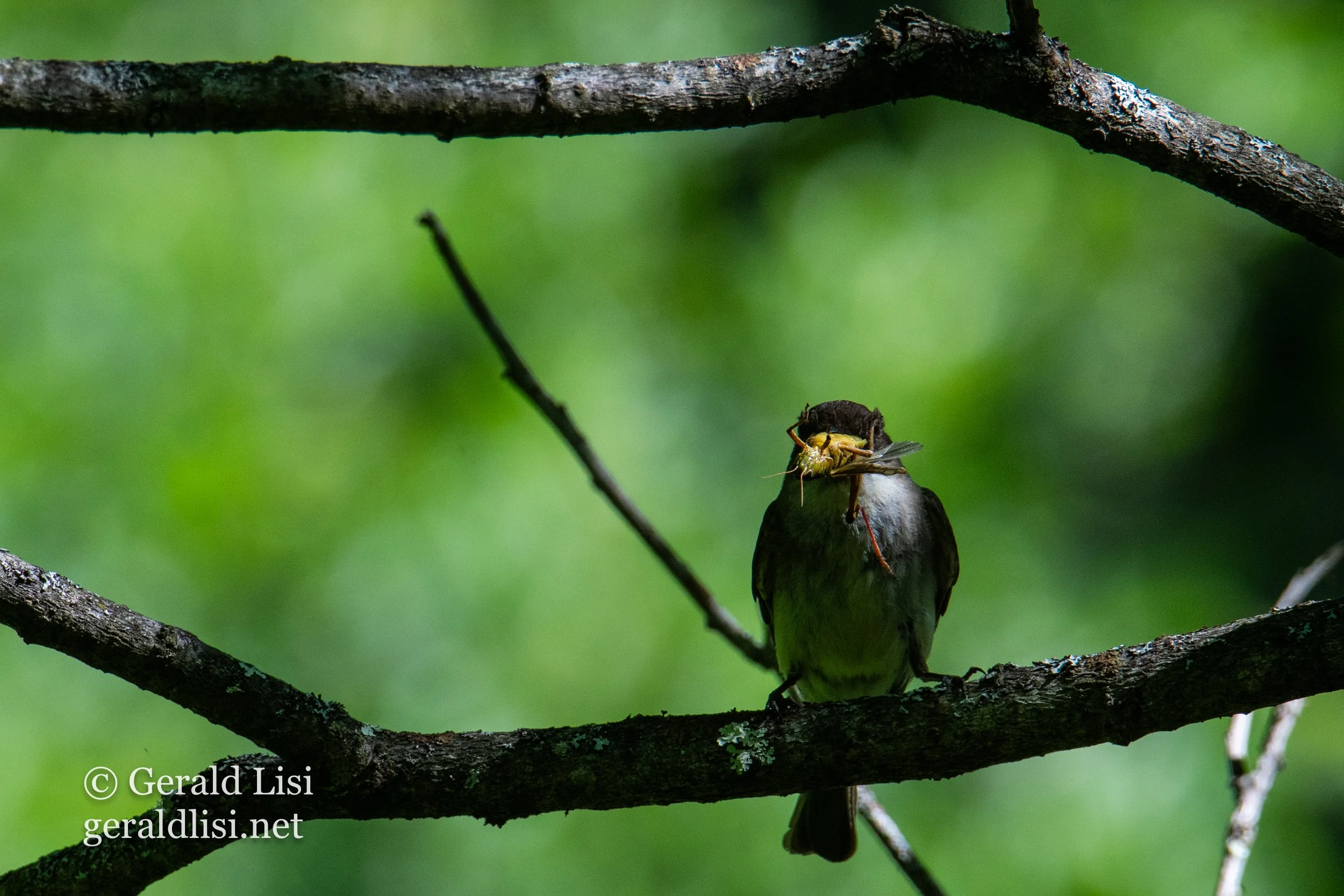
Last month I shared an Eastern Phoebe, Sayornis phoebe, with a fat caterpillar it had gleaned from the leaves of a forest tree. Here’s one with a grasshopper it caught in the tall grass and forbs of my yard. These migratory songbirds are familiar denizens of yards where adequate foraging habitat is provided, and they regularly nest in man-made structures such as my garage.
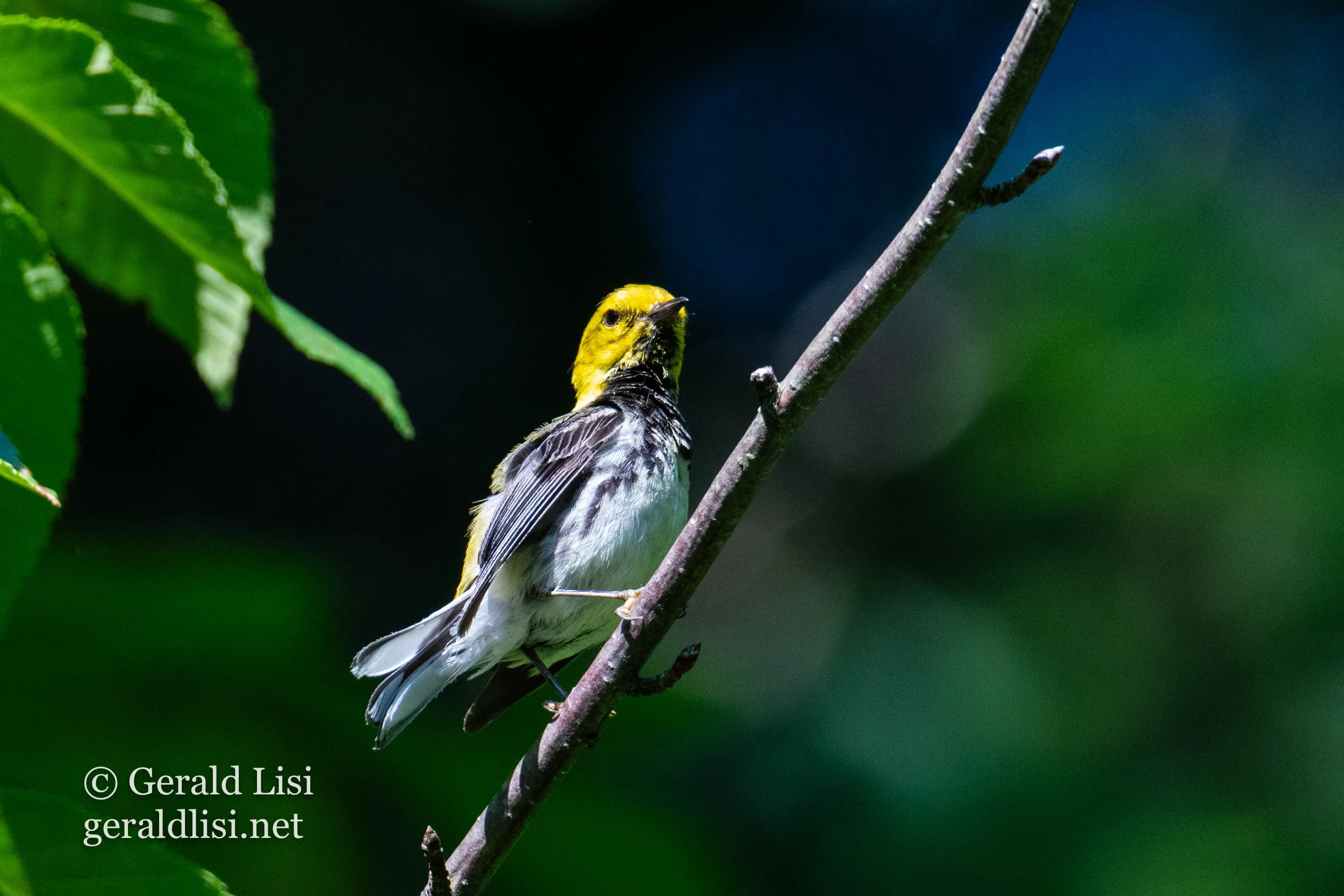
Here’s a male Black-throated Green Warbler, Setophag virens, who also makes his breeding home next to mine (non-breeding in my case.) I’ve not seen his mate or any of their young. But, I have seen him gathering caterpillars for the latter, and his songs were still regular in first couple weeks of this month. This species utilizes various forest types, so they are common throughout much of the Appalachians, New England, the Great Lakes region and a wide swath of Canada.
Next we are going to look at the Ruby-throated Hummingbirds, Archilochus colubris, that I mentioned in the introduction. Juvenile hummingbirds of both sexes have the same plumage as adult females. I distinguished these two from their mother by their behavior. They’re much more vocal than her and spend much more time in one place. They chatter at each other extensively, and chase each other away from the Beebalm flowers they both feed from. As with all hummingbirds good nectar sources are essential to this species, but they also need deciduous trees to nest in and other vegetation to provide insects and spiders that are their source of protein, fats, vitamins and minerals.
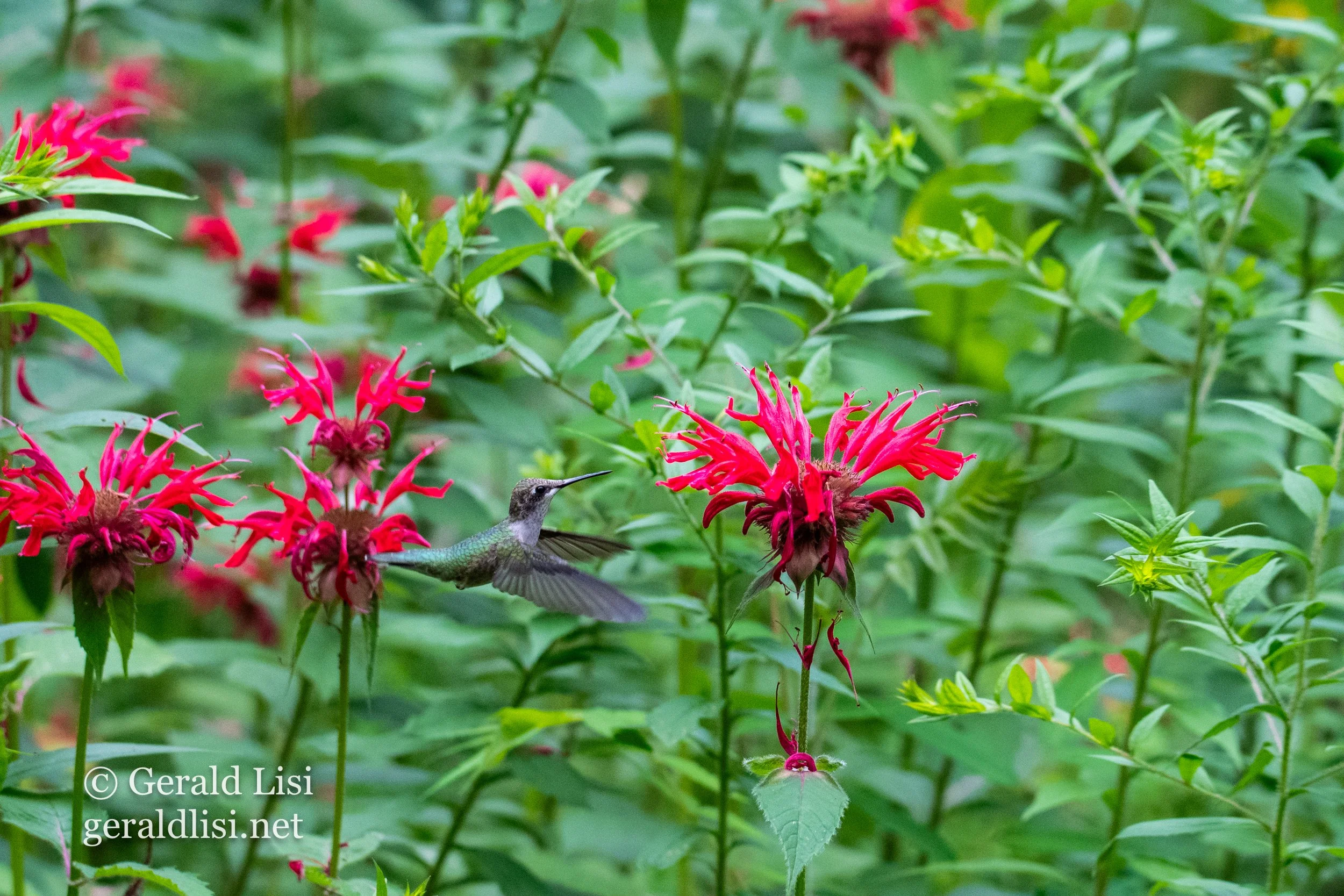
Scarlet Beebalm, Monarda didyma, is native from Ohio to New Jersey in the north of its range and from Georgia to Tennessee in the south. It is commonly planted in many other eastern states, where it sometimes establishes wild populations. This species is also known as Oswego Tea and Red Bergamot. The closely related Wild Bergamot, Monarda fistulosa, is native to New England. I recommend it as an alternative, or in addition, to Scarlet Beebalm here. The flowers are of the same, distinctly hummingbird-pollinated, shape, but are pink/ lavender. If you are in central/northern Vermont you can get it, and other awesome native wildflowers at Bird and Bee in Jericho, Northwoods Native Nursery in St Albans Town, or Amber Roots Farm in Glover.
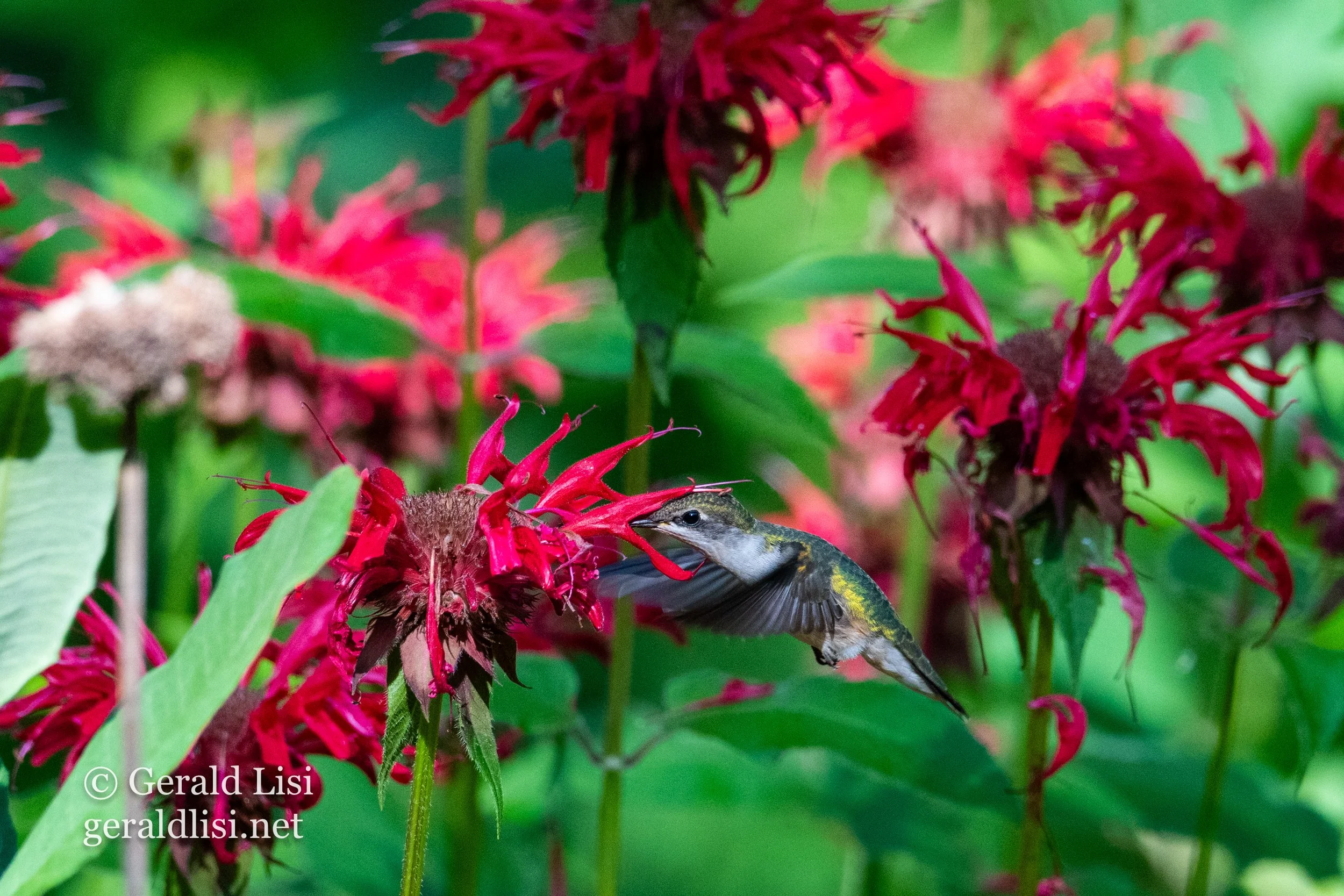
Hummingbirds will visit any flower that provides enough sugary nectar, just as they will drink a solution of table sugar from your feeder, but they are particularly attracted to red or orange tubular flowers. Such flowers often actually evolved to be pollinated by hummingbirds. This Scarlet Beebalm is a perfect example, Hummingbirds access the nectar at the base of the flowers with their long bills and longer tongues. In the process the flowers’ anthers brush pollen onto their heads, which sticks to the stigma of flowers they visit subsequently. Here we see the anthers protruding on a filament, and making contact with the back of this hummingbird’s head. Above it is the stigma at the tip of a style. The ovary is at the other end of the style, deep inside the flower. Pollination leads to fertilization, with leads to the development of a seed.
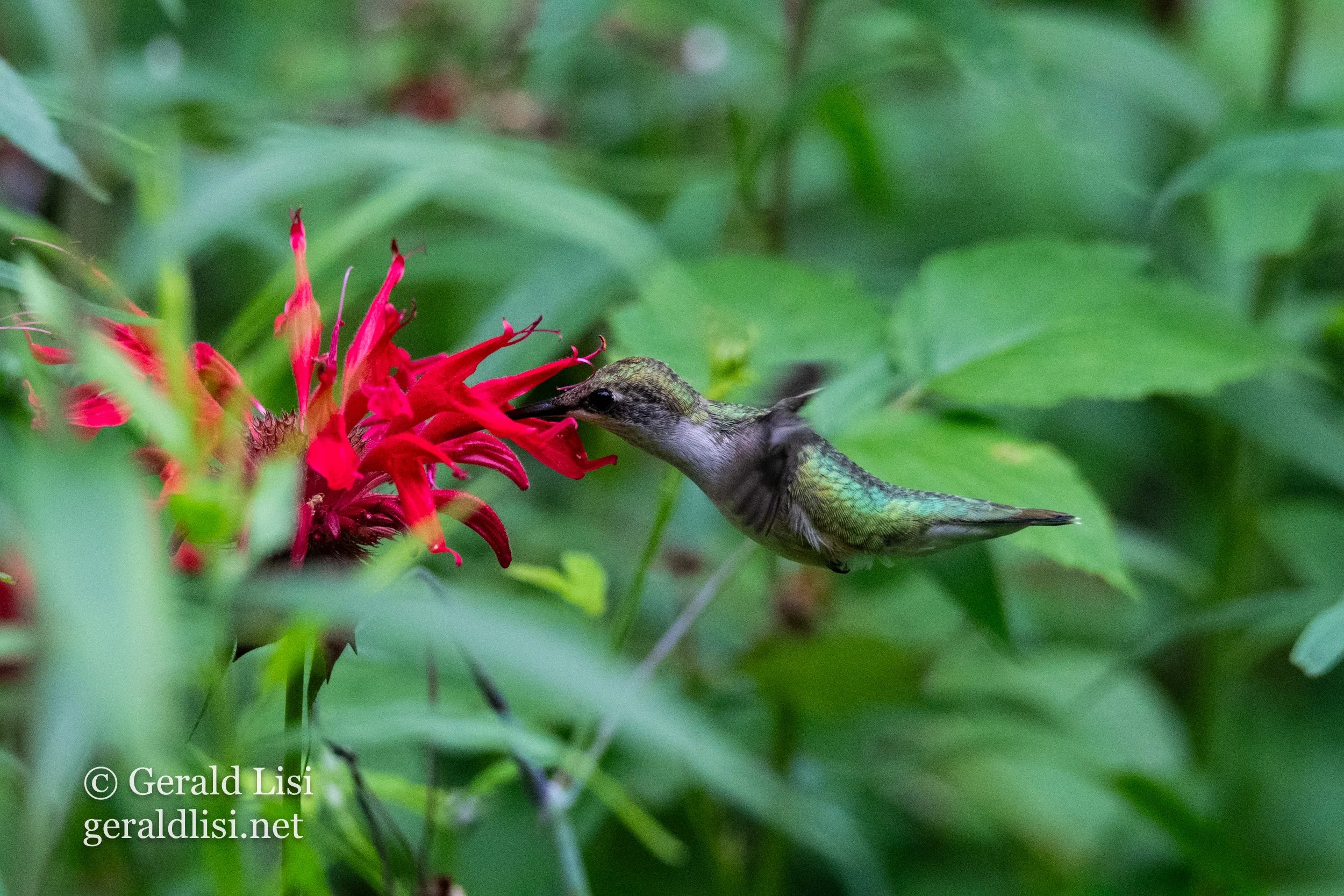
In this image the style has been bent inward by the hummingbird’s forehead. The style may or may not receive pollen from a suitable mate on this particular visit, but these blooms last for weeks, giving them many opportunities. Bumblebees and Butterflies have long proboscises that allow to access Monarda nectar too, but these animals’ different shapes make pollination less likely. I imagine that in the case of bumblebees it does happen sometimes.
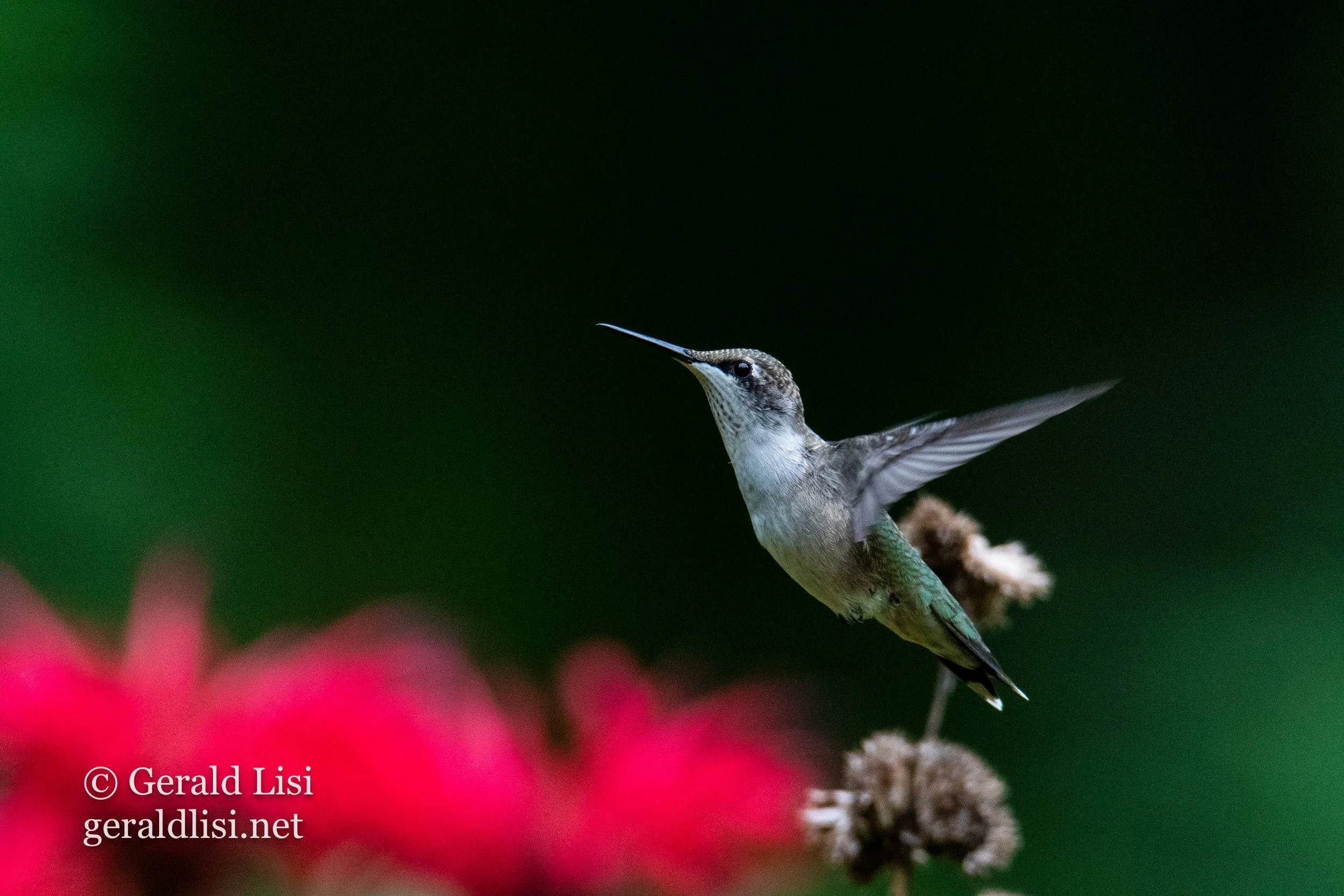
Hummingbirds’ unique ability among birds to hover for extended periods of time is accomplished by beating their wings in a figure eight pattern. In the case of Ruby-throated Humming birds these wingbeats have been measured at abut 53 beats per second. Yes, you read that right, and yes it’s incredible.
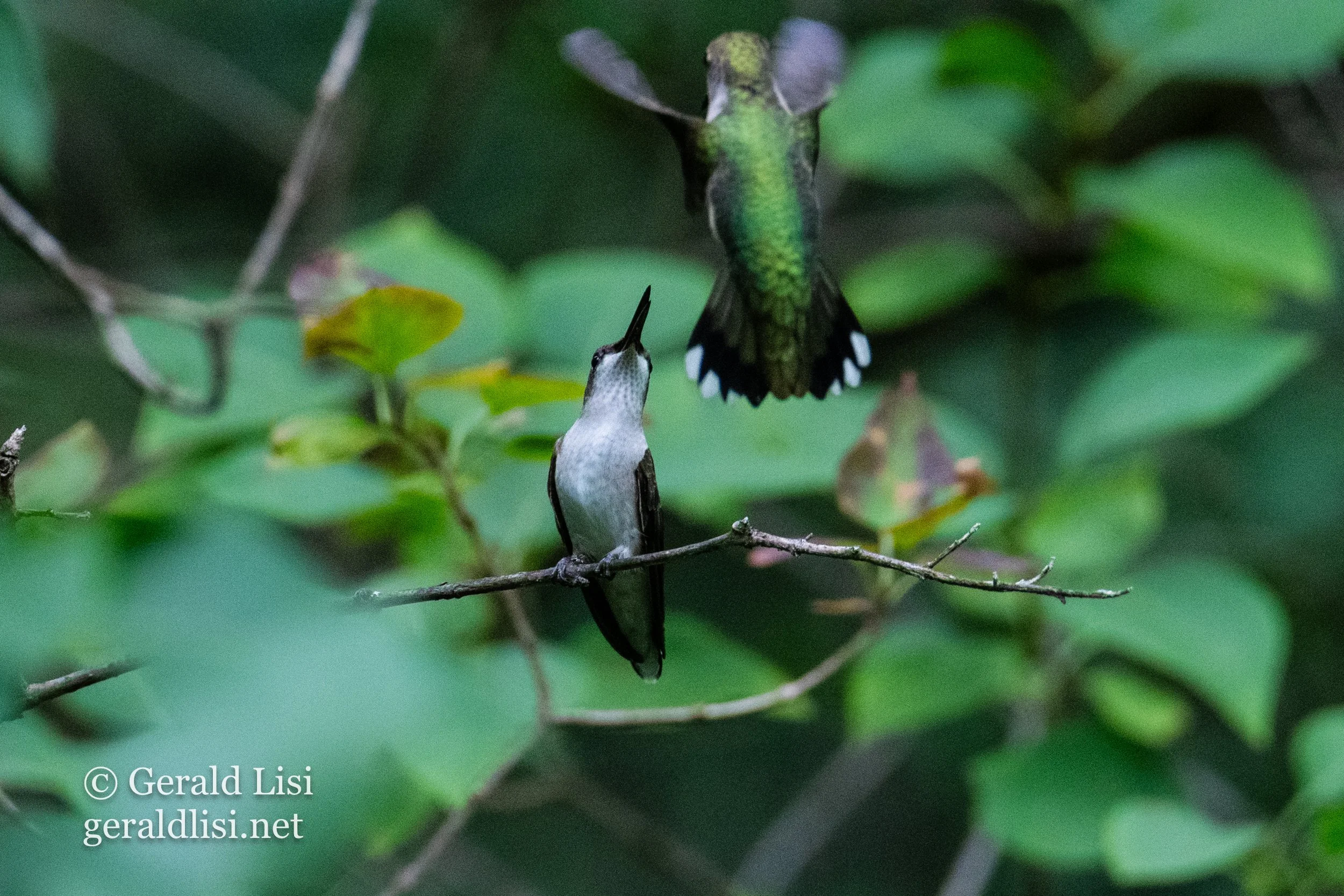
If it wasn’t for these two chattering away at each other wouldn’t have even known they were there, and none of these photos would exist. They fly so incredibly fast that I had little hope of capturing both of them in one frame, but since one harassed the other while he or she was perched I was luck enough to get this frame. You can see the bill of the perched individual is open, releasing a diatribe at the annoying sibling. I laughed at these delightful dorks quite a bit during this shoot.
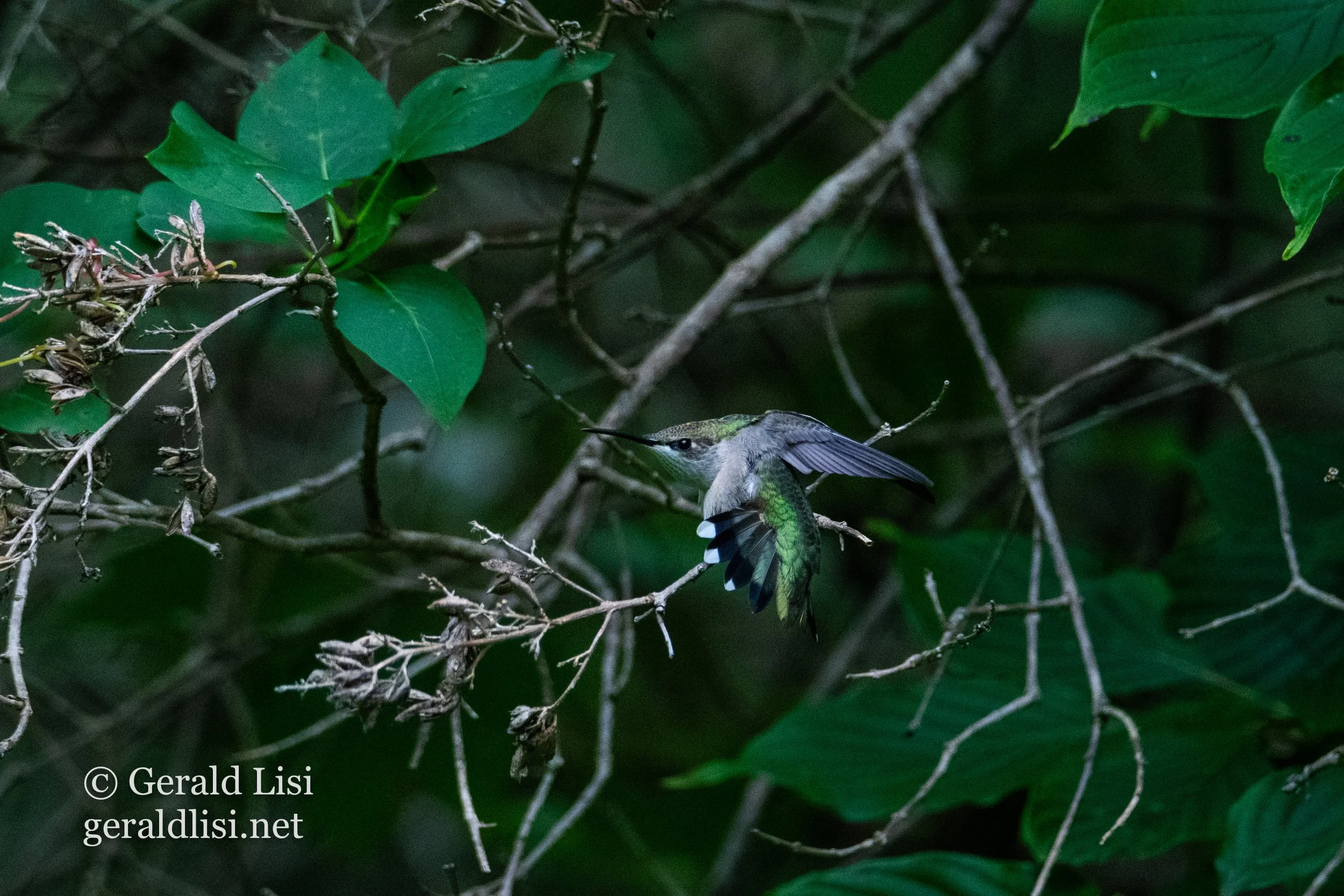
One last Ruby-throated Hummingbird photo; I was to delighted to capture this characteristic hummingbird stretch, with their flight feathers and glistening green body feathers on display. The adult male who sired the two juveniles in this post has been quite elusive, which is typical, so I have no photos of his gorget, the namesake of this species. But after my wonderful time with his progeny I really can’t complain.
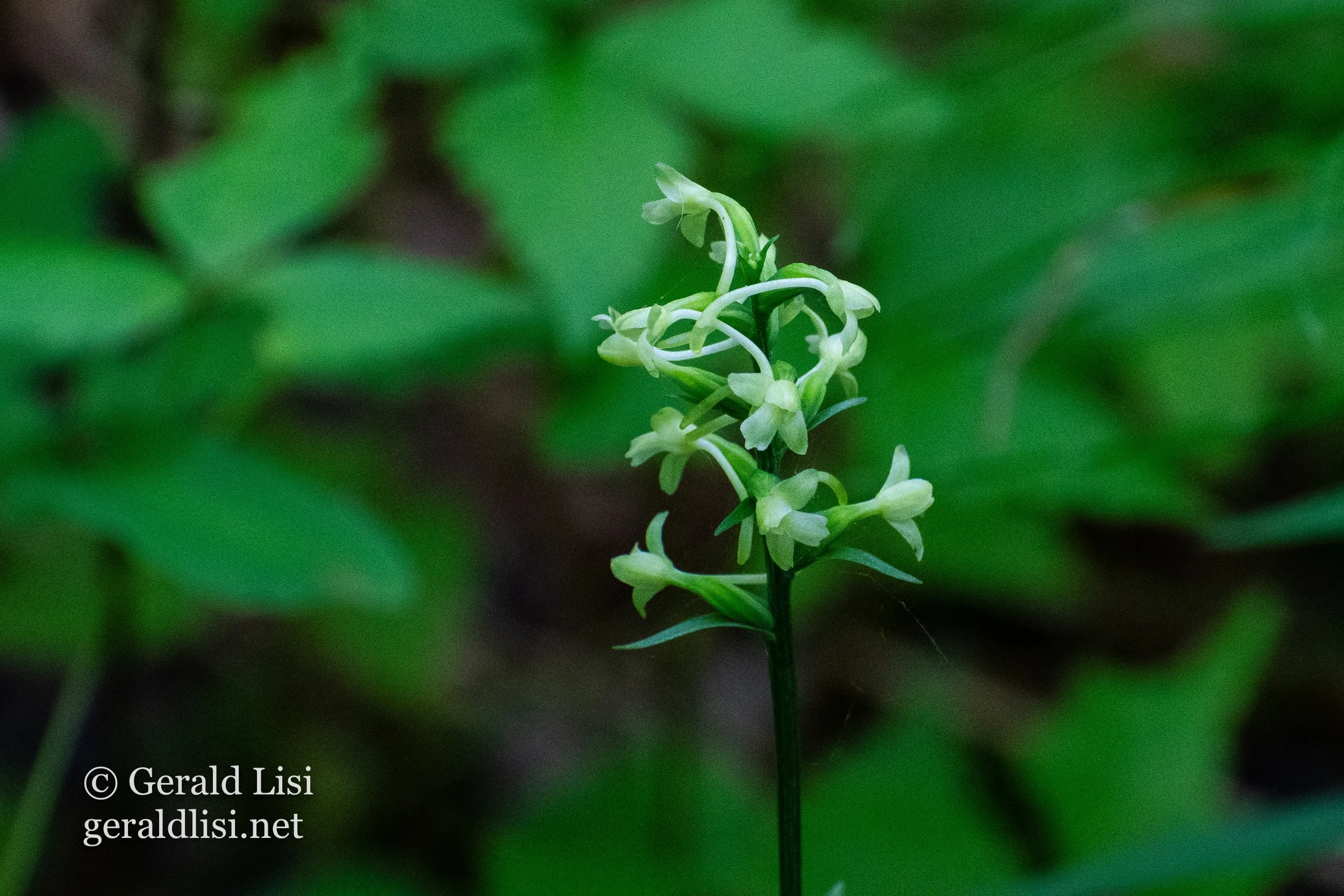
I close this edition with the inflorescence of a Small Green Wood Orchid, Platanthera clavellata. This was my first encounter with this species, and I’m so happy to have found them with fresh flowers. It would have been very easy to miss this hidden treasure beneath the relatively giant Cinnamon Fern fronds above it. I’ve been in this spot many times over the years, and was oblivious to the presence of this Small Green Wood Orchid. Even those who are always looking can use a reminder to look more carefully.
I want to thank you for your time and attention. These are our most precious resources, so I hope that you feel that yours were well spent here. If you’re a subscriber please consider forwarding this email to someone who might enjoy it. If you’re not a subscriber and would like to be you can sign up at www.geraldlisi.net . Here you will also find the page for my little ecological consulting business, Wild Niche. If you’re a land owner or manager in Vermont or hereabouts and would like guidance on creating and or enhancing habitat please to give it a read and contact me.
May August reveal many wild wonders to you. I’ll share some of my own here around the end of the month.