May, ‘26, Bird Edition
May in Vermont sees spring unfolding at a constantly accelerating pace. Most of the trees still have bare branches on the first day, but the canopy has filled in by the last. The emergence of this foliage and of myriad insects are the draws for many migratory birds, causing bird numbers to peak at this time. Up to 250 species are present by the third week of May, with 200 found reliably. Our permanent residents, bird species that live here year-round, are about seventy, so migrants more than triple the species count. A major migratory-bird highlight for me and many other birders is the warblers. More than sixty species of these busy, often colorful little songsters are found in North America, with seventeen nesting in Vermont. Most are hard to spot as they forage in trees or in other dense vegetation, but it’s much easier when they first arrive and all of that foliage is still growing. Because of that nine of the thirteen bird species I cover today will be warblers. All photos taken this month.
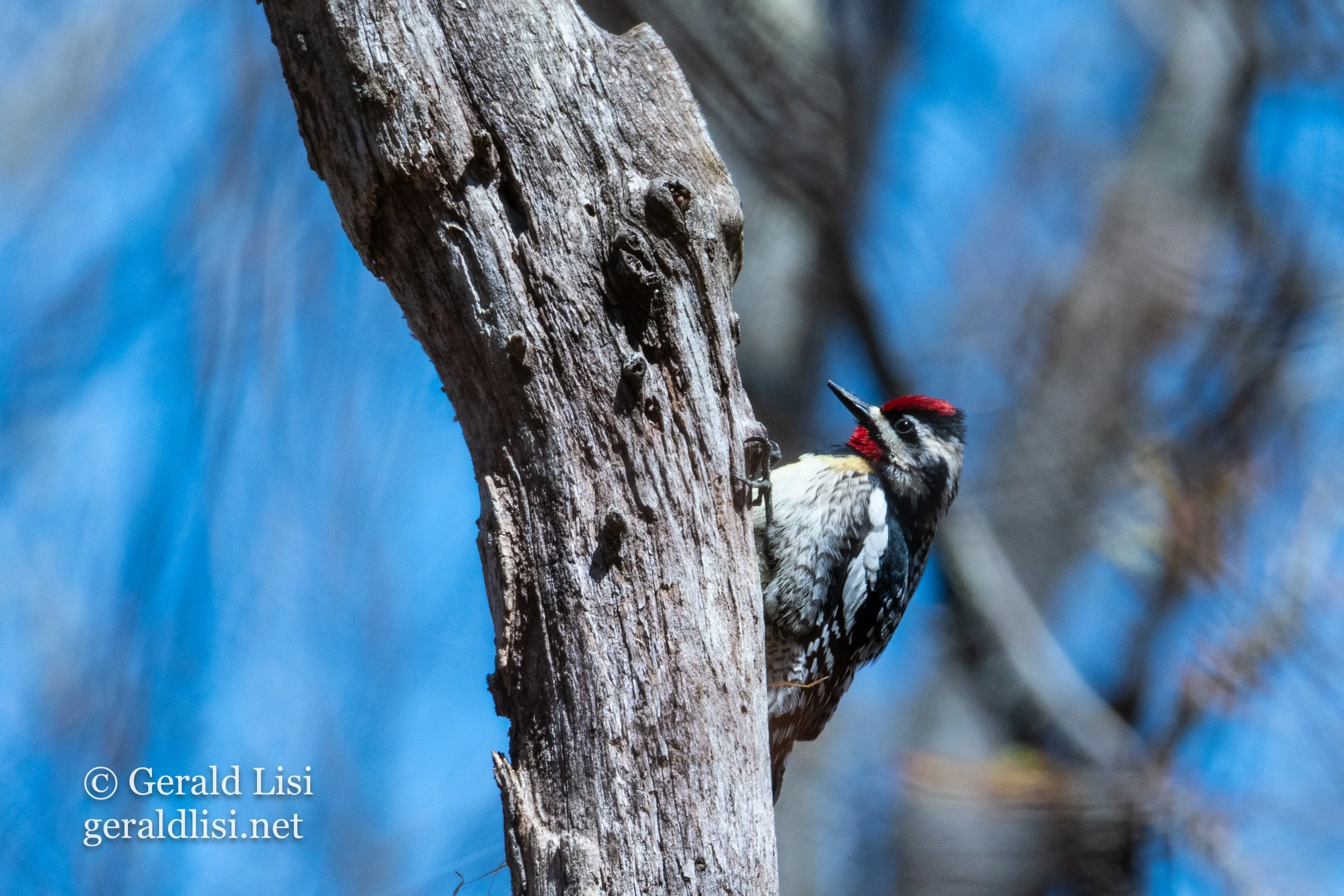
This Yellow-bellied Sapsucker was drumming daily from mid April ‘til mid May. Woodpecker drumming is the rhythmic pounding of the bill against a resonant surface, usually dead wood but sometimes metal. This drumming declares ownership of a territory and invites potential mates to check the drummer and territory out. I hope he won the attention of a lady sapsucker. I followed his drumming several times in vein before finally getting this picture.
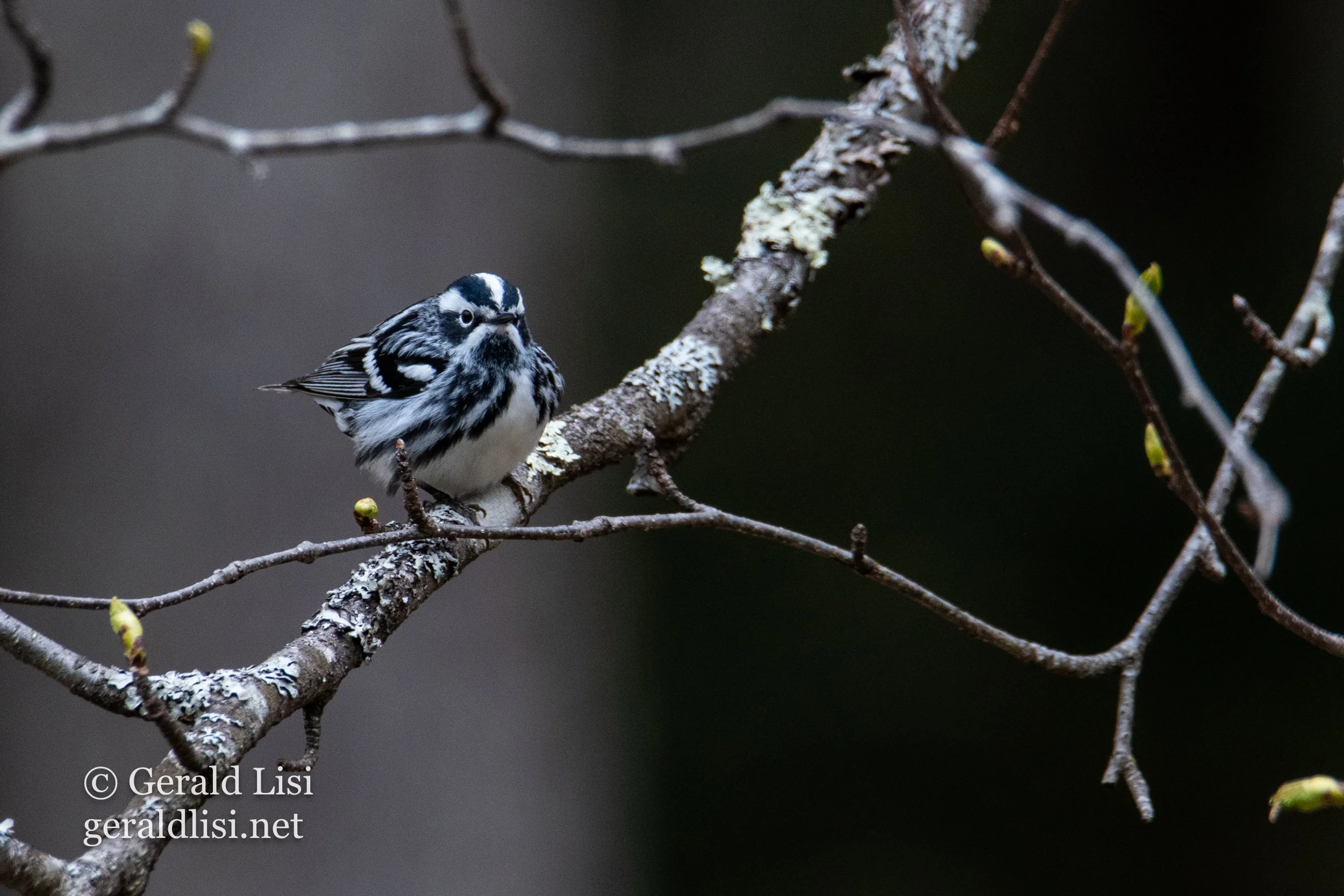
The closed buds of this birch place this photo at the beginning of the Month. Black and White Warblers forage like nuthatches, on the trunks and branches of trees, unlike most warblers who glean foliage.
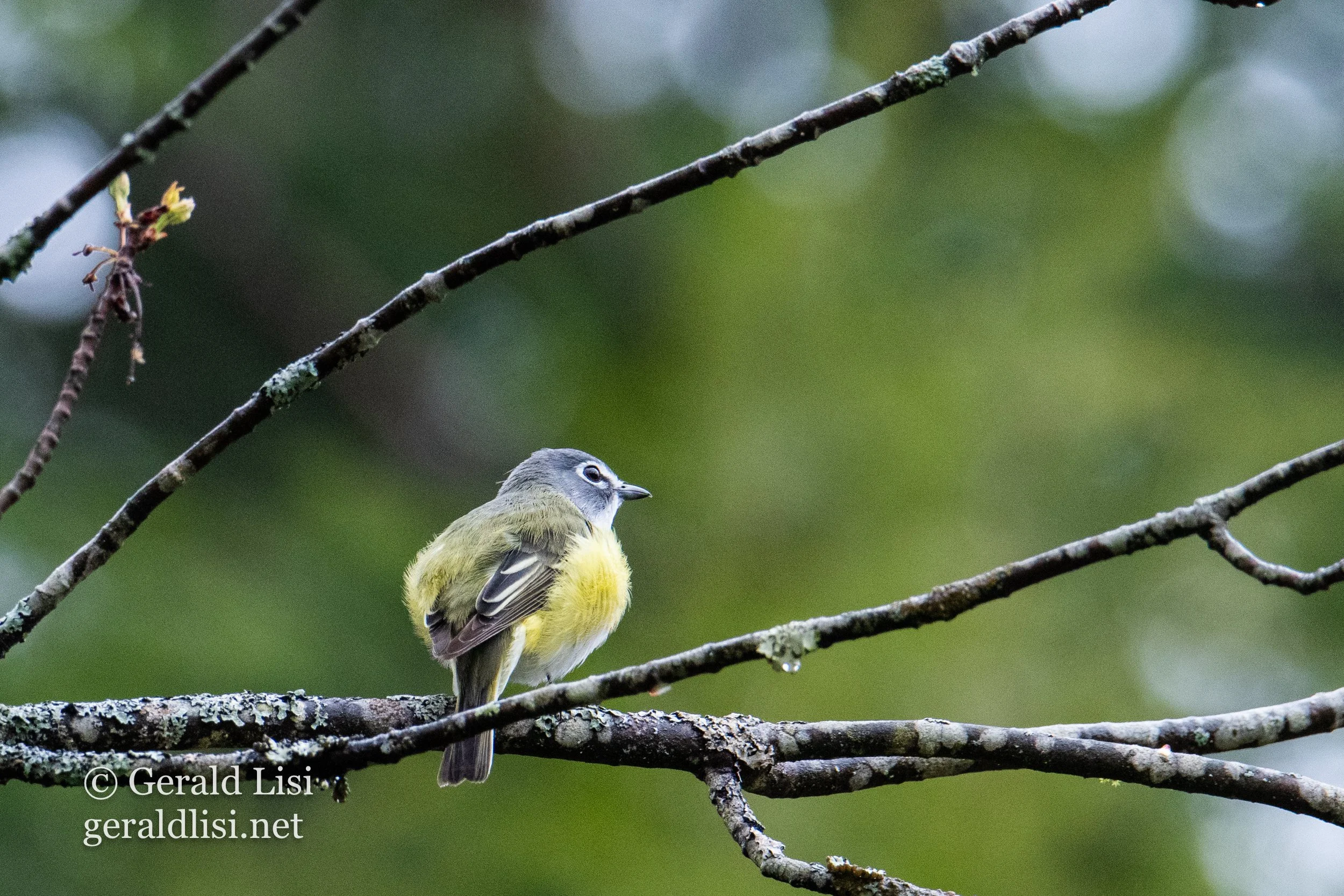
Blue-headed Vireos arrive around the first week of May. The puffing of this male’s feathers , along with his song, attracts potential mates. Blue-headed Vireos arrive a couple weeks ahead of the more abundant Red-eyed Vireo.
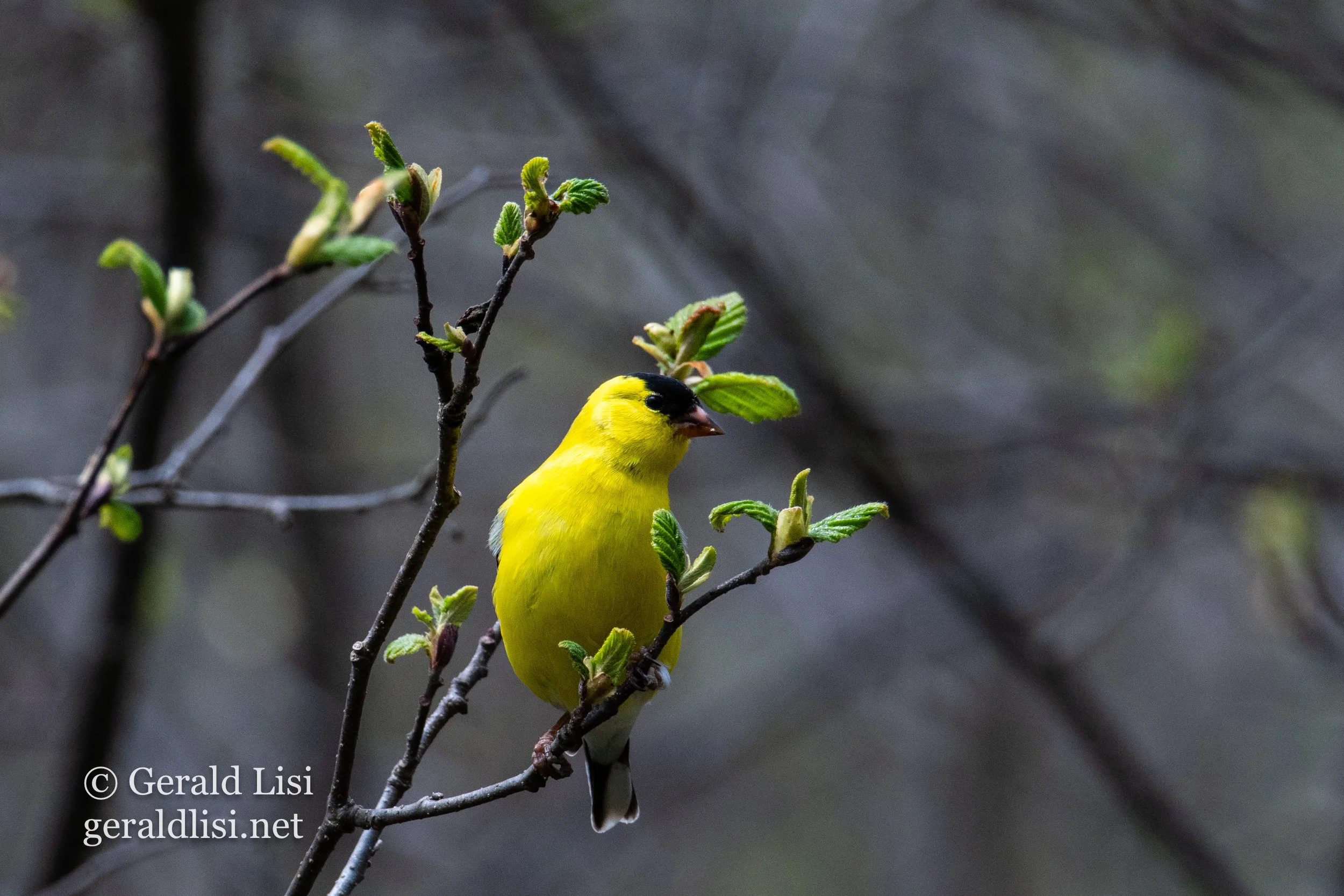
This American Goldfinch had finished molting into his breeding plumage by the time Speckled Alder was leafing out. Goldfinches are permanent residents. In winter the plumage of males and females looks the same. The breeding plumage of the females is somewhat more colorful version of the winter plumage, with the males taking on the distinct appearance seen here.
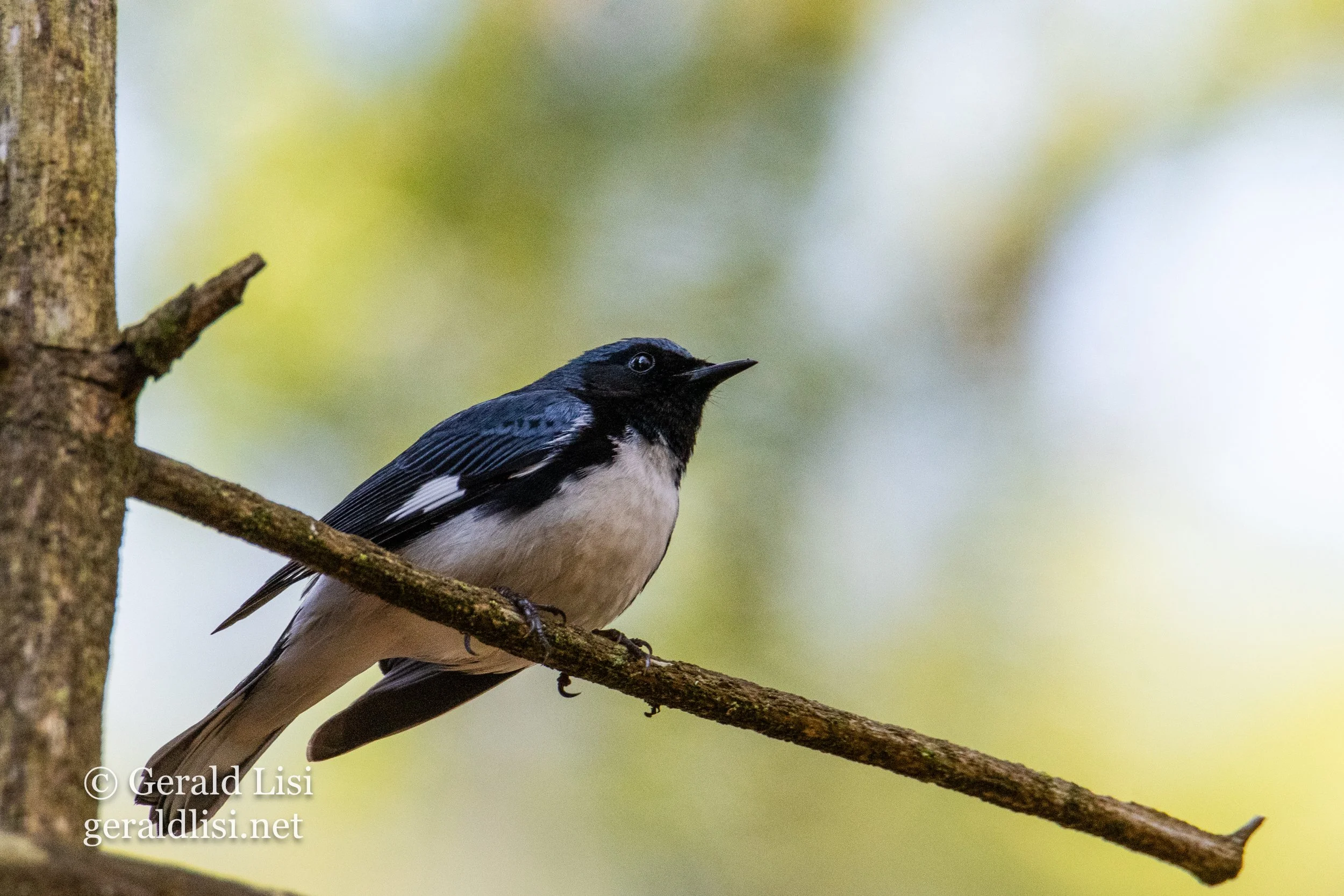
The song of the male Black-throated Blue Warbler isn’t nearly as pretty as his plumage, but I’m always glad to hear it. That’s how I spotted this guy just fifteen feet away from me.
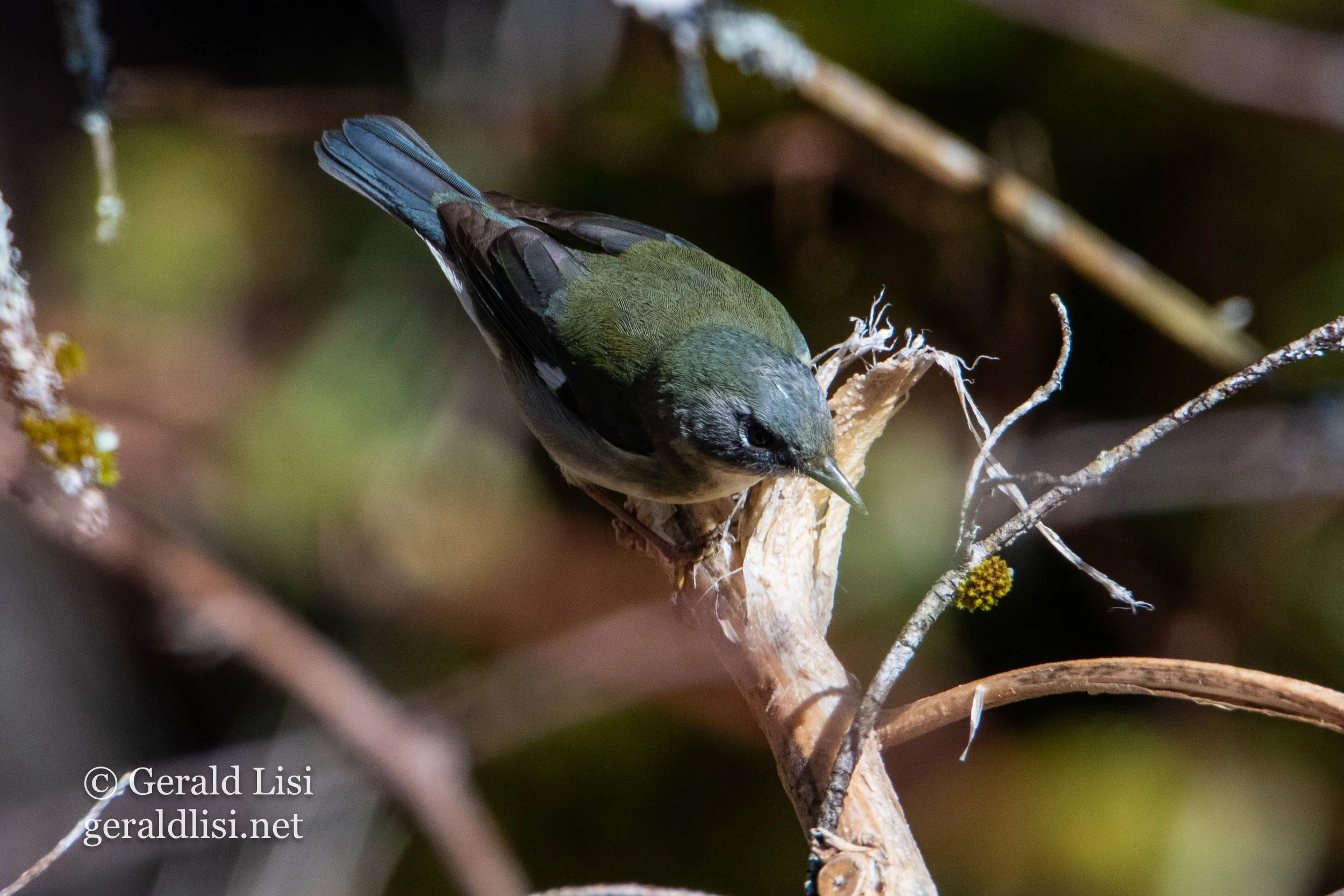
This was my first ever sighting of a female Black-throated Blue Warbler. Female warblers don’t advertise themselves with colorful feathers, and those of most species don’t sing, so they are harder to spot.
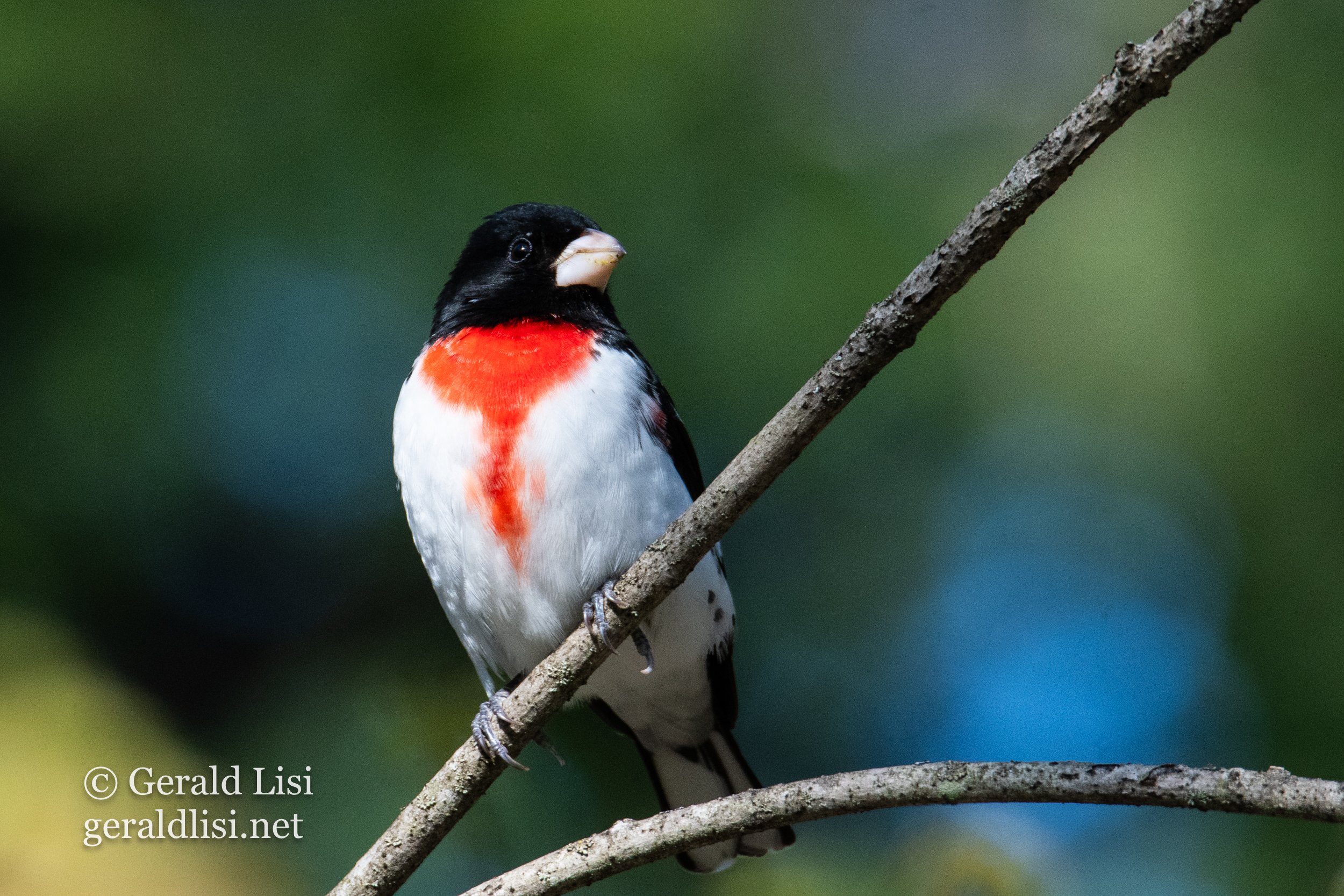
This was the closest I’ve been to a male Rose-breasted Grosbeak, and I even had some good light and found a clear view to photograph him.
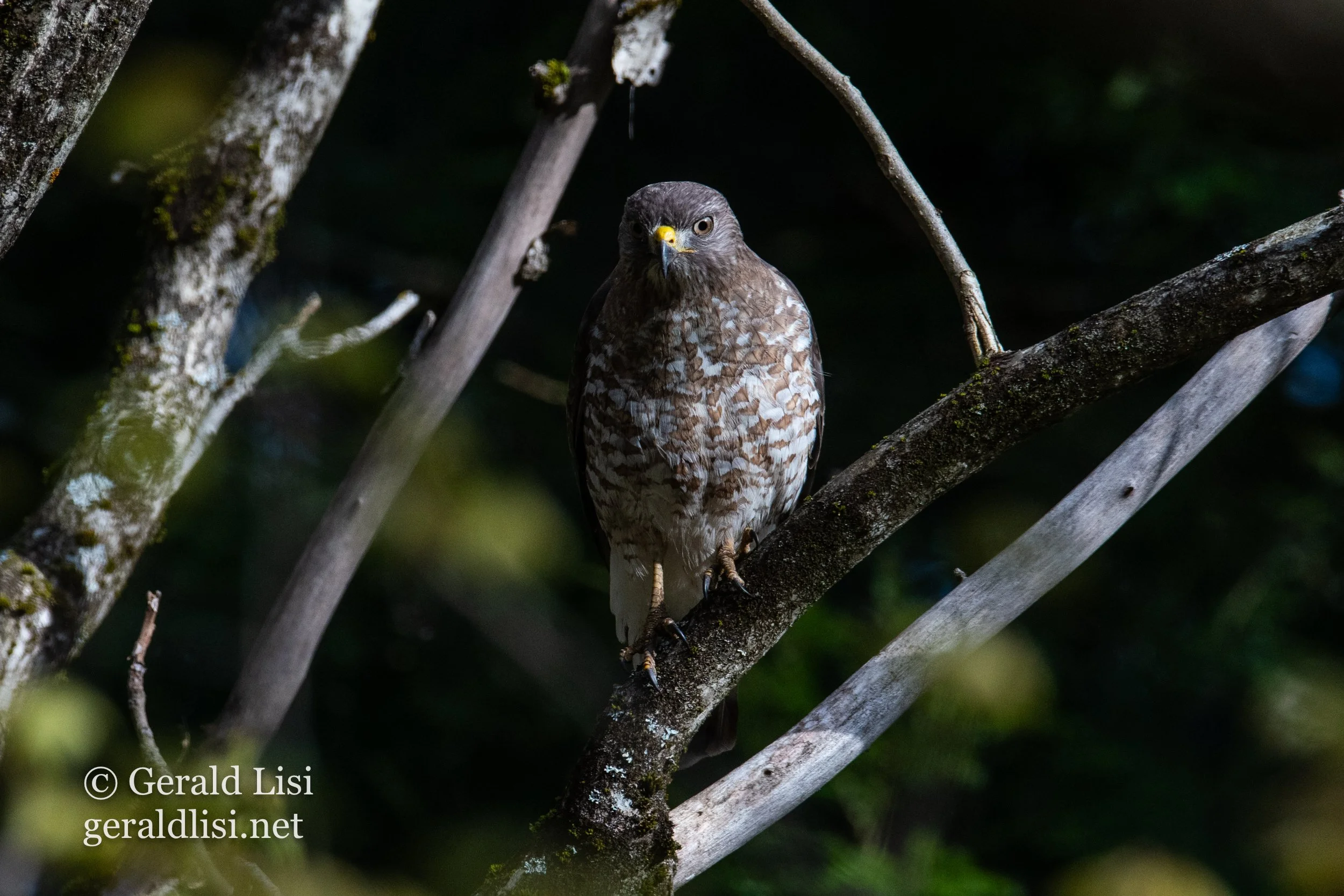
This Broad-winged Hawk probably didn’t notice me sitting quietly thirty feet when she swooped out of the forest into a Butternut in my backyard. I had less than a minute to get some pictures before my presence sent her in search of a more private hunting perch.
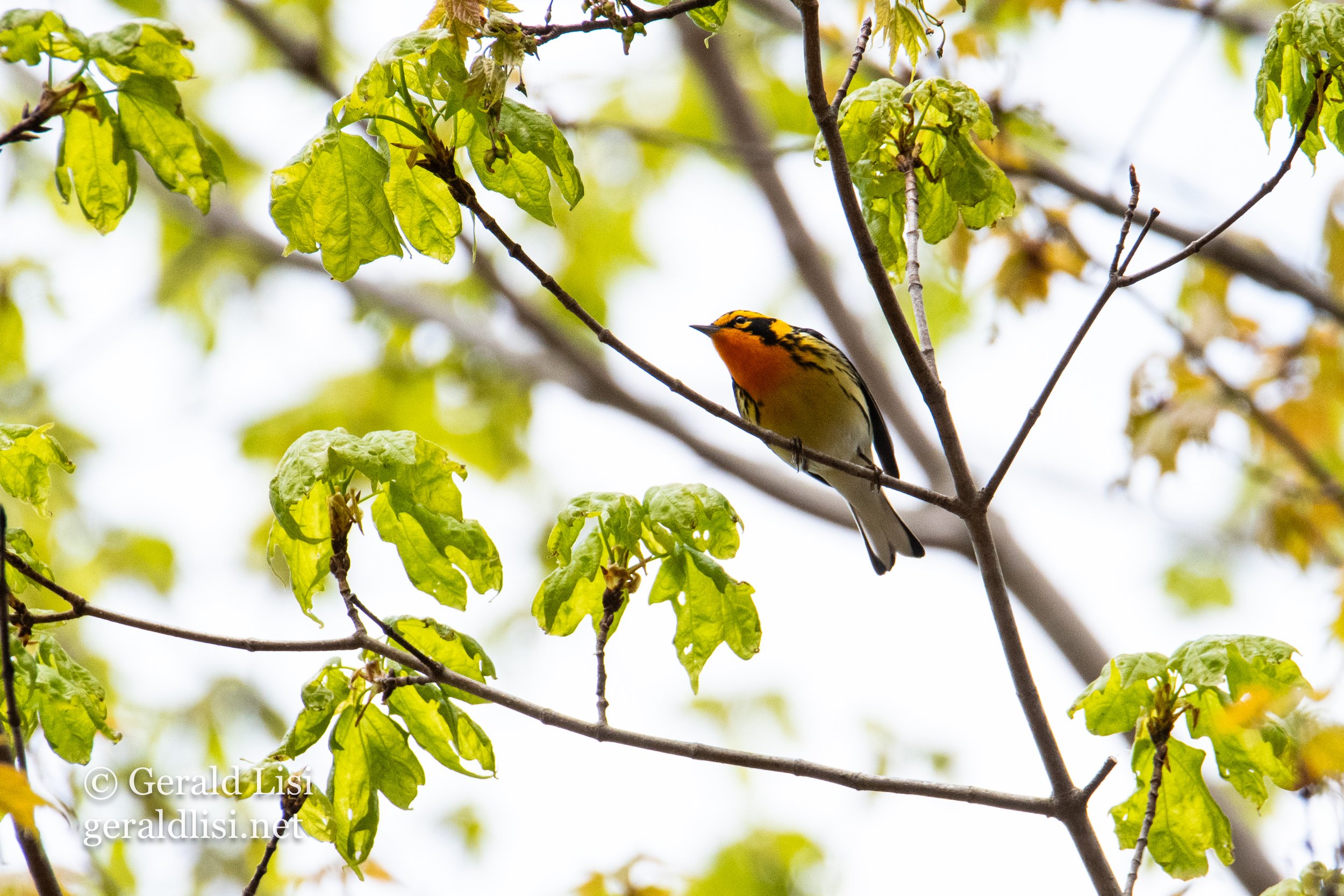
Blackburninan Warblers are favorite of many, myself included. They spend most of their time high in trees, as this guy was, so it’s hard to get a good look at them.
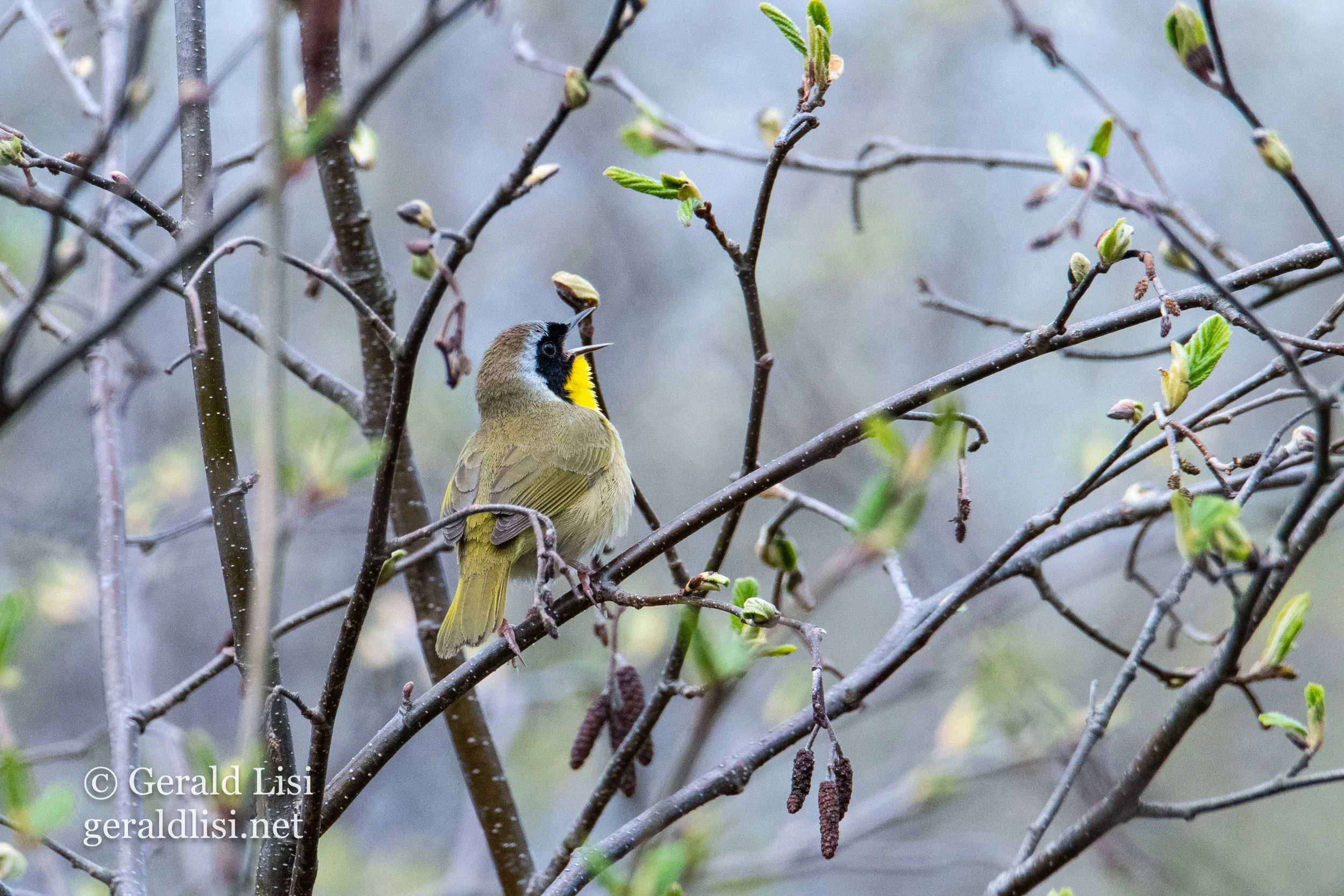
Common Yellowthroats forage and nest near the ground, usually in wet meadows or marshes. This guy was singing at eye level, but I had to find a window through the alder thicket to get this shot. Now that the trees and shrubs have leafed out these views are much harder to find.
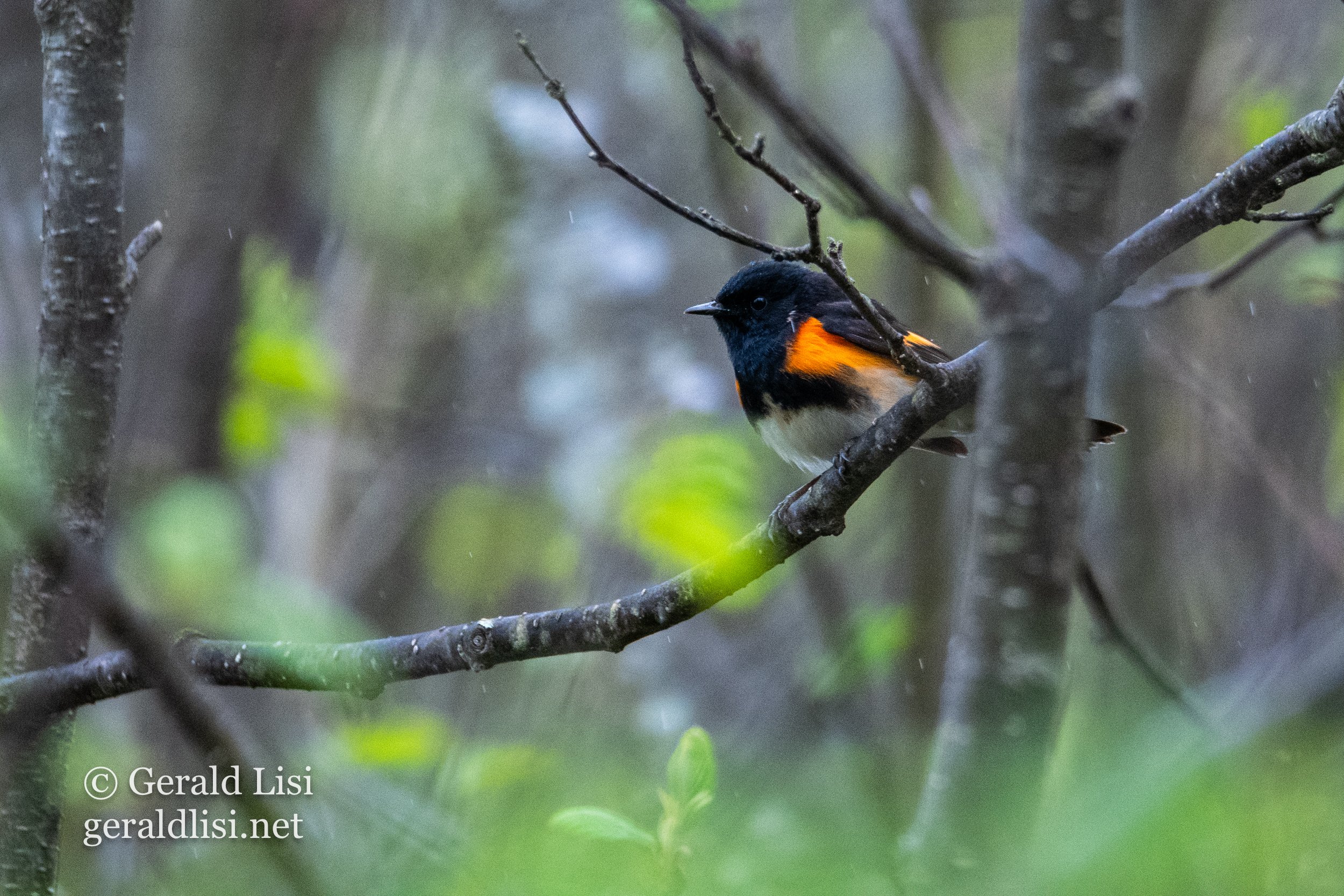
I was so close to getting a great view of this American Redstart, but good enough is fine with a bird this striking. Redstarts like woods near water. They sometimes sing high in the trees like a Blackburnian, but I find them more likely to sing and forage within 20 feet of the ground.
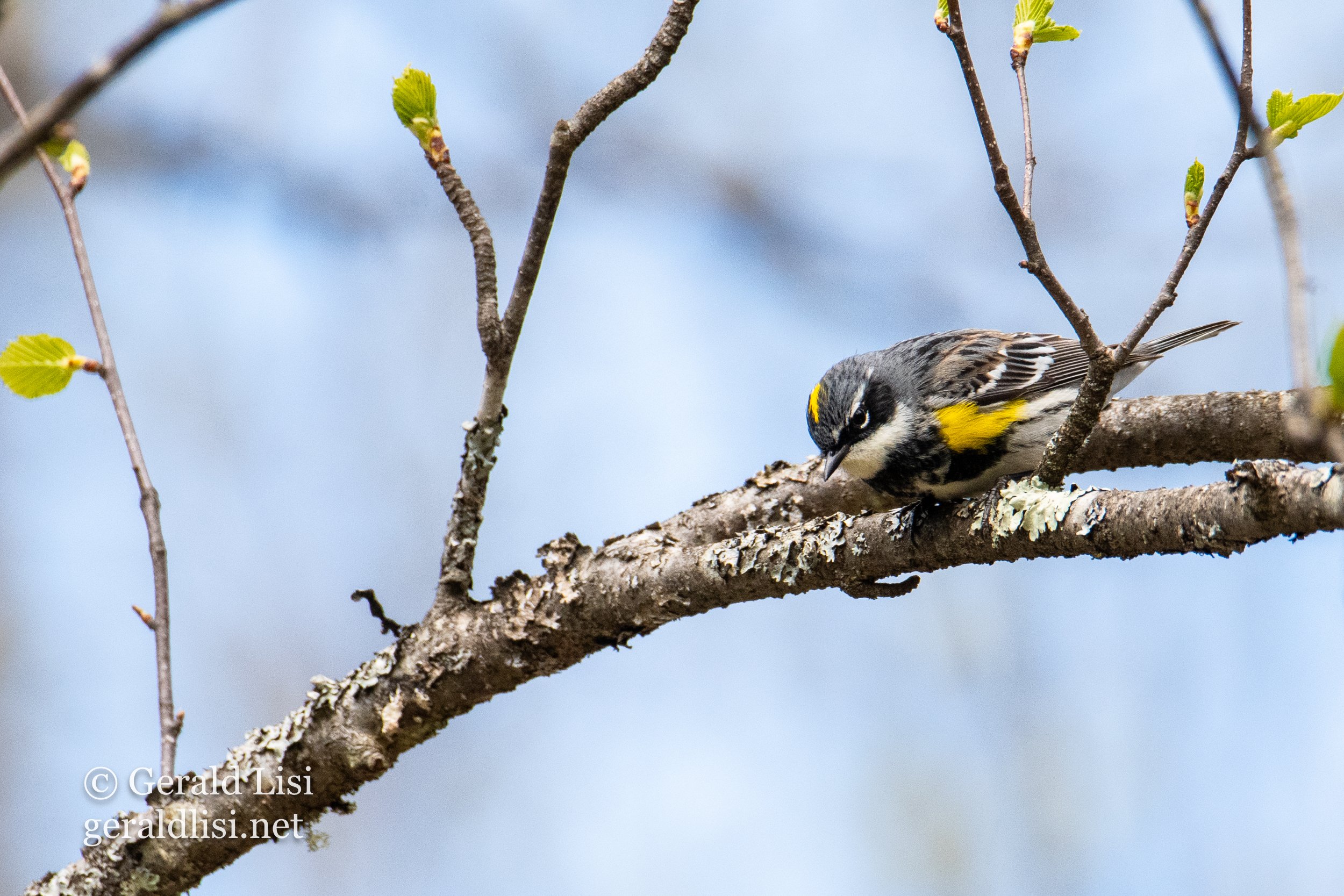
One of our more abundant and accessible warblers, the Myrtle (Yellow-rumped) Warbler hawks insects from low perches in trees near water.
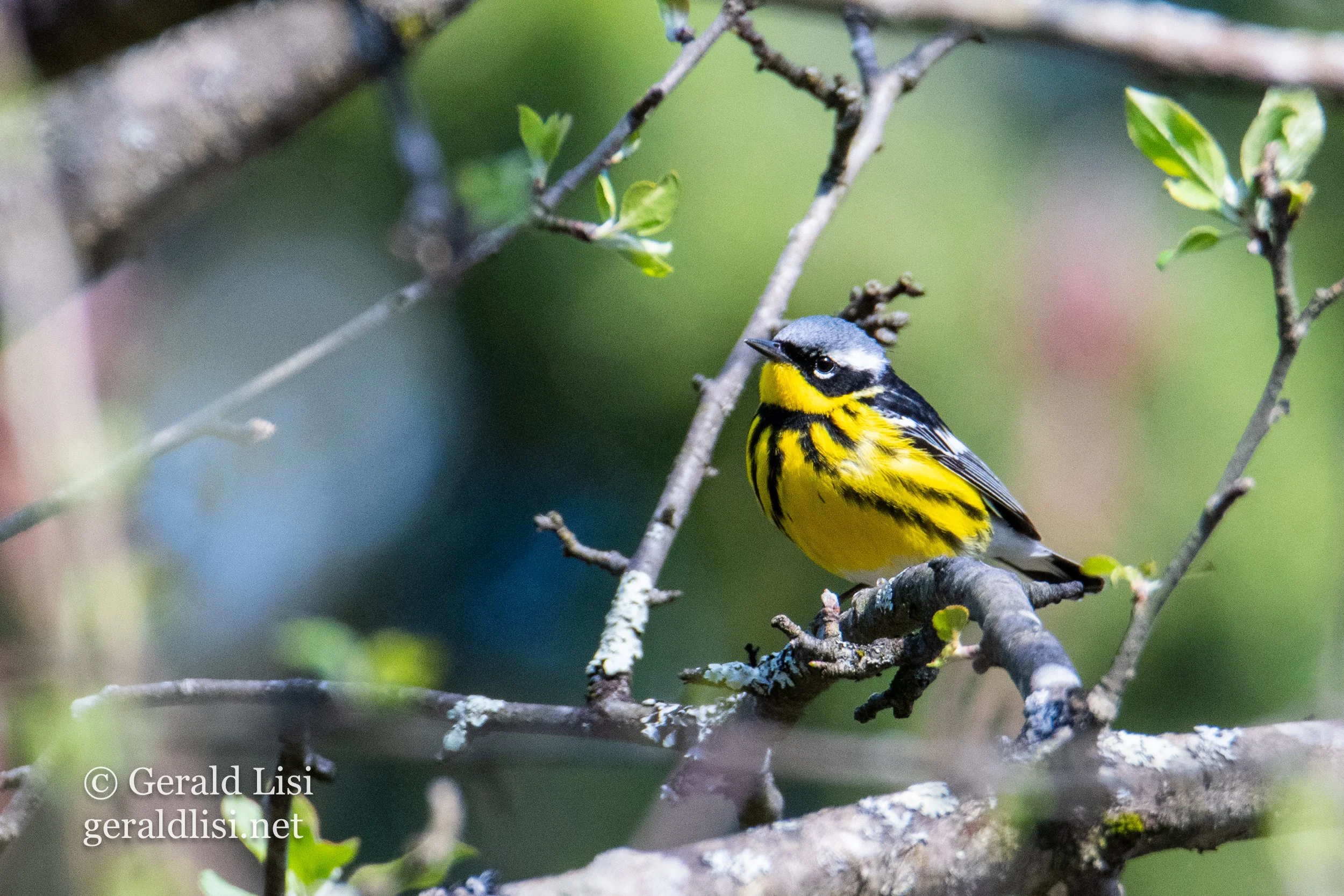
I had only heard Magnolia Warblers before I got a look at this guy. Another addition to my sizable favorite-bird list. Narrowing it down to a top ten would be nearly impossible.
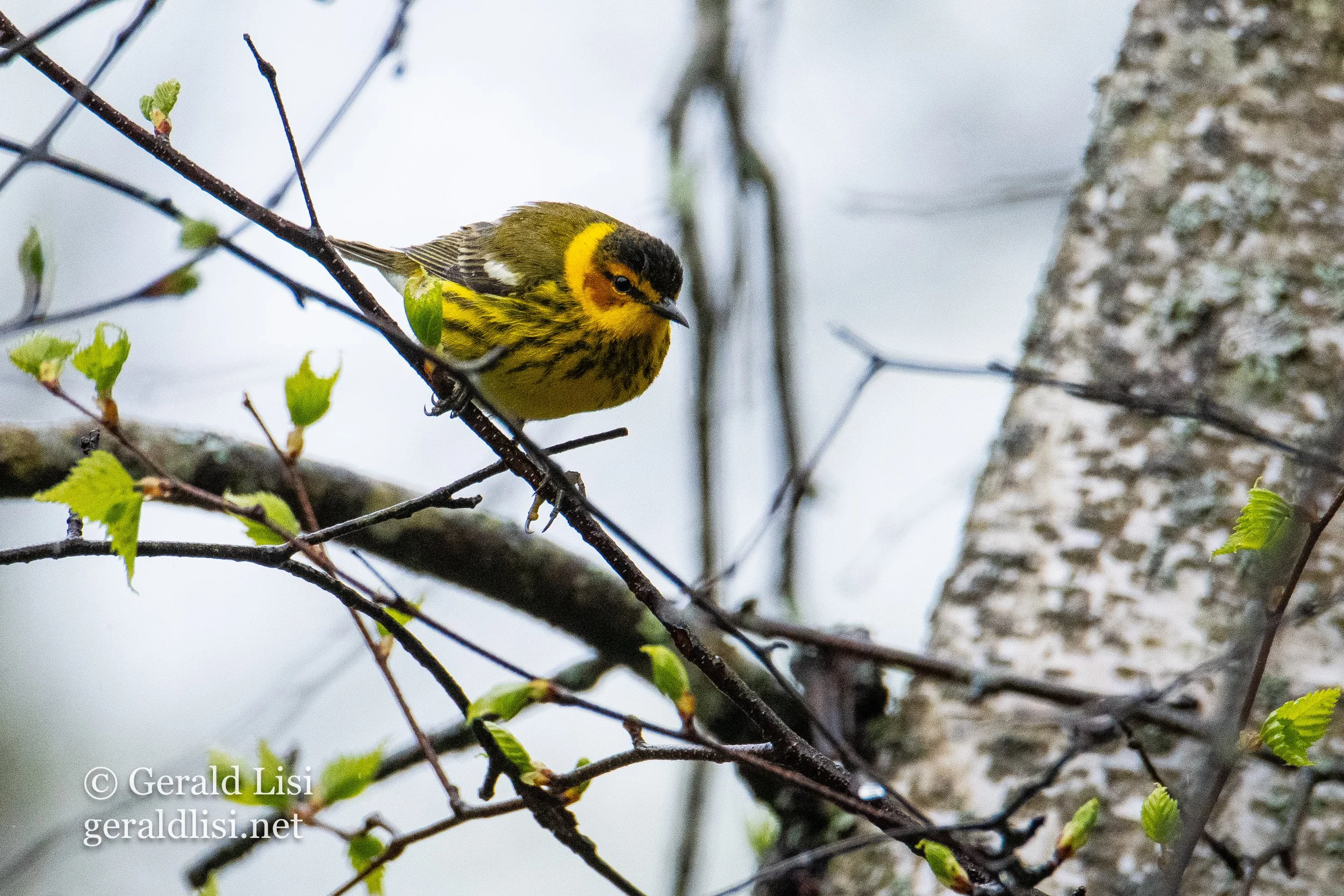
And another new favorite! A flash of yellow in a Gray Birch on a gray day brought this lifer (first of my life) to my attention. Cape Mays pass through Vermont flying to and from their nesting grounds north of here, so this was a lucky encounter.
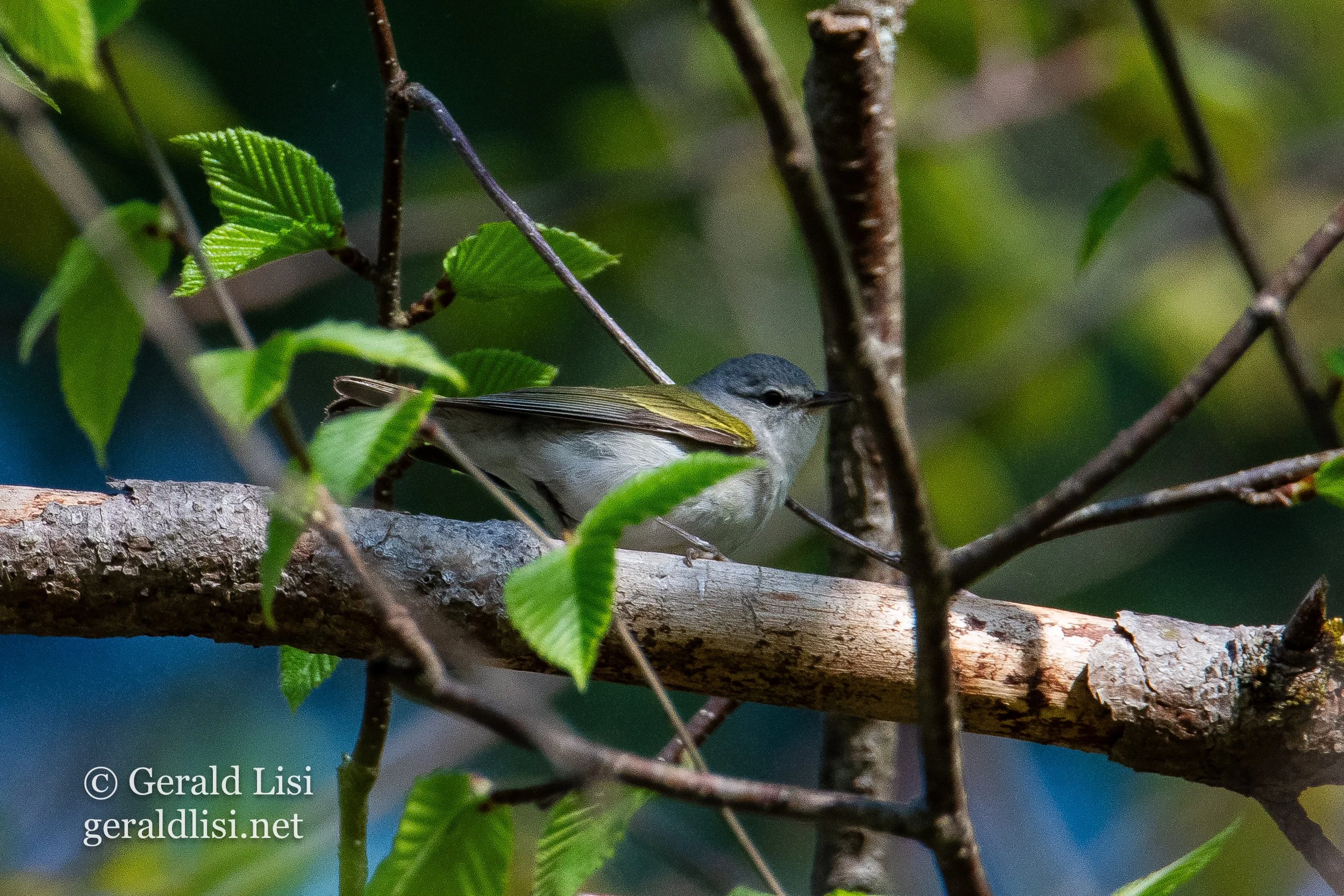
This Tennessee Warbler was another lifer that stopped in Vermont on his way to more northerly breeding grounds. I wish I got a better view, but this gives you a good idea of their field marks.
That’s it for this time, folks. Thanks for joining me for these avian highlights from Vermont’s birdiest month of the year. The “bird edition” part of this post’s title implies that there will be another May ‘26 edition, and that is in fact the case. Some time in the first week of June, perhaps tomorrow even, I will post a botany edition. I hope that my subscribers won’t mind getting two newsletters so close together. It’s rare that I do more than one a month, but it’s warranted for a month as eventful as May. If you’re not a subscriber but would like to be you can sign up here: www.geraldlisi.net. After entering your email address please be sure to respond to the verification email. Wishing you wonderful encounters with wild beings.