Early Bloomers
Most of the abundance and variety of wildflowers is still ahead of us in northern New England, but many plants flower here in April. It is especially wind-pollinated trees and shrubs that flower before they leaf out, leaves being an obstruction to pollen’s movement from the male flowers of one tree to the female flowers of another. But beneath the still-bare deciduous trees some of our loveliest wildflowers appear at this time. These spring ephemerals famously take advantage of the sunlight that the leafless branches let onto the forest floor. The pollen and/or nectar produced by all of these plants is an essential food resource for various species of bees and other insects that emerge at this time. The first course of many that plants provide for animals throughout the growing season and beyond.
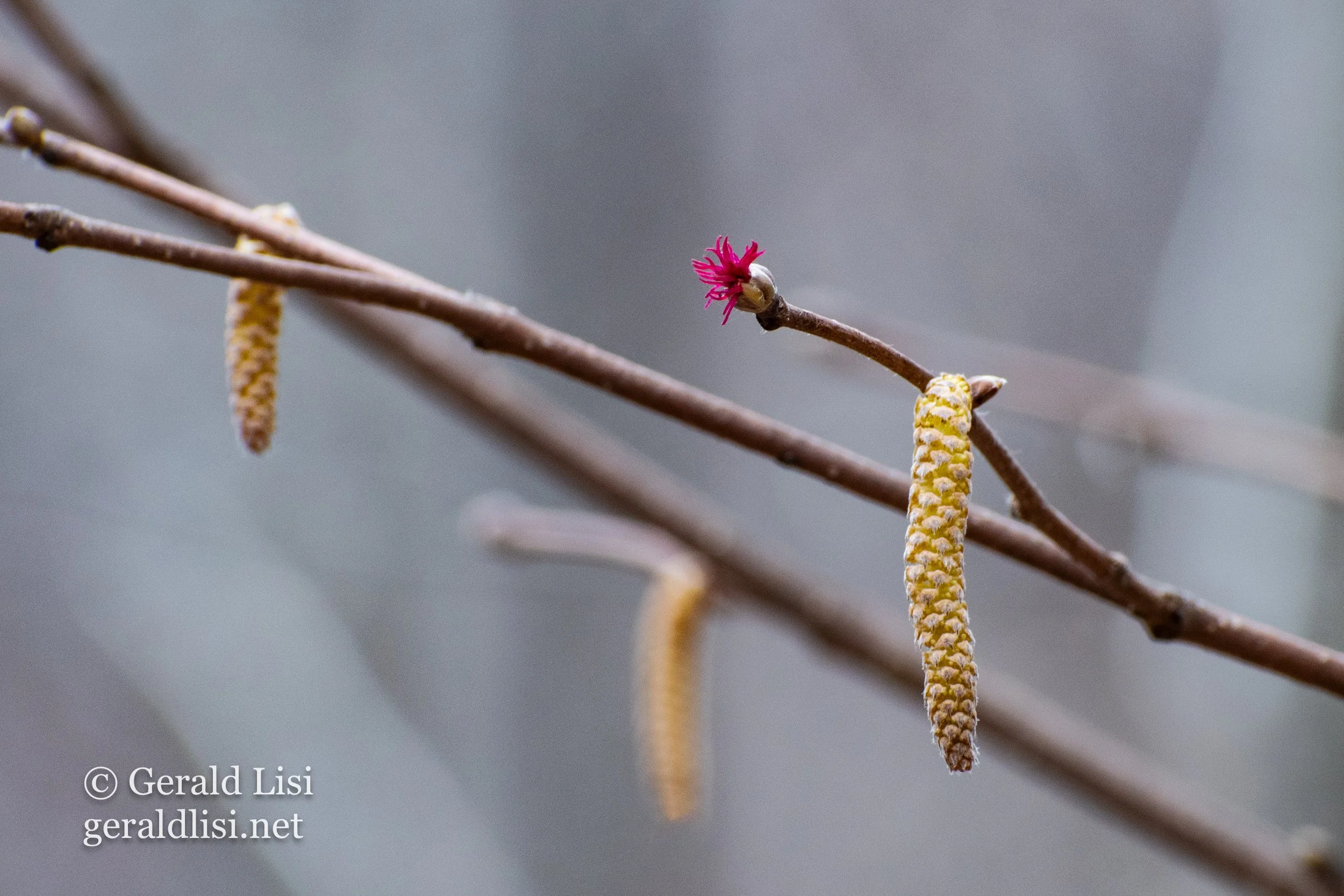
The dangling male catkins and tiny, delightfully-magenta, female flowers of Beaked Hazelnut, Corylus cornuta.
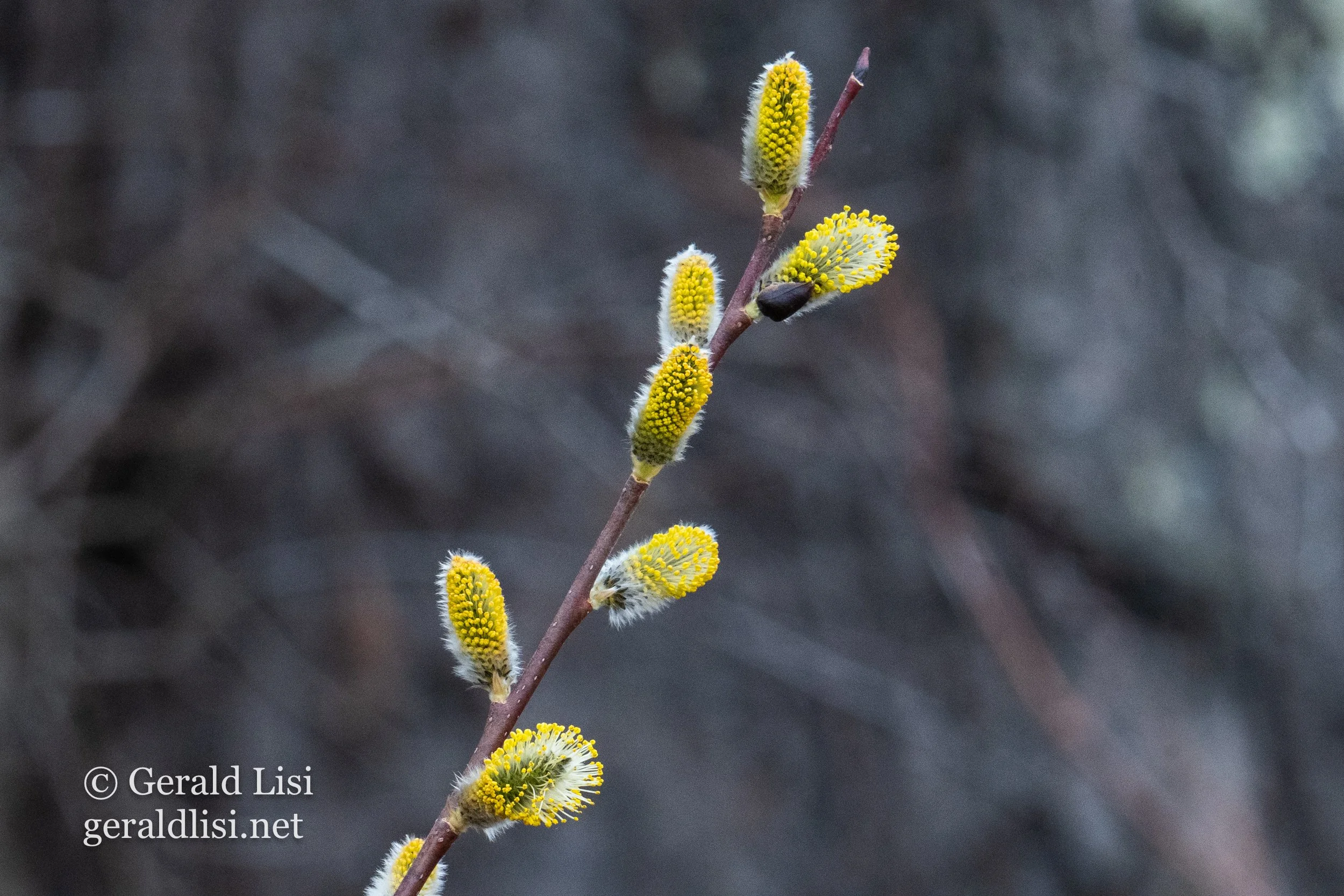
The soft, fuzzy flower buds of Pussy Willows, Salix discolor, and other willows give rise to dozens of male flowers, each with one pollen-loaded anther.
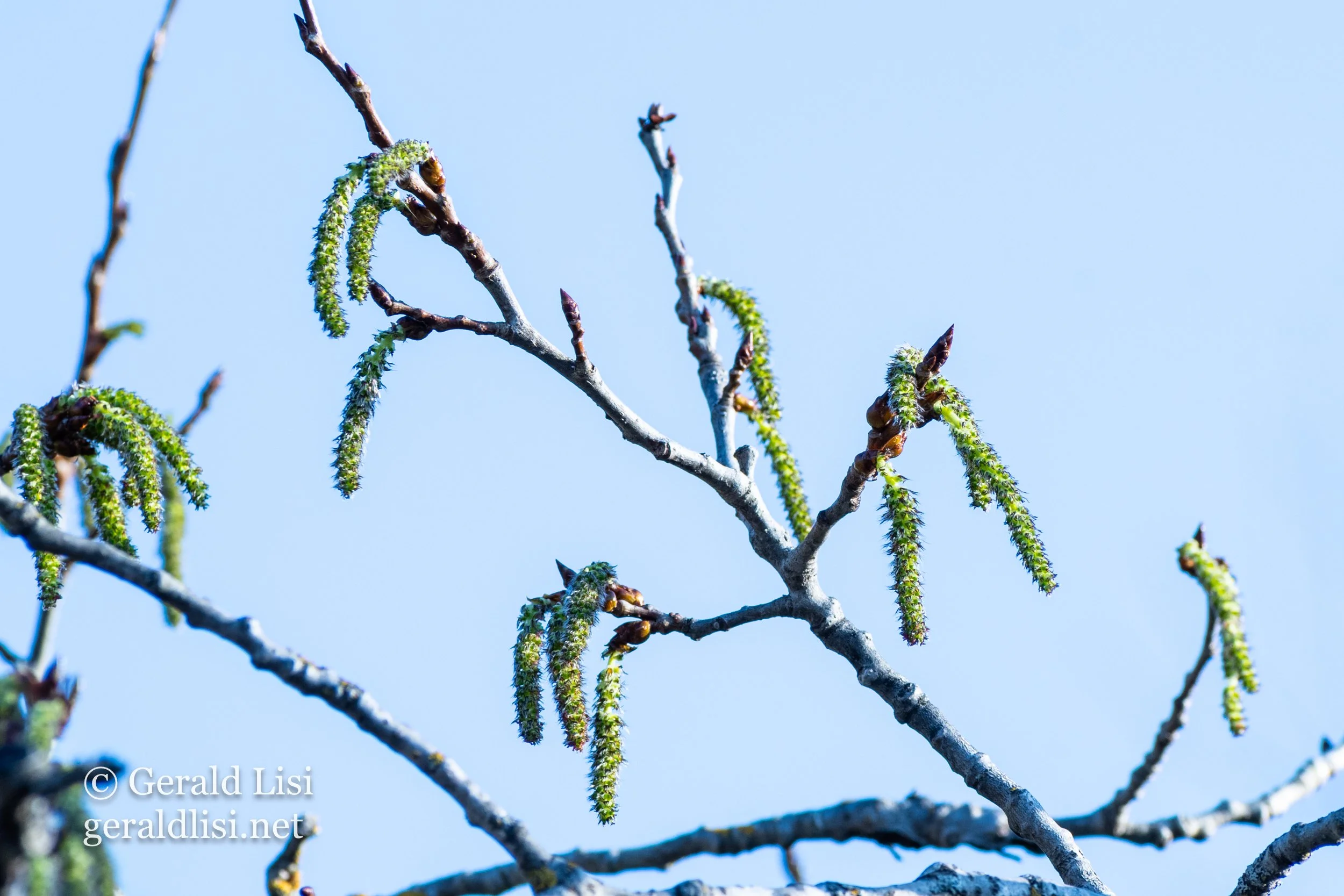
The female catkins of Balsam Poplar, Populus balsamifera, hold many little green pistils.
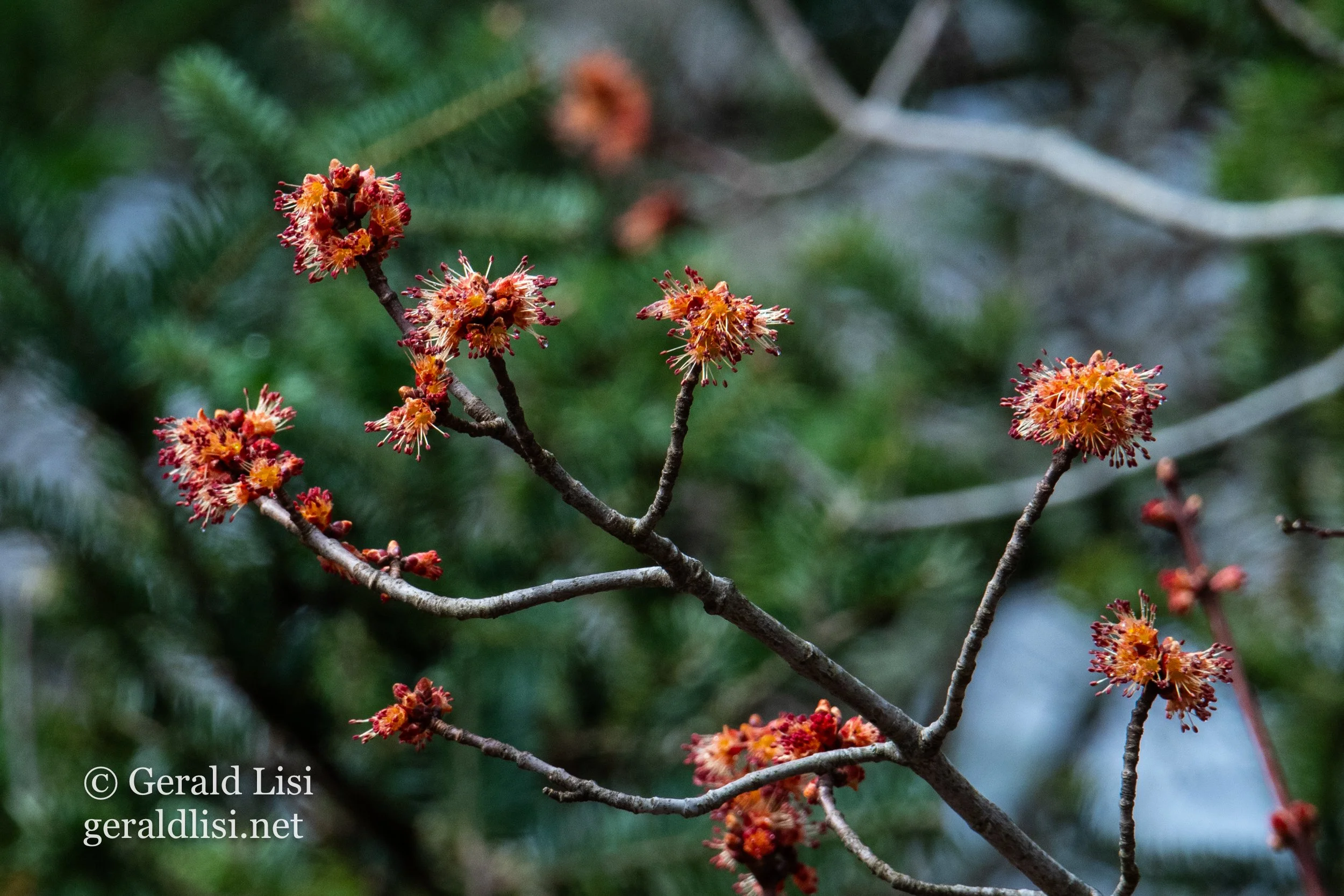
Clusters of the male flowers of Red Maple, Acer rubrum, appear shaggy from their sprays of anthers.
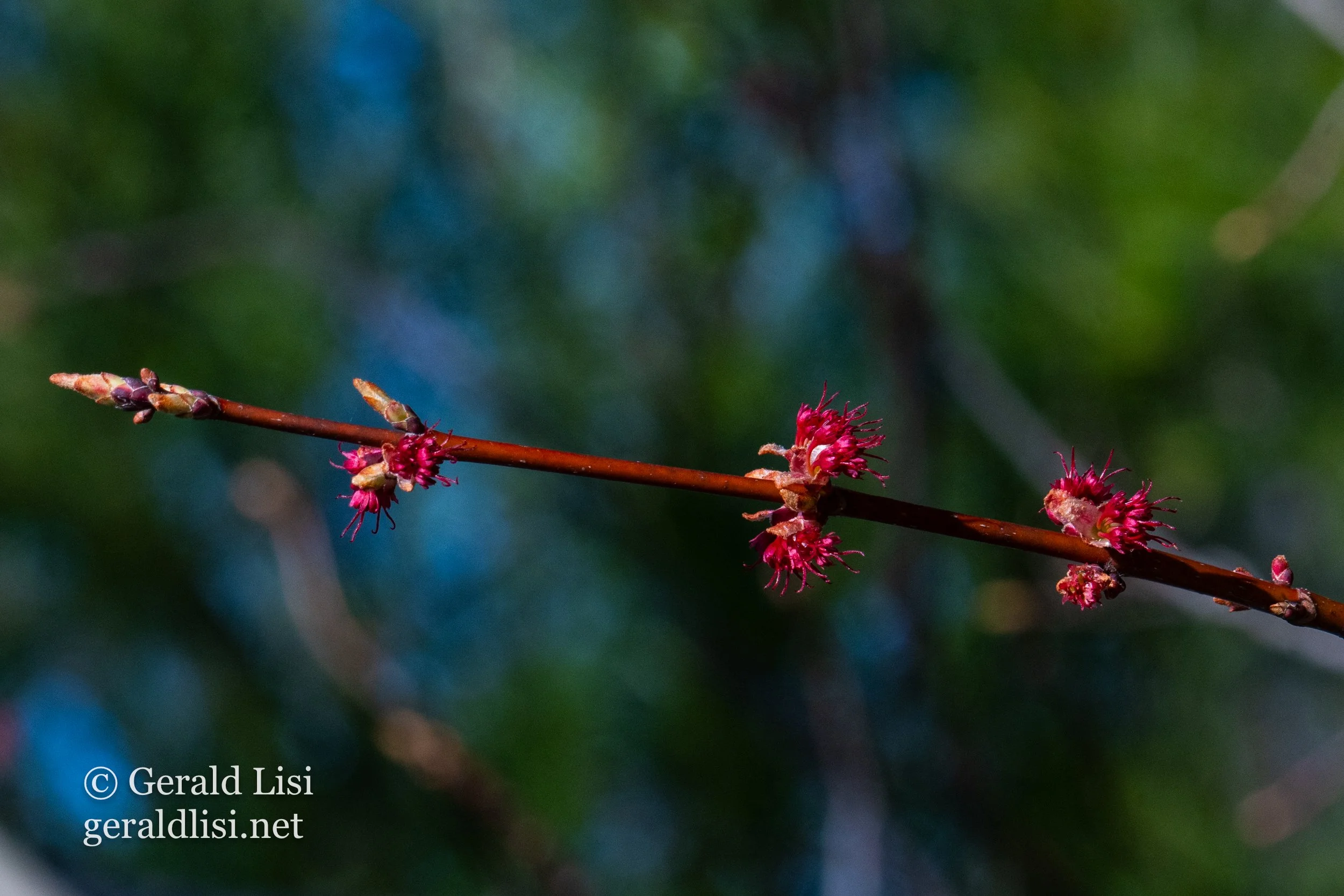
The female flowers of Red Maples are more compact, and uniformly red in color.
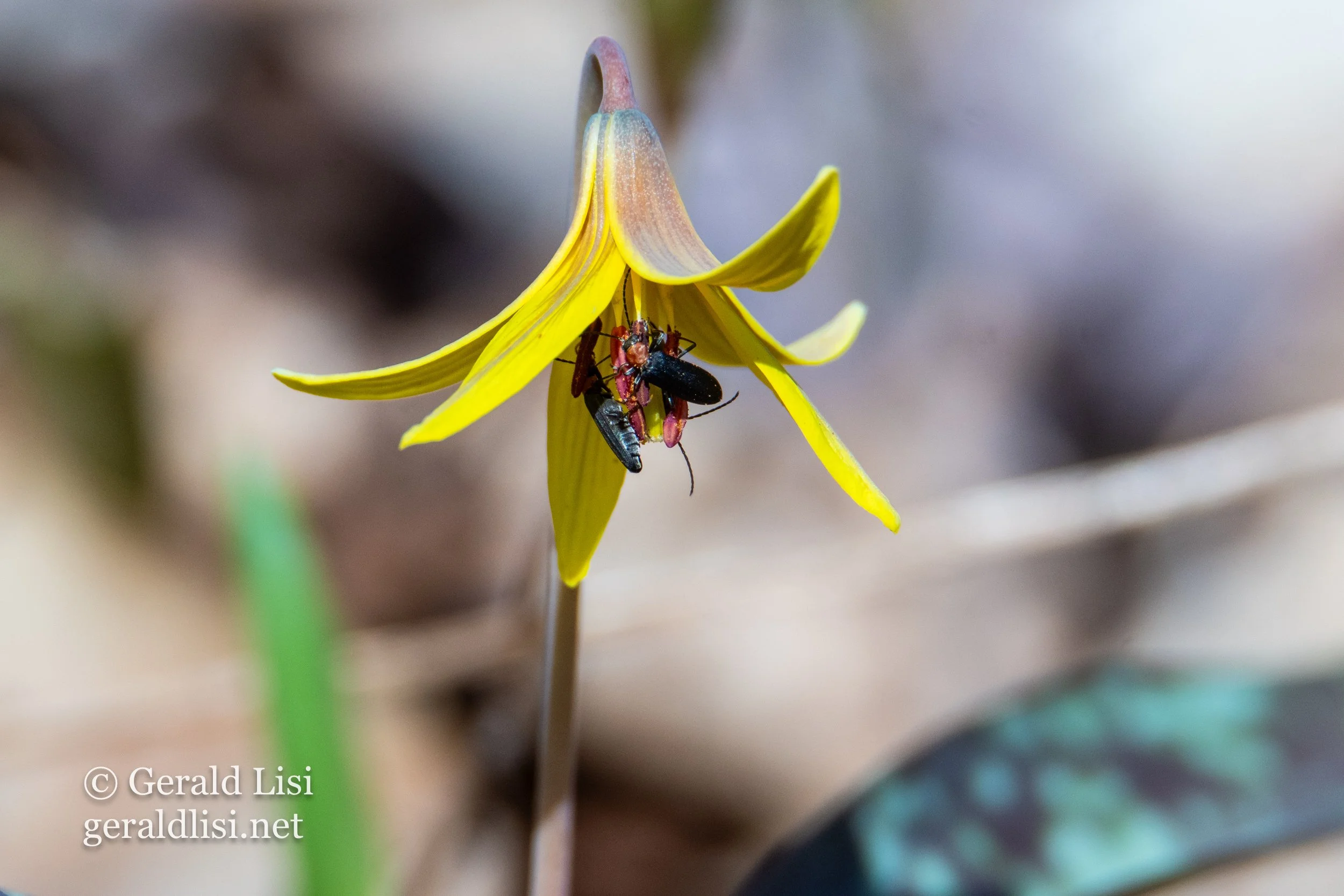
The mottled leaves of Yellow Trout Lily, Erythronium americanum, carpet the ground of many of our forests in April. Very few of them flower in any year, but it’s well worth looking for those that do. The insects feeding on the pollen of this flower are Red-necked False Blister Beetles, Ischnomera ruficollis. I observed this species repeatedly on numerous Trout Lilies in the last couple of weeks.
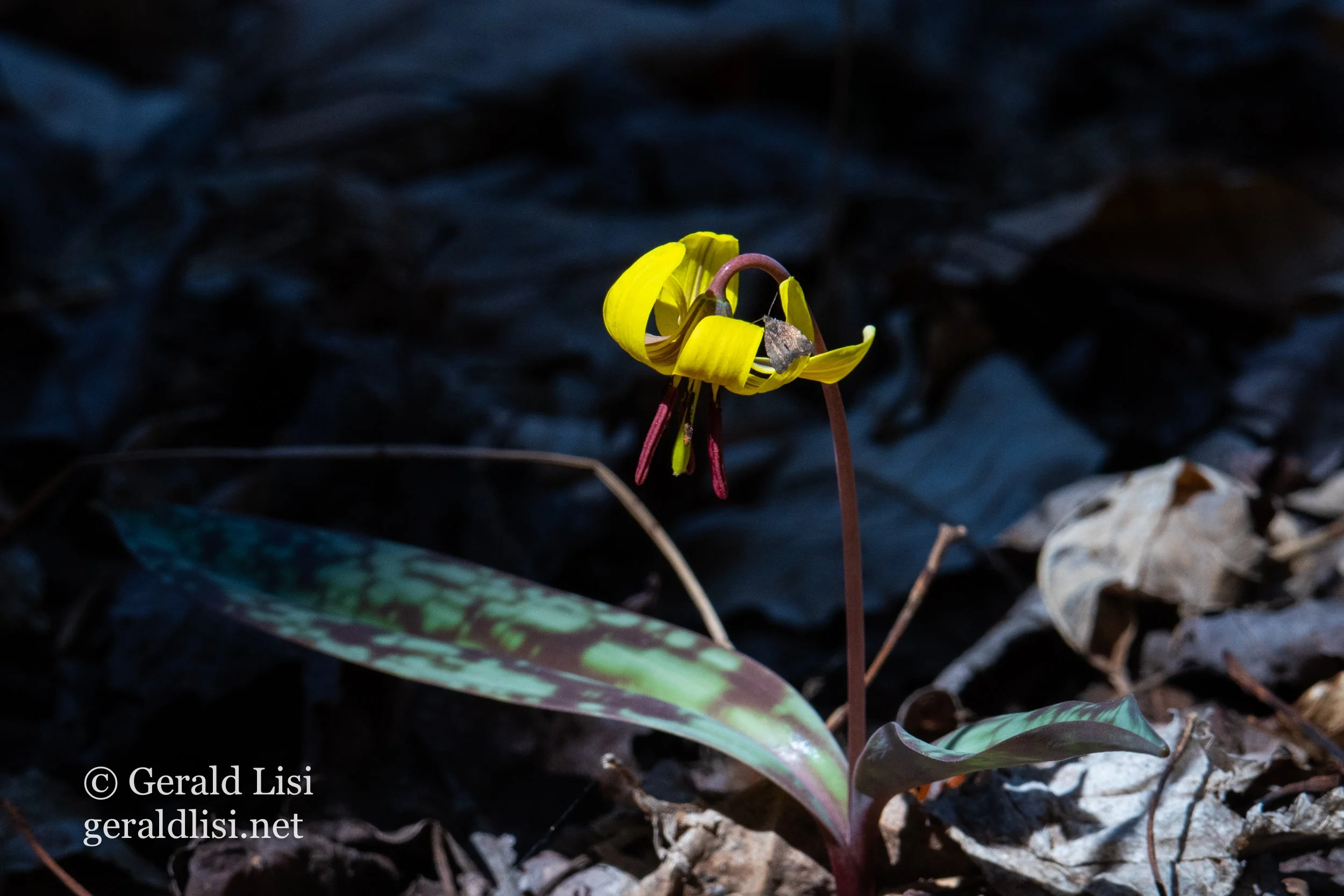
One of the few other insect species I managed to spot on Trout Lily flowers was the tiny moth, whose identity I have yet to determine.
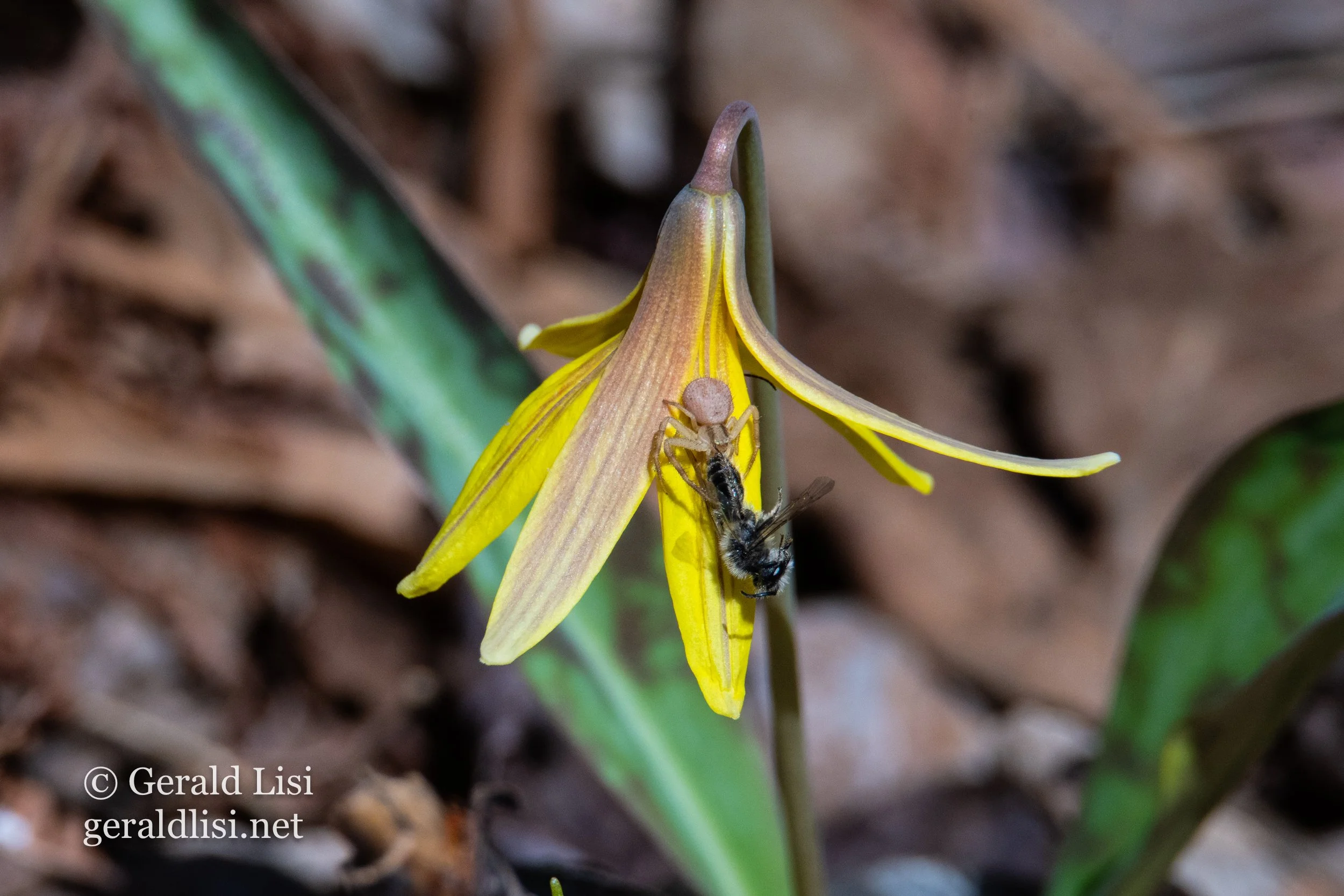
This crab spider, possibly a Mecaphesa species, caught a Mining bee, Andrena species, who was foraging for nectar and pollen.
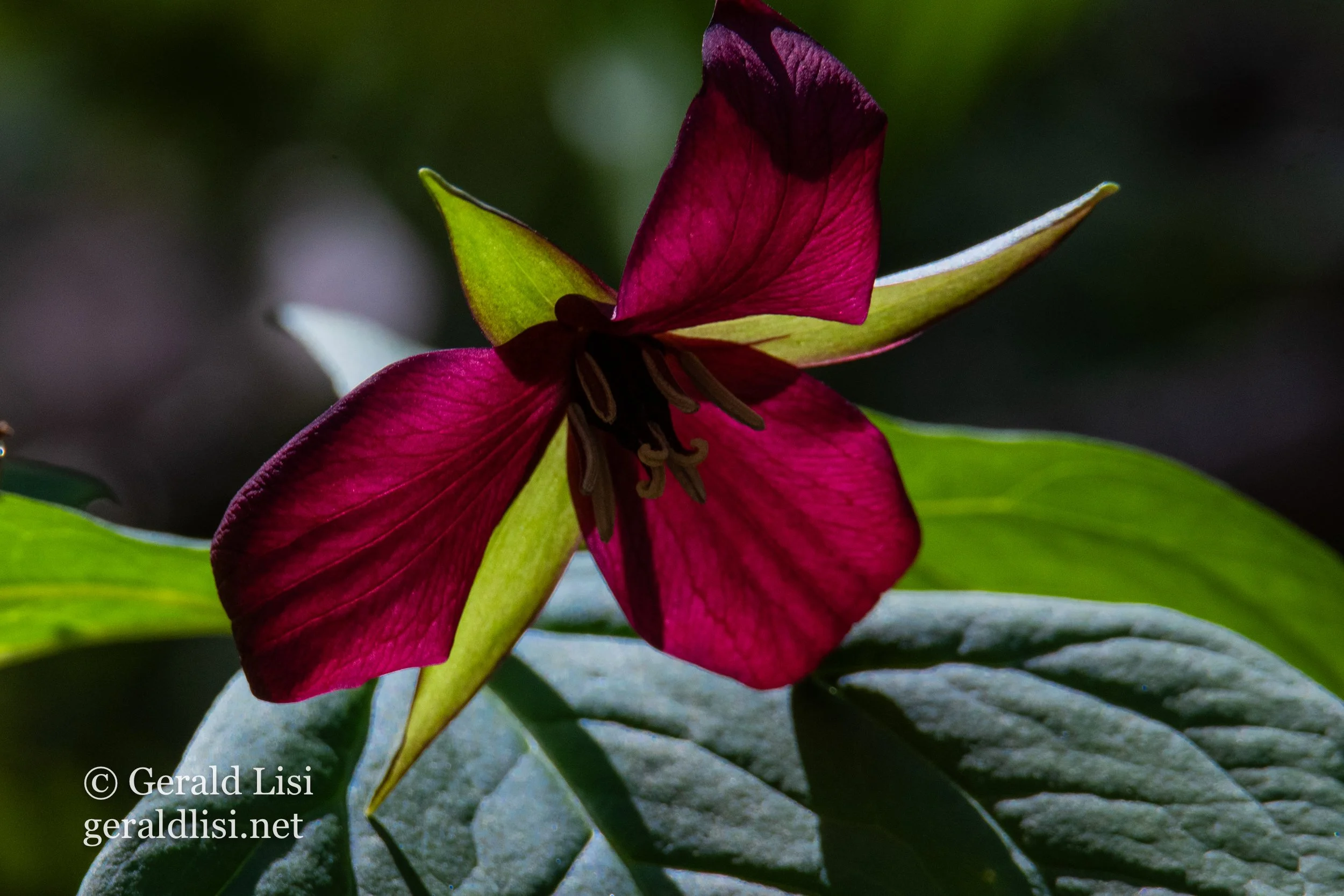
Red Trillium, Trillium erectum, is a famous sign of spring in the northern forest.
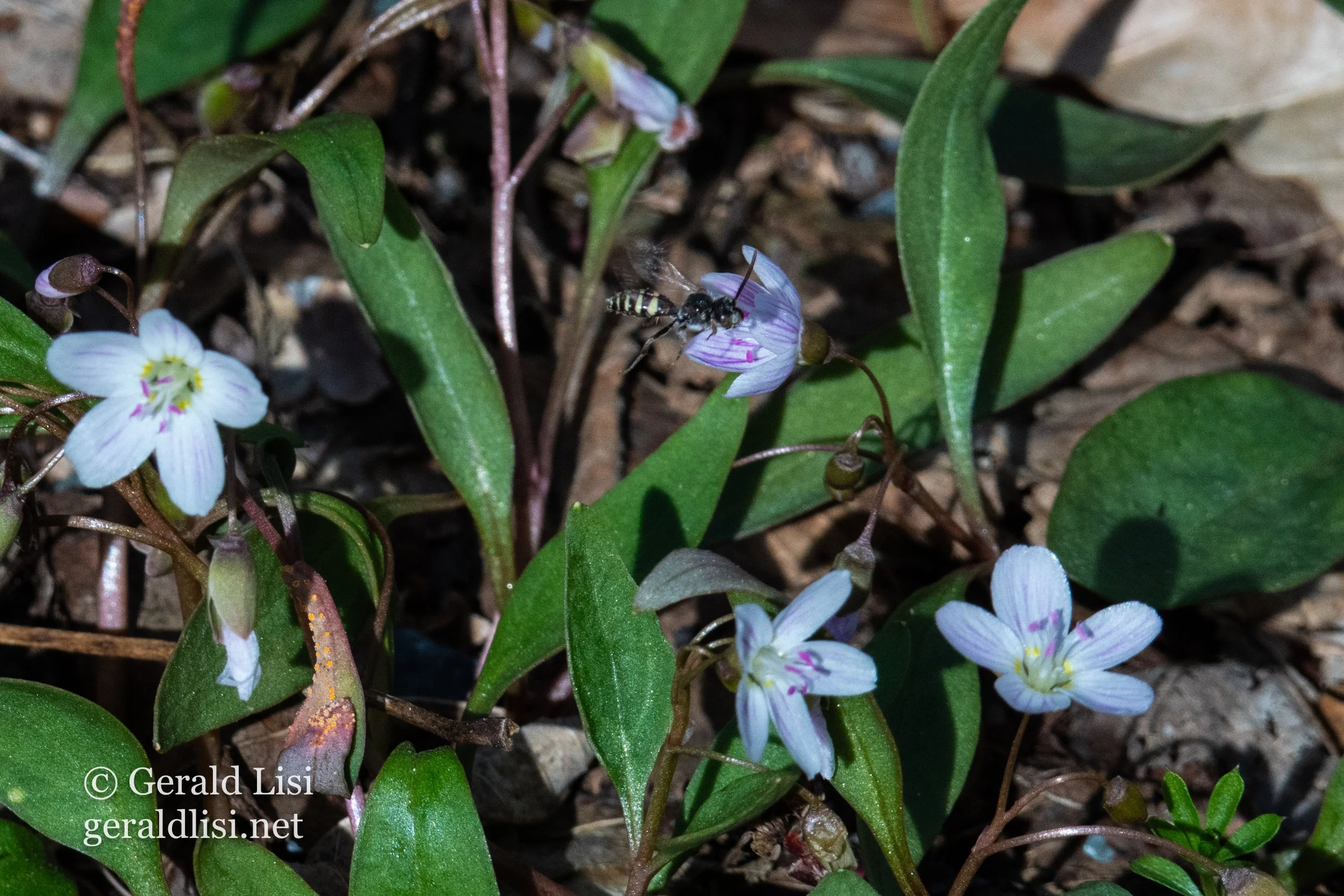
Carolina Spring Beauty, Claytonia caroliniana, is another reason to carefully scan the forest floor in April. These beloved flowers are only a half an inch wide. The closest match I could find for this bee is the Tifton Nomad Bee, Nomada tiftonensis, but I am still an amateur at bee identification.
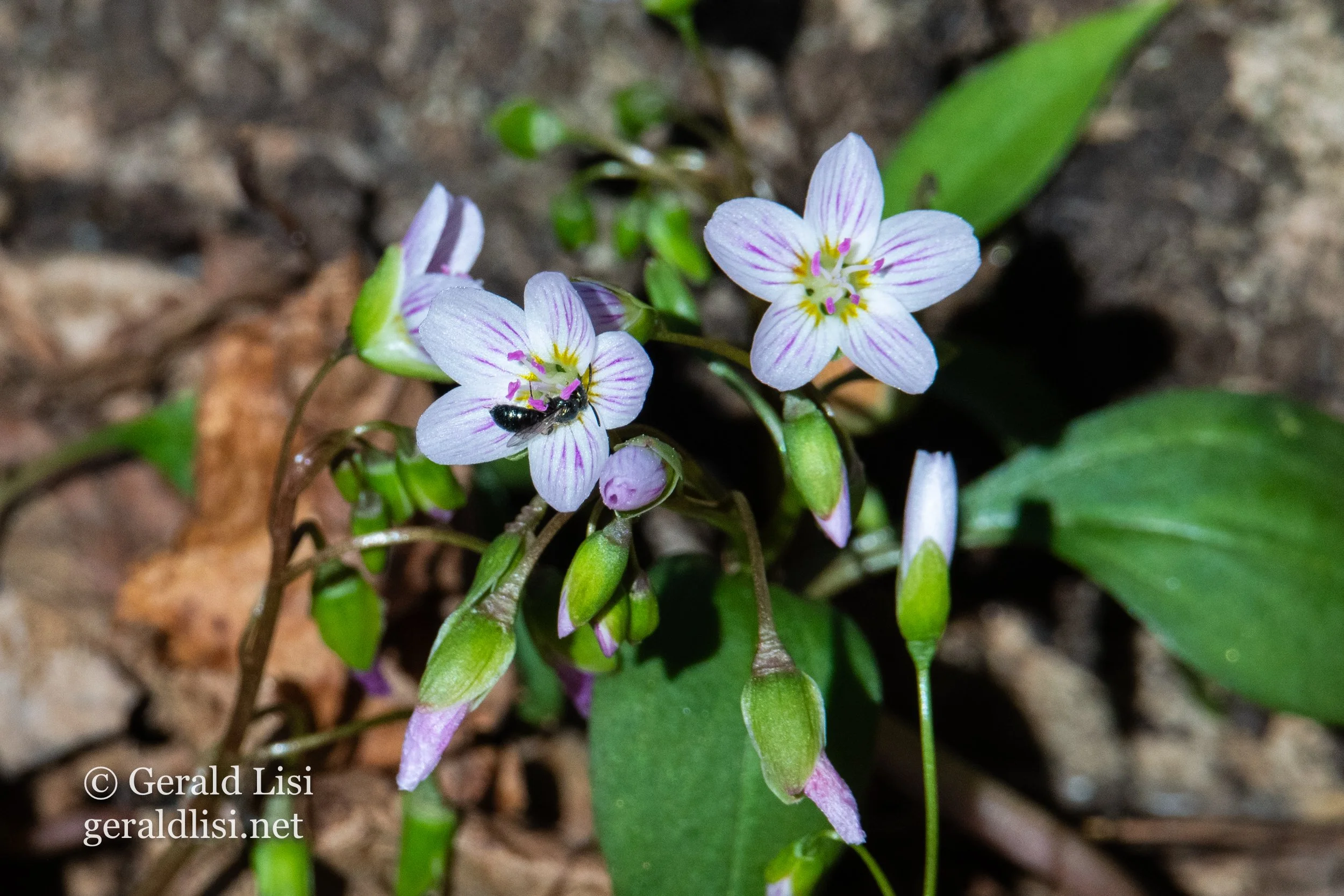
This little Carpenter Bee, Ceratina species, is going deep for some sweet Spring Beauty nectar.
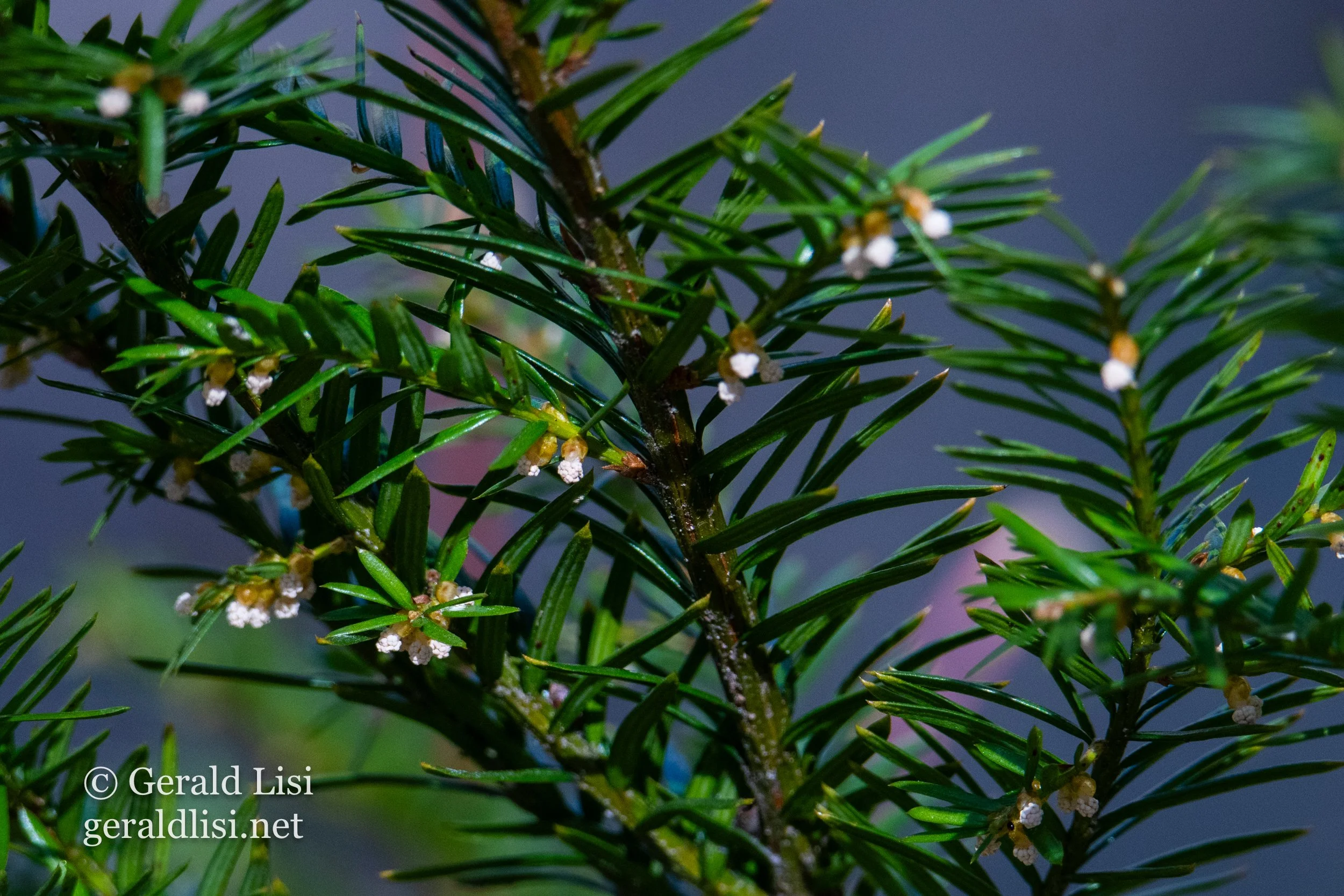
The pollen cones of this Canada Yew, Taxus canadensis, are tiny, but they stood out against the dark green needles in the sunlight.
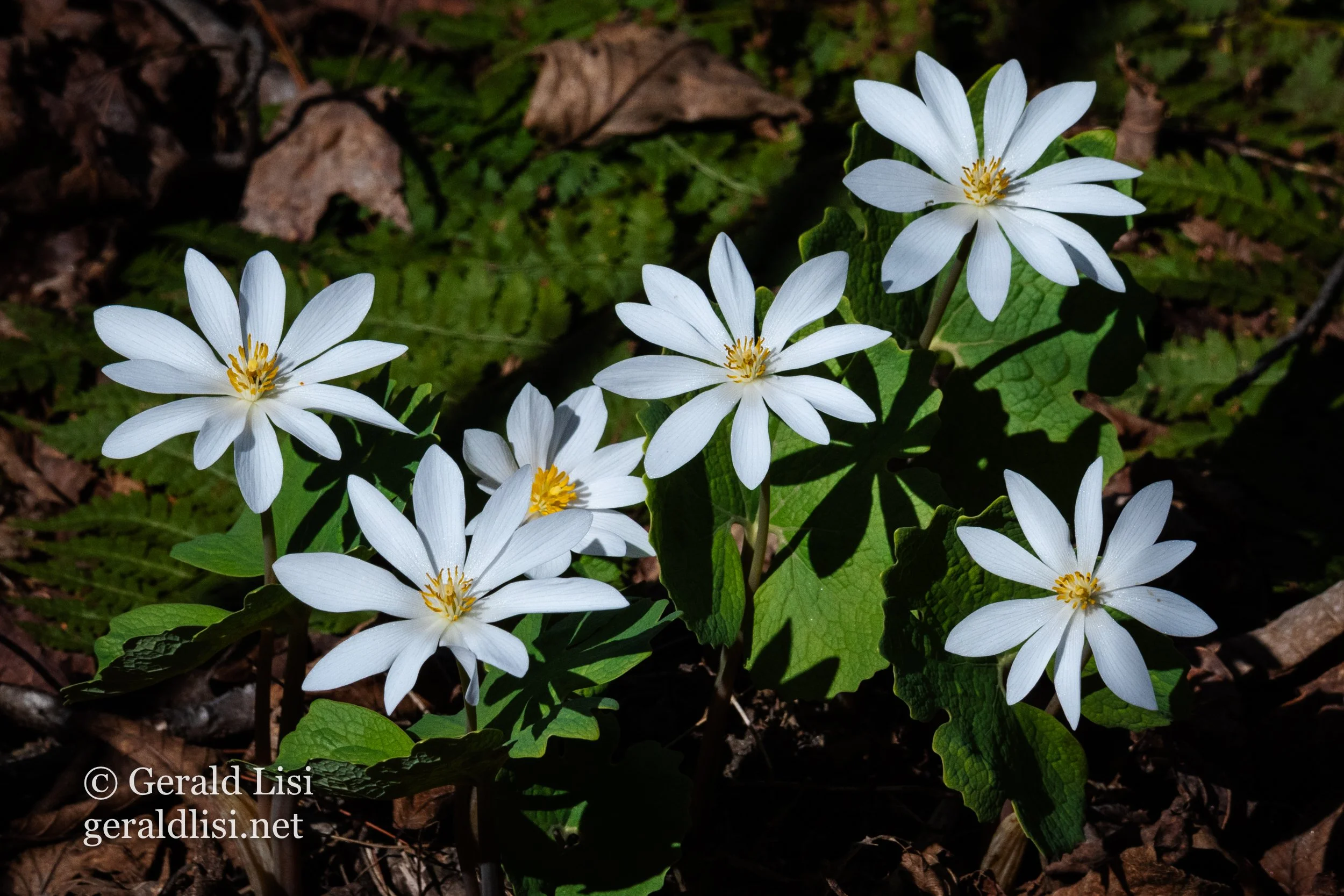
Bloodroot, Sanguinaria canadensis, in peak bloom is a stunning sight, and I leave you today with this example.
That’s it for this time, folks. Thanks for taking this virtual woods walk with me. If you’re reading this on my website please consider signing up at www.geraldlisi.net to get future editions in your inbox. If you’re already a subscriber please consider forwarding this to someone else who might enjoy it. Until next time, take care of yourselves, of each other, and of the land that you live on.